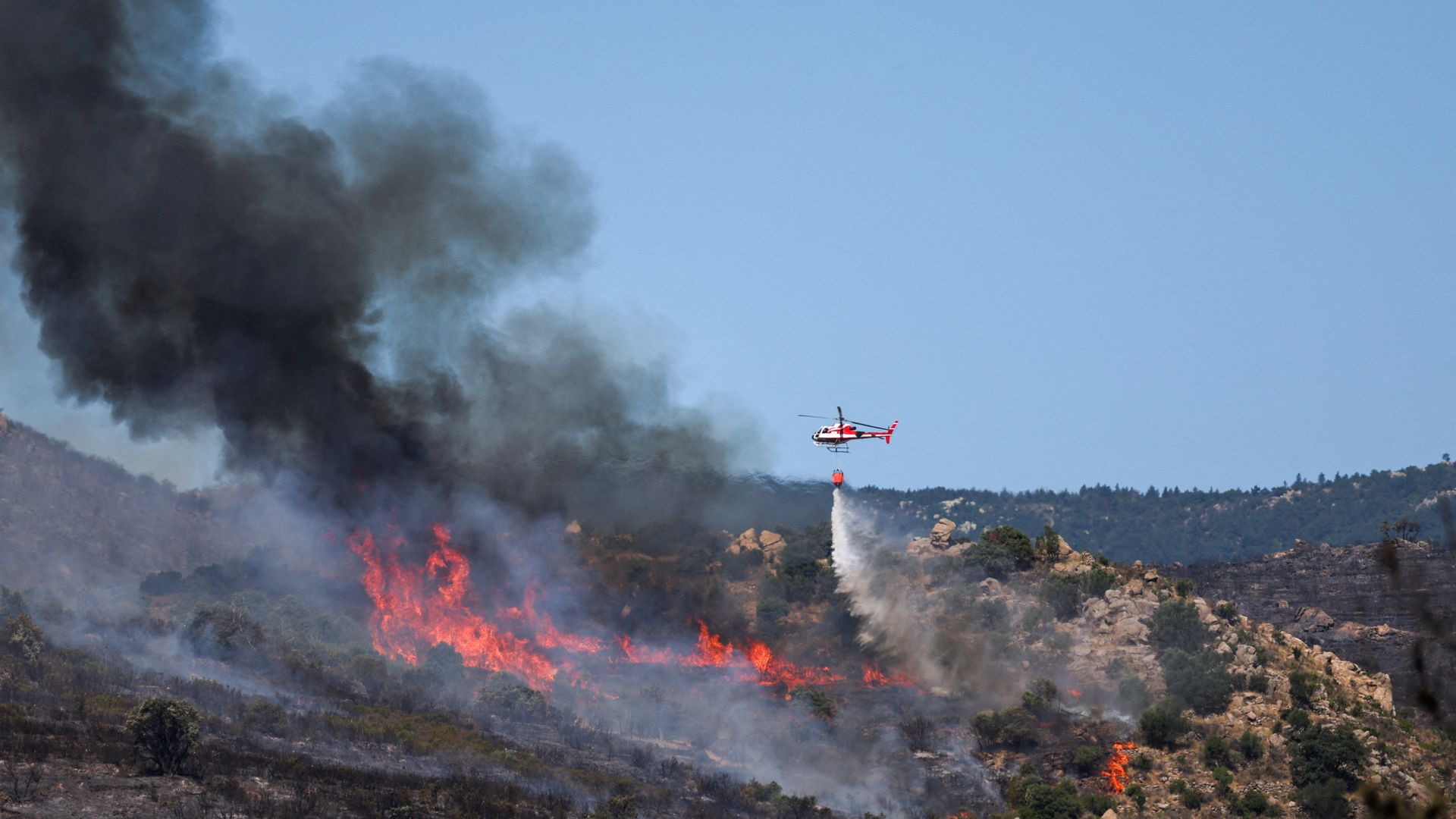
Europe is dry, baking, and burning. The summer wildfire season started an entire month early this year, and the consequences are turning fatal. A 22-year-old volunteer firefighter lost his life in the Savoie region of the French Alps. He spent the night battling an aggressive forest fire before being struck by a falling stone block on a steep slope at 5:00 AM on Wednesday. He was scheduled to start his career as a professional firefighter on September 1.
This isn't an isolated tragedy. It’s part of a sweeping, climate-driven emergency across southern Europe that has already forced more than 10,000 people to evacuate their homes. Early heatwaves in May and June completely parched the landscape. Now, even typical summer heat acts like a match on tinder.
Southern Europe is trapped in a dangerous cycle of extreme heat and explosive fire behavior. If you want to understand why these fires are moving faster, burning hotter, and becoming tougher to control, you have to look at the combined impact of unprecedented weather patterns and shifting landscape risks.
The Reality Behind the Alps and Pyrenees Blazes
Most people assume wildfires are exclusively a flatland or Mediterranean coastal problem. The tragedy in Savoie proves otherwise. Mountainous terrain introduces severe complications for fire crews, turning steep slopes into chimney-like structures that pull flames upward at terrifying speeds.
In Savoie, the rugged terrain itself became a hazard, leading directly to the loose rock fall that killed the young responder from the SDIS 73 emergency service.
Further south, the Trevillach wildfire in the Pyrenees-Orientales region near the Spanish border has already ripped through 4,900 hectares of land. Pierre Regnault de la Mothe, the local prefect, confirmed that the fast-moving front injured 16 people, including four firefighters. The intensity of the smoke and the unpredictable wind forced a massive evacuation across two dozen small towns and villages.
The fire got so close to key infrastructure that officials had to close public access to the third stage of the Tour de France between Granollers and Les Angles to give emergency vehicles an open path.
Why Europe is Burning Early
The World Meteorological Organization points out a stark fact: Europe is warming at more than twice the global average. We are seeing the compounding effects of a two-week surge in June temperatures that broke records and left a trail of thousands of excess heat-related deaths across France, Spain, and Belgium.
The ground never had a chance to recover. When a heatwave hits a landscape that has already lost all its soil moisture, the vegetation doesn't just dry out—it becomes volatile.
- The Early Start: Fire seasons traditionally peak in August. This year, major blazes started tearing through forests in late June and early July.
- The Human Toll: France recorded over 2,000 extra deaths in a single week during the June heat peak.
- The Scale: Combined fires across France, Spain, and Portugal have already devastated more than 19,000 hectares of land.
In Catalonia, Spanish authorities arrested a maintenance worker suspected of sparking a 2,200-hectare fire in the Les Gavarres protected natural area simply by using an angle grinder near dry roadside grass. When conditions are this extreme, a single spark from everyday work creates a multi-day inferno.
Straining the Limits of Mutual Aid
We are watching an emergency that outpaces local capacity. France and Portugal activated the EU Civil Protection Mechanism to share resources because their domestic teams are stretched to the limit.
The European Commission pre-positioned a record 777 firefighters from 14 different countries across high-risk zones in France, Spain, Portugal, Italy, Greece, and Cyprus.
While pre-positioning assets helps speed up initial response times, it doesn't solve the core issue. Firefighting planes dropping retardant can only do so much when simultaneous blazes break out across thousands of miles. Ground crews have to hike into punishing terrain under 40°C heat, wearing heavy protective gear, facing intense physical exhaustion and immediate environmental dangers like shifting winds and falling debris.
What Needs to Change Next
We can't rely solely on heroic emergency responses to handle an environment that is permanently changing. If you live in or travel through high-risk European zones, you need to understand the immediate tactical shifts required to survive and adapt to this new climate reality.
Clear Your Defensible Space
If you own property in rural southern Europe, clear all dead brush, dry grass, and low-hanging tree limbs within 30 meters of your home. Creating a clean buffer zone cuts down the chance of flying embers catching your roof on fire.
Respect Local Work Bans
During high-wind and high-heat alerts, do not use outdoor machinery like grinders, chainsaws, or mowers near vegetation. Governments are tightening enforcement, and accidental ignitions face heavy criminal penalties.
Prepare Your Evacuation Plan Early
Don't wait for an official knock on the door if smoke is visible in your valley. Pack a bag with essential documents, medication, and supplies. Know at least two exit routes from your village, as fast-moving blazes frequently block primary mountain roads.