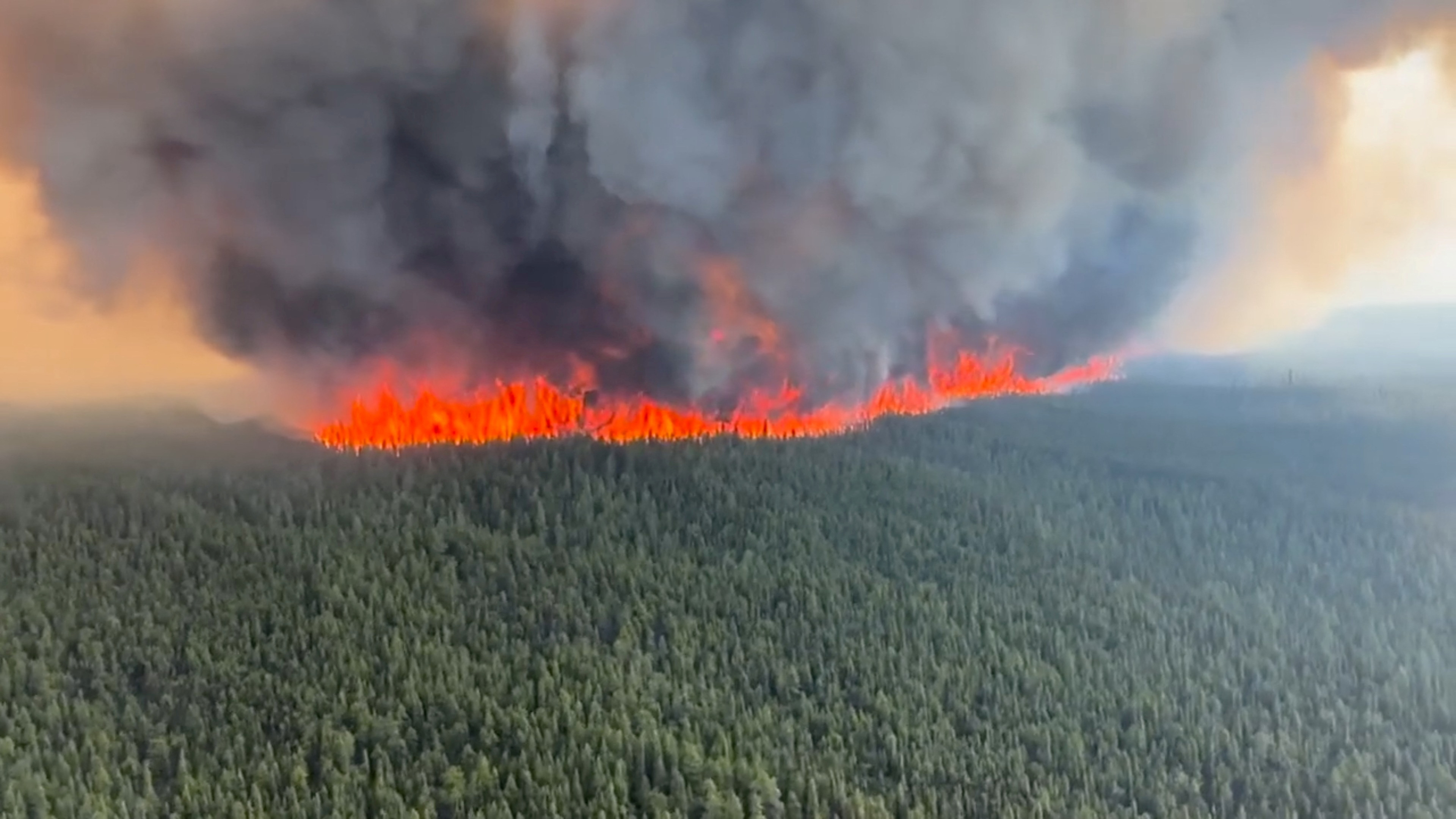
When you think of devastating wildfires, you probably picture the dry, sun-baked hills of Southern California or the eucalyptus forests of Australia. You do not usually picture the historic, lush canopy of the Fontainebleau forest just south of Paris.
Yet, that is exactly where firefighters recently spent two grueling days battling a blaze that swallowed nearly 10% of that UNESCO biosphere reserve. For a more detailed analysis into this area, we recommend: this related article.
We are seeing a terrifying shift across Western Europe. By July 2026, wildfires in France had already scorched over 41,000 hectares of land—nearly four times the historical average. Across the border in Spain, the situation is even grimmer: 330 fires have destroyed over 65,000 hectares and claimed 13 lives.
The scary part? We are only just entering the typical peak of the fire season. For broader context on this issue, detailed reporting can also be found on USA.gov.
The narrative we often hear is simple: "It is hot, so things burn." But that explanation misses the real, complex mechanics of why Europe is burning so early and so violently. If we want to understand how to survive this new normal, we have to look at the factors that the mainstream news overlooks.
The Compound Threat of Wet Winters and Scorching Junes
To understand why the 2026 fire season started with such fury, we have to look back a few months.
Early in the year, heavy storms and intense rain swamped much of Western Europe, drowning fields and replenishing reservoirs. Many assumed this moisture would act as a natural shield against summer fires.
It did the exact opposite.
Ample winter rain triggers rapid, explosive plant growth. When that "green wave" is immediately followed by record-breaking heat waves—like the scorching temperatures that baked France and Spain in June—that fresh vegetation dries out rapidly.
[Heavy Winter Rains] -> [Explosive Vegetation Growth] -> [Sudden June Heatwave] -> [Massive Volume of Dry, Volatile Fuel]
This sequence transforms lush undergrowth into fine, highly flammable fuel. When a spark hits, the fire does not just crawl; it sprints. This is why a historic forest like Fontainebleau, which rarely sees major fires, became a tinderbox.
Why Firefighters Cannot Save Every Forest
There is a common misconception that we can simply build a bigger firefighting force to solve this problem.
That is a dangerous illusion.
While France deployed firefighting planes to scoop water directly from the Seine River to save Fontainebleau, local resources are being pushed to their absolute limits.
As fire scientist Guillermo Rein of Imperial College London points out, when extremely dry vegetation combines with high winds, flames spread so fast that they instantly overwhelm local crews. Firefighters cannot stop an extreme, wind-driven wildfire once it gets going. They can only try to herd it away from homes.
The real failure is not a lack of firefighters; it is a failure of land management.
For decades, European forestry has prioritized dense, continuous tree cover. While great for timber and carbon storage, it creates uninterrupted paths for fire to travel. Without active forest thinning, controlled burns, and strategic firebreaks, we are essentially building giant wooden grids and waiting for a spark.
The Human Factor Behind the Sparks
It is easy to blame climate change for every fire, but climate change does not actually start fires. It merely creates the perfect conditions for them to thrive.
The vast majority of wildfires are started by humans—either through negligence, accidents, or deliberate arson.
In the case of the Fontainebleau blazes, local prosecutors quickly made arrests after fires broke out in different parts of the forest on different days, pointing strongly toward arson.
As heatwaves push more tourists and hikers into cooler forest areas, the risk of accidental ignition skyrockets. A discarded cigarette, a poorly cleared campfire, or even a spark from agricultural machinery can instantly trigger a disaster when the relative humidity drops into the single digits.
Moving Beyond Emergency Response
We have to stop treating these early-season wildfires as surprising, one-off natural disasters. They are predictable, recurring events.
To protect our communities and wild spaces, we need to shift our focus from reactive firefighting to proactive preparation.
- Create Defensible Space: If you live near a wooded area, clear dry leaves, brush, and low-hanging branches within 30 meters of your home. This simple step drastically increases the chances of your property surviving a passing fire.
- Support Controlled Burning: We must accept that fire is a natural part of many ecosystems. Using planned, low-intensity burns during the wet winter months reduces the fuel load, making summer fires much easier to manage.
- Rethink Forest Planning: Forest managers need to break up large, continuous stands of flammable pine and eucalyptus with bands of fire-resistant deciduous trees like oak and maple.
The data from the European Forest Fire Information System paints a clear picture: the old ways of managing our lands are no longer working in a hotter, drier world. Unless we adapt our forests and our safety habits to match this reality, the record-breaking seasons of today will simply become the baseline of tomorrow.