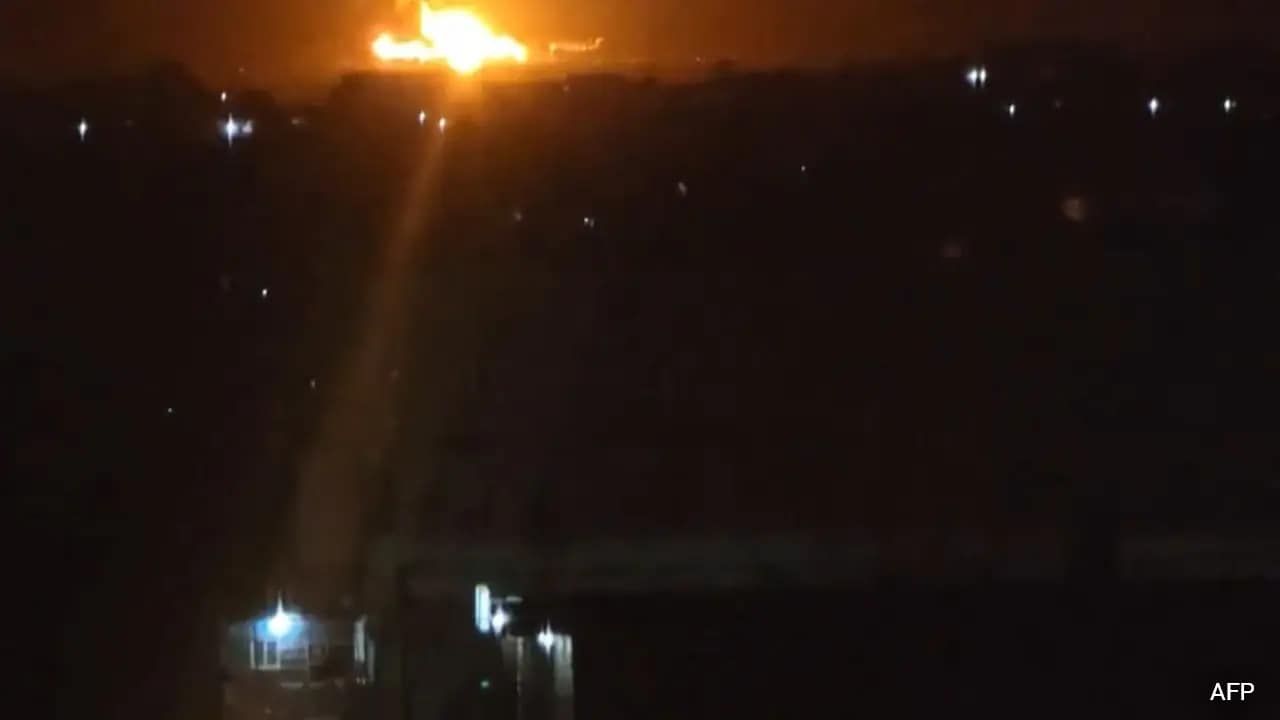
Air raids don't just happen in a vacuum. When bombs hit the strategic Red Sea hub of Mokha, killing six people and injuring eight others, the shockwaves ripple far beyond local borders.
If you've been following the shifting sands of Middle Eastern geopolitics, you know that Yemen is rarely just about Yemen. It's a proxy battleground where regional powerhouses, global shipping choke points, and major international players collide. The recent escalation involving Saudi-led coalition airstrikes targeting Houthi-held positions in Mokha marks a dangerous turn in a conflict many thought was simmering on a back burner.
Understanding the Real Stakes Behind the Mokha Port Strikes
Let's look at why this specific port matters so much. Control over Yemen's Red Sea coast isn't just about local territory. It's about maritime trade lanes that feed the global economy.
The Houthi movement staged a lightning offensive to seize control of Mokha and surrounding coastal areas. Why? Because holding these shores tightens their grip—and by extension, Iran's grip—on crucial maritime routes. When tankers and cargo ships have to navigate waters controlled by hostile or unstable factions, shipping insurance skyrockets, supply chains wobble, and energy markets panic.
Saudi Arabia views these advances as an existential threat. Riyadh has led a coalition backing Yemen's internationally recognized government since 2015, and they aren't going to stand by while Iran-backed groups cement control over vital waterways. That's why the bombs dropped on Mokha, and it's why more military friction is practically guaranteed.
The Diplomatic Scramble and International Responses
Wars are fought with weapons, but they're sustained or stopped through phone calls and diplomatic pressure. As the violence on the ground intensifies, leaders are scrambling for alliances.
Reports show that Yemen's governing body head, Rashad al-Alimi, reached out directly to Washington to request American military backing against the Houthi fighters. At the same time, diplomatic corridors buzzed with discussions involving Saudi Crown Prince Mohammed bin Salman pushing for direct intervention.
Even outside players are getting pulled deeper into the mud. Britain agreed to provide military support to Saudi Arabia to help counter the Houthi threat. When nations start picking sides in a regional escalation like this, the conflict transforms from a localized civil war into a wide-reaching security crisis.
What Most People Get Wrong About the Yemen Conflict
Many casual observers assume the war in Yemen started yesterday or that it's an isolated skirmish. The reality is far grimmer. The conflict has roots stretching back to the Houthi capture of Sanaa in 2014, morphing into one of the worst humanitarian catastrophes of our modern era.
While a fragile truce had frozen much of the direct combat since 2022, the underlying tensions never vanished. The moment wider Middle Eastern hostilities flared up—sparked by broader exchanges involving Israel, Iran, and Western powers—Yemen's frozen war thawed out almost overnight.
You can't separate the airstrikes in Mokha from the broader regional picture. Every missile fired, every port captured, and every diplomatic phone call tells the same story. The region is locked in a high-stakes standoff where neither side can afford to back down, and civilians pay the ultimate price for control over the coastline.
Track the movement of regional navies and watch the insurance rates on Red Sea shipping lanes if you want real-time indicators of where this conflict heads next. That is where the actual pulse of the war beats.