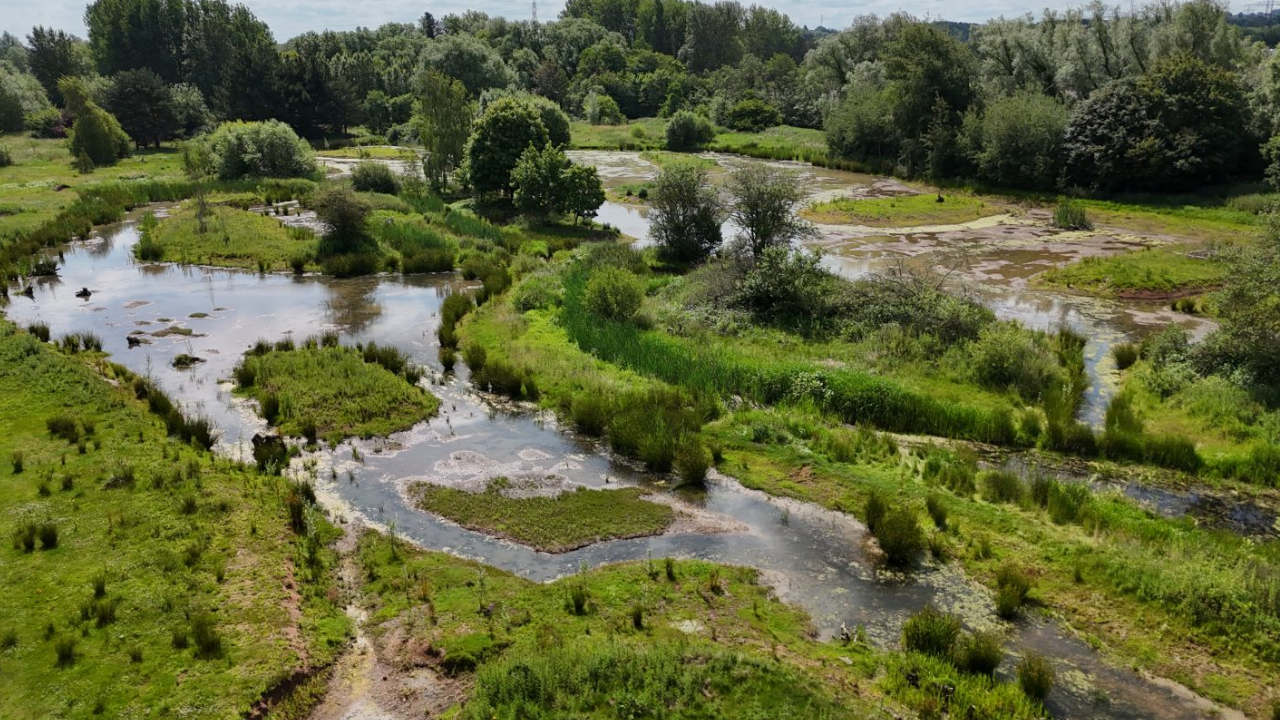
Industrial ruins don't usually become wildlife havens. Yet, that's exactly what's happening along the River Trent in Staffordshire.
Back in 2017, a 64-acre golf course built specifically for the workers of England's Rugeley Power Station shut down for good. Fast forward nine years, and heavy machinery is reshaping those manicured fairways into wetlands, wet grasslands, and shallow ponds. Known as Rugeley Riverside Park, this project completely flips the script on how we handle post-industrial brownfields.
If you think this is just another corporate greenwashing campaign, look closer at the engineering and ecological scope.
Rugeley Riverside Park and the Shift From Coal to Conservation
The story of Rugeley Power Station used to be about coal, electricity, and heavy smoke stacks. When the power plant went offline, it left behind a massive 139-hectare footprint. ENGIE handled the heavy lifting of land remediation before selling the wider site to Vistry Group for a massive housing development consisting of roughly 2,300 homes, a school, and local community spaces.
Instead of paving over every square inch, the developers carved out space for nature. Staffordshire Wildlife Trust officially took ownership of the 64-acre Riverside Park land from ENGIE. Working alongside the Environment Agency and Severn Trent Water, they aren't just planting a few trees. They're actively lowering sections of the local floodplain to reconnect the land with the River Trent.
Why does this matter? Because rivers need room to breathe.
When you lower the floodplain and dig out interconnected ponds, you create natural water storage. During heavy seasonal rains, this newly engineered wetland absorbs overflow, reducing downstream flood risks for nearby communities. At the same time, it establishes a functional green corridor that opens up previously restricted riverbanks to the public.
What Actually Lives in a Restored Power Station Wetland
You might wonder if wildlife will actually return to an industrial cleanup site. Nature usually beats expectations if you give it the right blueprint.
Local conservationists expect the newly formed aquatic channels and wet meadows to draw a surge of biodiversity. Little egrets, specialized wading birds, and darting dragonflies are prime candidates to colonize the area. Staffordshire Wildlife Trust has even flagged the site as a prime future habitat for otters moving along the Trent corridor.
This isn't an isolated experiment either. The timing aligns with broader regional frameworks. The Wildlife Trusts recently launched the Rivers 2040 initiative, an 18-month project analyzing how restoring ecosystems along the 220-mile-long Trent can deliver massive environmental and social dividends. Rugeley Riverside Park sits right at the center of this broader push to revive England's battered waterways.
Accessing the New Landscape
Conservation areas are often locked behind fences to protect fragile species. Rugeley Riverside Park takes a different approach by balancing public access with wildlife protection.
Visitors heading to the site when it opens will find a dedicated 1.5-kilometre circular route. Walkers can explore terrain that was off-limits for decades—first as a private industrial perk for power plant employees, and later as a fenced-off remediation zone. Strategic viewing areas and interpretive signs will give people a firsthand look at how floodplain restoration works in practice.
You get a walkable green space, the local ecosystem gets vital flood defense and habitat restoration, and a forgotten piece of industrial history gets a second life.
Check local council guidelines or Staffordshire Wildlife Trust updates if you plan to visit the trail upon its opening. Wear proper waterproof footwear if you go after a heavy rain, because active wetlands tend to stay muddy by design.