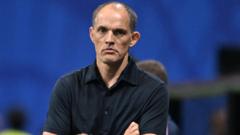
You can't win a World Cup knockout match if you haven't slept for 36 hours. It sounds like basic common sense, but right now, Thomas Tuchel and the Football Association are treating sleep as a critical tactical battleground.
Following a grueling 2-1 comeback victory over the Democratic Republic of Congo, courtesy of a late Harry Kane brace, England booked a Round of 16 date with co-hosts Mexico at the iconic Azteca Stadium. It's the ultimate trial by fire. But the real trouble won't start when the referee blows the whistle on Sunday night. It starts at midnight in the hallways of a secret hotel.
Mexican football fans have turned hotel psychological warfare into an elite art form. Just days ago, Ecuador's squad spent the entire night before their knockout match listening to a coordinated assault of air horns, fireworks, revving motorbikes, and bass-heavy loudspeakers right outside their windows. Ecuador lost 2-0. The Ecuadorian Football Federation complained to FIFA, but complaints don't restore rapid eye movement sleep.
England watched that happen and decided to completely change their travel playbook. They're deploying a blend of high-security secrecy and specialized sleep technology to ensure the players actually get some rest.
The Psychological Warfare Outside the Team Hotel
The practice of "serenading" rival teams is legendary in Latin American football. It isn't a random gathering of a few rowdy teenagers. It's a highly organized, strategically timed operation designed to induce maximum fatigue in the opposition's starting eleven.
Fans track team buses from the airport, cross-reference hotel bookings, and flag down luxury accommodations across the city. Once the clock strikes midnight, hundreds or thousands of supporters assemble. The goal is simple. Keep the visiting athletes awake until sunrise.
For an elite athlete, a single night of severely disrupted sleep completely wrecks reaction times, visual tracking, and cognitive decision-making. At an altitude of 2,240 meters in Mexico City, where oxygen levels are already low, adding sleep deprivation to the mix is a recipe for physical collapse. Tuchel knows this. The FA sports science staff knows this. That's why the logistics team has spent the last 48 hours working like a counter-intelligence agency.
Breaking Down England Strategy Against the Noise
The first line of defense is total anonymity. The FA is attempting to keep the team's exact accommodation in Mexico City completely off the grid. Local police escorts will be used, but England is avoiding the traditional flagship five-star hotels that are easily spotted by local fan groups.
But secrecy only goes so far in the digital age. Someone always leaks a location. If fans find the hotel, England's medical team is relying on physical countermeasures.
The squad has been issued specialized sleep packages designed to block out high-decibel disturbances. This includes custom-molded acoustic earplugs that block out low-frequency engine rumbles and high-pitched horns without causing physical discomfort during sleep. Alongside the earplugs, players are using portable white noise and pink noise generators. These devices emit steady, masking frequencies that drown out sudden spikes in external volume, like a firework exploding down the street.
The FA has also brought in specialized light-blocking eye masks and portable black-out curtains. It sounds extreme, but even flashing lights from fan flares can disrupt melatonin production through closed eyelids. Every single player's sleep cycle is being monitored via wearable biometric rings, letting Tuchel’s staff see exactly who is rested and who is running on fumes before match day.
The Altitude Trap Thomas Tuchel is Desperately Trying to Avoid
The noise is only half the problem. The secondary issue is the thin air of Mexico City. Tuchel openly admitted to reporters that playing the co-hosts on their own turf is a massive disadvantage because England hasn't had the weeks required to properly acclimate to the high altitude.
Ideally, England would fly into Mexico City just hours before kickoff, play the game, and immediately fly back down to sea level. This strategy stops altitude sickness from fully setting in. However, FIFA rules state that knockout teams must be present in the host city at least 24 hours before the match begins.
This creates a brutal logistical paradox.
Tuchel wants a late arrival to protect his players' lungs. But a late arrival means spending the critical night before the game directly in the crosshairs of the local fan base. If they arrive too early, the altitude catches up to them. If they arrive right at the 24-hour mark, they risk walking straight into a wall of sound.
To mitigate this, the coaching staff has been utilizing simulated conditioning environments, including heat and low-oxygen training setups at their primary base. It's an attempt to shock the players' respiratory systems into adapting before they even touch down in Mexico.
Actionable Steps for Surviving High Stakes Sleep Deprivation
While you probably aren't playing in front of 80,000 screaming fans at the Azteca this weekend, the principles England is using to protect their recovery apply to anyone dealing with high-stress, noisy environments or travel-induced insomnia.
- Layer your audio defenses: Don't just rely on earplugs or a white noise machine alone. Use custom earplugs to block the physical sound waves, and overlay a pink noise machine to mask whatever bleeds through.
- Control the light spectrum: Use true blackout materials to prevent external ambient light or flashing sources from disrupting your circadian rhythm.
- Keep your core temperature low: High stress and anxiety cause your body temperature to spike, making deep sleep impossible. Keep your sleeping environment cool, around 18 degrees Celsius, to force your body into a resting state.
The clash on Sunday night will be defined by fine margins. Harry Kane is chasing goal-scoring history, but his ability to find the back of the net might depend entirely on whether an acoustic earplug can survive a barrage of Mexican air horns.


