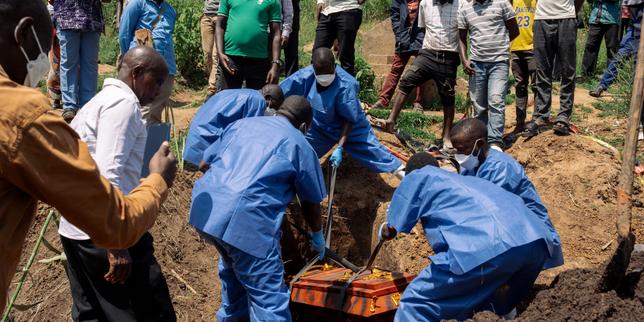
The world is looking the other way while a familiar nightmare unfolds in the Democratic Republic of the Congo. It's happening faster than before. Within just a few months, a massive spike in infections has shattered previous containment timelines. By July 2026, the numbers have surged past 1,700 confirmed cases and more than 600 deaths.
If you think this is just another standard outbreak that the global health community knows how to handle, you're dead wrong. The current situation in the eastern DRC, particularly in the Ituri and North Kivu provinces, represents a terrifying shift in the fight against hemorrhagic fevers. We aren't fighting the usual suspect. This crisis is different, and the harsh reality is that our modern medical toolkit is largely useless right now.
To understand why this containment effort is failing so spectacularly, we have to look at the intersection of mutated viral genetics, intense regional conflict, and a global health network that grew far too complacent after past victories.
The Zero Vaccine Problem Changing the Rules of Engagement
Everyone remembers the massive triumph of the Ervebo vaccine during previous crises. It saved countless lives. It gave health workers a shield. But that shield doesn't work here.
The current epidemic is driven by the Bundibugyo species of the virus, not the Zaire strain. This distinction isn't just academic. It's a matter of life and death. The highly effective vaccines deployed in recent years were engineered specifically to target the Zaire strain. Put them up against Bundibugyo, and their efficacy drops to zero.
We are essentially facing a brand-new monster without armor. Health workers are entering isolation wards without the biological protection they relied on during the outbreaks of the last decade. There's no approved antiviral treatment ready for wide distribution either. The World Health Organization only recently added the first diagnostic test for the Bundibugyo strain to its emergency use list, and clinical trials for experimental treatments are barely getting off the ground.
When patients arrive at treatment centers in places like Bunia or Mongbwalu, doctors can only provide supportive care. Rehydration. Pain management. Treating secondary infections. That's it. When you lack a silver bullet, your only option is to slow the spread through old-fashioned, brutal groundwork. And that groundwork is failing because of where the virus chose to strike.
Gold Mines and Conflict Zones Creating the Perfect Storm
The epicenter of this crisis sits in Ituri province, a region defined by two things: immense mineral wealth and endless armed conflict. The virus likely flared up around January or February 2026 in the town of Mongbwalu, a notorious hub for small-scale, artisanal gold mining.
Think about how an artisanal gold mine operates. Thousands of young men and families move constantly between makeshift camps, deep pits, and local trading towns. They live in cramped, unsanitary conditions. When someone falls ill with a fever, they don't immediately go to a clinic. They keep working, or they travel back to their home villages to seek care from family members or traditional healers.
This extreme mobility acts as a biological supercharger for the virus. By the time a single case is officially confirmed by laboratory analysis, that individual has already interacted with hundreds of people across multiple communities. The virus has already ridden on the back of motorbikes and public transport into major urban centers like Butembo and Beni in North Kivu. It even managed to hitch a ride all the way to Kampala, Uganda's capital, via cross-border trade routes.
Controlling an epidemic requires tracking down every single person who touched an infected patient. It requires contact tracing. But how do you trace contacts when the population is constantly fleeing violence? Eastern DRC is home to dozens of active rebel groups. Armed militias regularly clash with government forces and peacekeepers.
When a village is attacked, everyone runs. Contacts disperse into the dense equatorial forests or crowded displacement camps. Health workers cannot safely enter these red zones without military escorts, which immediately creates distrust among the local population. You can't run an effective medical response when the people you are trying to save think you are aligned with the military forces they fear.
Breaking Down the Numbers of a Growing Threat
The sheer speed of this transmission window highlights just how out of control the situation has become. Look at the timeline of the official data from international monitoring groups.
- In mid-May 2026, the Congolese Ministry of Health officially declared the outbreak after a cluster of deaths in Ituri. They initially noted around 246 suspected cases.
- By the end of May, laboratory-confirmed cases jumped to over 320, spreading across three separate provinces.
- By mid-June, the case count ballooned past 890.
- By the first week of July, the numbers crossed 1,700 confirmed cases, with the death toll climbing past 580.
A crude case fatality ratio hovering around 30 to 35 percent means this strain is highly lethal, though slightly less explosive than the worst Zaire outbreaks. Don't let that lower percentage fool you. The true death toll is almost certainly much higher. Many people are dying in remote villages before they can ever be tested, their bodies buried traditionally, which initializes new chains of infection among mourning relatives.
The Fatal Flaw in International Complacency
Why did it take so long to wake up to this threat? The international community fell into a trap of dangerous optimism. Because we successfully rolled out vaccines and ring-vaccination strategies in past years, global donors assumed the Ebola problem was solved. Funding shifted elsewhere. Preparedness stockpiles focused almost exclusively on the Zaire strain.
When the Bundibugyo strain emerged in Mongbwalu, the local health infrastructure was already depleted. Diagnostic laboratories lacked the specific reagents needed to identify this specific viral signature quickly. Weeks were lost. Those lost weeks allowed the virus to establish a massive foothold in the mining communities.
Local health workers paid the ultimate price for this delay. Dozens of doctors, nurses, and laboratory technicians have caught the virus and died since May. When a local hospital loses its chief nurse, the entire facility collapses. People stop coming because they see the hospital as a place of death rather than healing. The healthcare system itself becomes a vector for panic.
What Needs to Change Immediately to Stop the Bleeding
We can't keep using the playbook from 2018 or 2021. The reality on the ground has changed, and the response must pivot sharply if we want to prevent this from becoming a continental disaster.
First, the immediate focus must shift from searching for a non-existent vaccine to radical community engagement. The response teams need to stop arriving in armored vehicles surrounded by government soldiers. They need to work directly with trusted local leaders, market women associations, and traditional authorities who actually hold sway over the community. If the community doesn't trust the thermometer, they won't report the fever.
Second, isolation protocols must be decentralized. Forcing sick individuals to travel long distances to massive, centralized treatment centers in major cities only encourages people to hide their sick relatives. Small, localized isolation tents built with community consent right next to existing health posts will keep infected individuals from traveling and spreading the pathogen further.
Third, regional borders need real, resourced screening, not just token checkpoints. The spread to Uganda shows how porous these borders are. Every major mining market and transport node needs rapid diagnostic tools that can deliver results in hours, not days.
The epidemic in the DRC isn't slowing down. It's moving faster because the structural realities of eastern Africa provide it with the perfect environment to thrive. If the global health response remains slow, rigid, and hyper-focused on the tools of the past, this record-breaking transmission rate will soon look like a minor prelude to a much wider catastrophe. The clock is ticking, and the current strategy is losing the race.