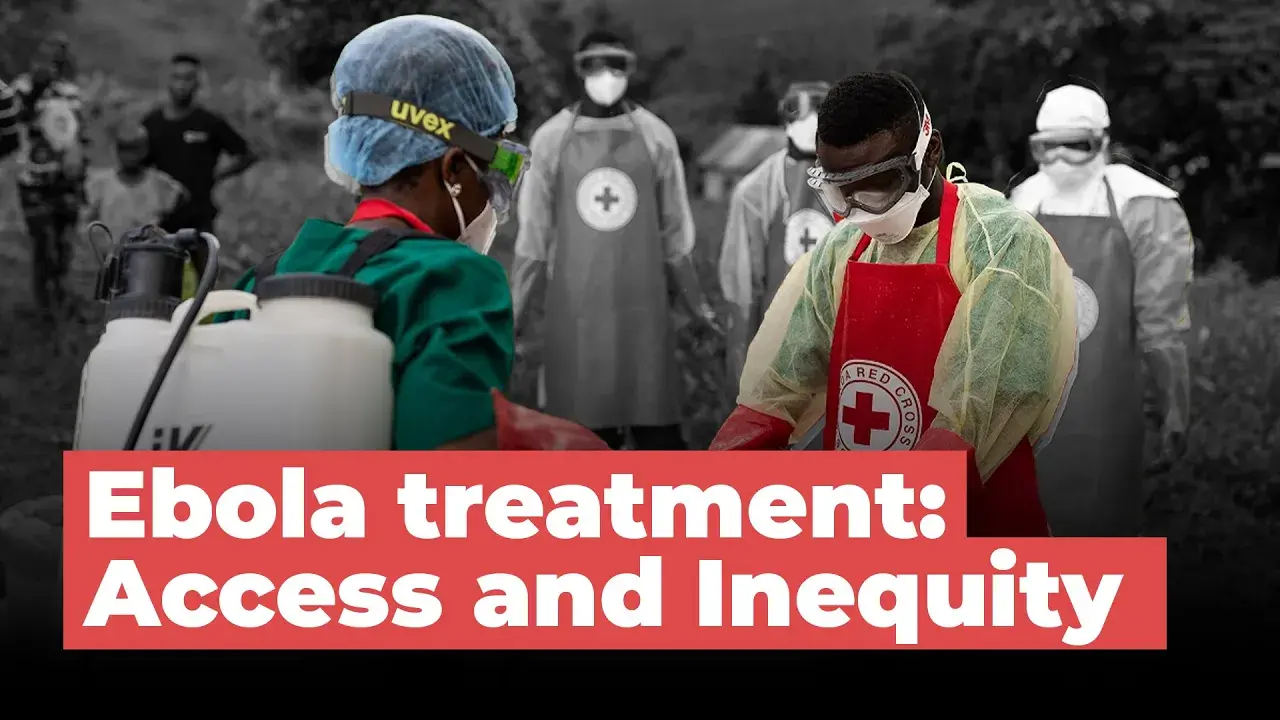
Survivational odds for Ebola shouldn't be a coin toss. Yet when the hemorrhagic fever strikes, fear often drives people away from the exact places that can save them. In the Democratic Republic of Congo, currently battling its seventeenth recorded Ebola outbreak, the virus has claimed over 170 lives. Amidst the tension of the eastern Ituri province, clinical isolation units are seeing a slow but profound shift. Survivors are walking out of treatment centers alive, offering a blueprint for how early medical intervention changes everything.
The traditional narrative around Ebola focuses heavily on mortality rates, which historically climb as high as 50%. The current outbreak involves the Bundibugyo strain, which carries a lower but still formidable mortality rate of around 30%. Because there is no widely deployed vaccine or targeted antiviral drug specifically approved for this particular strain, a dangerous misconception persists that entering an Ebola Treatment Center (ETC) is a death sentence. The real data proves otherwise.
The Power of Optimized Supportive Care
When a patient arrives early at an isolation ward, medical teams do not just sit back because a targeted drug doesn't exist. They deploy optimized supportive care. This means aggressively managing pain, treating secondary infections, maintaining strict fluid balances, and ensuring targeted nutritional intake.
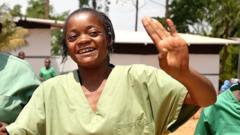
Daniel Kitambala, a local subsistence farmer who recently beat the virus, serves as a living testament to what happens when you don't wait out the symptoms at home. Upon his discharge, he raised his hands in a victory salute, urging his community to stop avoiding hospitals. The difference between survival and fatal organ failure often comes down to a matter of days—or even hours—in getting that initial intravenous line set up.
According to the World Health Organization (WHO), early supportive care drastically improves the odds of surviving filovirus diseases like Ebola and Marburg. Dehydration and electrolyte imbalances are what kill most patients, not the virus itself.
Why Traditional Healers Still Beat Hospitals to the Punch
You have to look at the cultural reality to understand why people delay care. In many rural communities across the Congo Basin, sudden, severe illness is viewed through a spiritual lens rather than a biological one. High fevers, intense headaches, and vomiting frequently send the afflicted down paths leading to traditional healers rather than modern isolation units.
This choice has devastating consequences. Traditional healing spaces lack personal protective equipment (PPE). A single patient seeking spiritual intervention can easily transform a local shrine into a super-spreader site. When medical teams try to track down contacts later, they face a wall of distrust.
Public health experts emphasize that countering this trend requires absorbing local healers into the response strategy rather than alienating them. If a healer knows the signs of hemorrhagic fever and immediately refers the patient to an ETC, containment succeeds. If they try to treat it with herbs, the outbreak expands.
Cross Border Risks and the Reality of Regional Spread
This isn't just a local crisis confined to a remote forest. The eastern region of the DRC shares highly porous borders with Uganda, South Sudan, and Rwanda. People cross these borders constantly by bus, motorbike, and boat to trade, visit family, or flee conflict.
The Africa CDC and WHO recently launched a joint continental response plan to step up screening at these border crossings. Because the incubation period for Ebola ranges from 2 to 21 days, an infected person can easily cross a border before showing a single symptom. International coordination isn't a bureaucratic luxury here; it is the only wall preventing a localized emergency from turning into a regional disaster.
Practical Next Steps for Global Health Preparedness
We cannot afford to treat every Ebola outbreak like a surprise. Containment relies on execution, not new scientific breakthroughs.
- Fund local frontline training immediately. Healthcare workers need continuous access to PPE and training on filovirus clinical guidelines before an outbreak starts, not weeks after.
- Integrate community leaders and traditional healers. Public health agencies must actively build relationships with trusted community figures to dismantle the fear surrounding treatment centers.
- Establish decentralized diagnostic hubs. Waiting days for a blood sample to travel to a capital city for PCR testing destroys the window for early intervention. Fast, regional testing saves lives.
The victories outside the treatment centers in the DRC show that the virus is winnable. Survival shouldn't depend on luck; it depends on getting patients through the clinic doors before the organs start to fail.