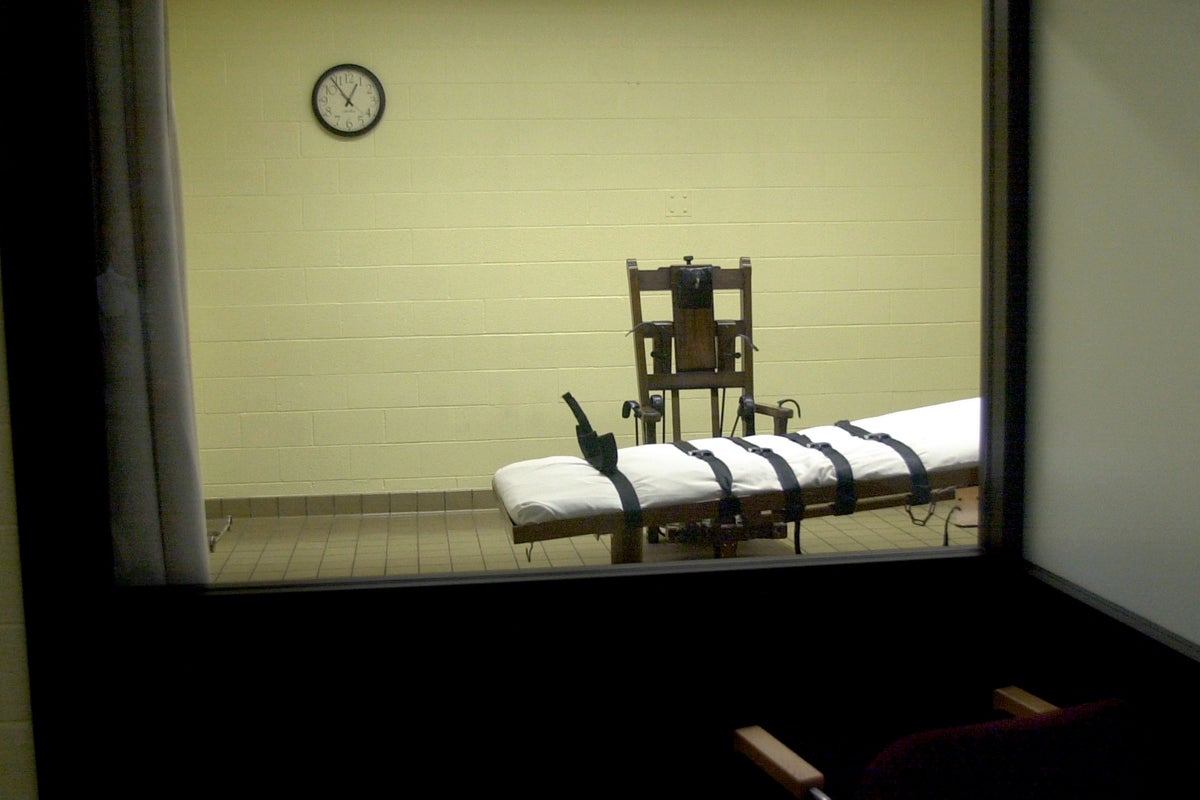
A 74-year-old man infirm with liver disease presents no active threat to the public while locked deep inside a maximum-security prison. But Florida plans to wheel Dusty Ray Spencer into the execution chamber anyway. This decision forces us to confront a deeply uncomfortable reality about the American justice system. When does the passage of time turn a mandatory punishment into something else entirely?
The legal team representing Spencer, a U.S. Marine Corps veteran, fought up to the final hours before his scheduled execution at Florida State Prison. They didn't base their desperate appeals on a claim of innocence. Instead, they focused heavily on a straightforward physical reality: Spencer is old, he is sick, and the three-drug lethal injection cocktail carries a heightened risk of causing agonizing pain due to his advanced liver disease.
The U.S. Supreme Court denied his final appeal without comment, clearing the way for the state to carry out the sentence. If everything moves forward as scheduled, Spencer will become the oldest inmate executed in modern Florida history.
The Brutal Reality of the 1992 Crime
To understand how Spencer ended up on death row for more than 34 years, you have to look back at the horrifying chain of domestic violence that devastated his family in Orange County. This wasn't a sudden, unexpected tragedy. It was a prolonged, premeditated attack that local law enforcement failed to stop.
In December 1991, Karen Spencer asked her husband to move out of their home after a bitter argument over business finances. Dusty Ray Spencer choked her, beat her, and threatened her life. He was arrested, but the system didn't keep him contained. While sitting in a jail cell, he called Karen and delivered a chilling warning: he was going to finish what he started the second he got out.
He kept that promise. On January 18, 1992, Spencer returned to the home and assaulted Karen. When her teenage son, Timothy, rushed into the room to save his mother, Spencer beat the boy over the head repeatedly with a clothes iron. A week later, Spencer trapped Karen outside the house, striking her with a brick. Timothy tried to defend his mother with a rifle, but the weapon misfired. Spencer turned on the boy with a knife, forcing the teenager to run for help.
By the time police arrived, Karen Spencer was dead. The medical examiner later testified that she suffered four to five stab wounds to the chest, blunt force trauma to her head, and deep defensive cuts on her hands. She bled to death over a painful ten to fifteen minutes.
The Changing Standards of Florida Capital Punishment
The state convicted Spencer of first-degree murder, attempted murder, aggravated assault, and aggravated battery. But the way he received his death sentence highlights a massive legal shift that makes his impending execution highly controversial today.
The jury in Spencer’s trial did not return a unanimous decision for death. They split 7-5.
Under current legal standards across the United States, a 7-5 jury split cannot send a person to the execution chamber. In fact, if Spencer committed this exact crime today, he wouldn't be eligible for the death penalty under Florida law, which now requires a supermajority of at least 8-4 even after recent legislative rollbacks. In almost every other state, a unanimous 12-0 vote is required.
Five people on that original jury looked at Spencer’s background—including his honorable service in the Marine Corps and his participation in rescue missions in the Philippines—and decided he should serve a life sentence instead. Yet, because of the laws in place three decades ago, those seven votes were enough to seal his fate.
When Capital Punishment Meets Geriatric Care
Executing elderly inmates is becoming an unavoidable trend in the American corrections landscape, and Florida is leading the charge under Governor Ron DeSantis. The state oversaw a modern record of 19 executions in 2025 alone, and Spencer marks the ninth execution of 2026. Just weeks from now, on July 14, Florida plans to execute another 74-year-old inmate, Dennis Sochor.
This aggressive pace exposes a major logistical and ethical breakdown. When an inmate spends over three decades fighting appeals, the state stops managing a dangerous criminal and starts managing a geriatric patient.
| Florida Execution Statistics | Impact and Scope |
|---|---|
| Spencer's Age | 74 years old (Oldest in modern state records) |
| Time on Death Row | Over 34 years |
| 2025 Florida Executions | 19 (Led the United States) |
| 2026 Florida Executions | 9 completed or scheduled by late June |
Advocates for alternatives to capital punishment argue that carrying out a death warrant on an elderly man with severe liver disease serves no punitive purpose. Spencer's body has already decayed behind bars. He relies on prison healthcare to survive day-to-day, and his spiritual advisors describe him as a frail man focused entirely on his faith.
The state counters that the passage of time does not erase the debt owed for a brutal murder. From the perspective of prosecutors and the state government, delaying an execution due to aging simply rewards an inmate for surviving the lengthy appeals process.
The Immediate Legal Next Steps
If you are tracking the status of capital punishment laws or the use of lethal injection protocols on aging inmates, focus your attention on these two specific developments:
- Monitor the Executive Orders: Watch the office of Governor Ron DeSantis for any last-minute temporary stays regarding the upcoming July 14 execution of Dennis Sochor, which hinges on similar age-related constitutional challenges.
- Track Clemency Petitions via Advocacy Groups: Review the active legal filings and public safety briefs hosted by Floridians for Alternatives to the Death Penalty to see how defense attorneys are pivoting their arguments for other elderly inmates currently on death row.