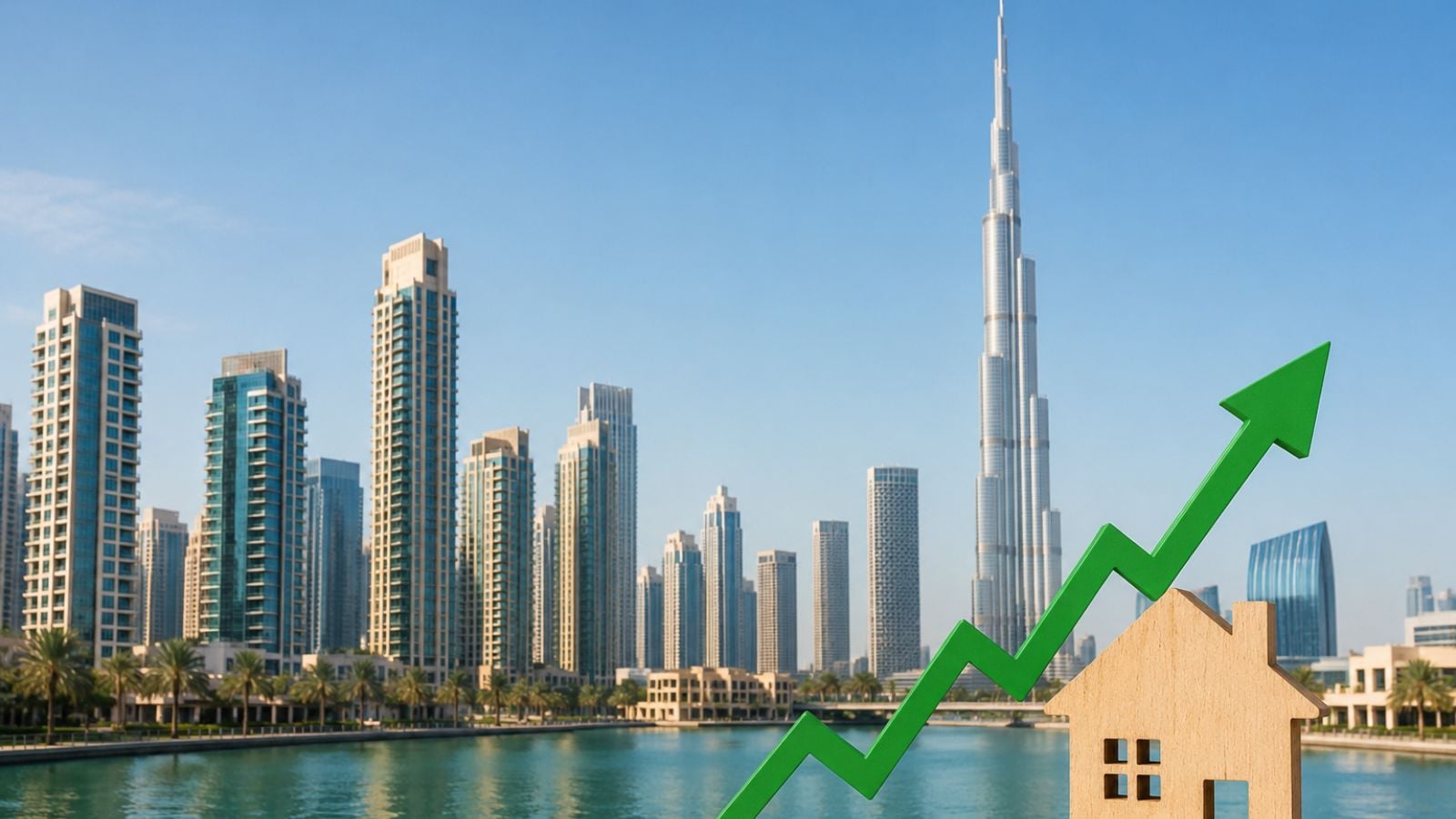
Headlines love a good crisis. When geopolitical tensions between the US and Iran escalated earlier this year, commentators quickly predicted the absolute collapse of the Dubai property market. Some market watchers panicked, pointing to month-on-month transaction drops and screaming that the fairy tale was over. But if you look past the immediate panic and look at the actual data from the first half of 2026, a very different picture emerges. The numbers show a market that isn't crumbling at all. It's adjusting, stabilizing, and in many areas, continuing to grow.
Investors who pulled out in a panic missed the bigger picture. Dubai property sales managed to rack up a massive AED 225.7 billion ($61.4 billion) in residential transactions during the first half of 2026. Yes, that is a 16.1% drop compared to the record-breaking euphoria of H1 2025, which saw AED 269.1 billion. But context matters. That AED 225.7 billion figure is still nearly 15% higher than the first half of 2024. More importantly, average residential prices actually climbed to AED 1,900 per square foot, marking a 6% year-on-year increase from the AED 1,800 per square foot average in 2025. You can call it a slowdown if you want, but a market where prices rise 6% during a regional conflict isn't in terminal decline.
The Sentiment Gap Versus Asset Reality
Markets run on two separate tracks: how people feel and what people actually do. When the conflict intensified around March and April, buyer anxiety spiked. The Dubai Financial Market (DFM) Real Estate stock index took a massive hit, crashing 34% at its peak. Stocks are liquid, easy to dump, and hyper-reactive to bad news.
The brick-and-mortar reality was totally different. Real estate consultancy ANAROCK pointed out that while property stocks cratered, actual residential property prices only softened by a minor 4% to 7% between February and April. That is the widest gap between paper sentiment and hard asset performance ever recorded in a Dubai crisis.
Why didn't physical real estate prices follow the stock market off a cliff? Because real estate transactions take time, and property owners aren't willing to panic-sell their physical wealth at a massive discount just because of a bad news cycle. Once ceasefire talks started making headway, the transaction volume bounced right back. During the recovery phase, weekly residential sales volumes surged back up to AED 10 billion. Investors realized the underlying infrastructure hadn't changed.
The Cash Cushion That Protects Capital
Western real estate markets are tied to the whims of central banks and interest rate hikes. If mortgage rates climb a couple of percentage points in London or New York, the entire buyer pool shrinks. Dubai operates on a completely different financial system.
Roughly 80% of all residential property transactions here are cash-funded. Think about that for a second. When four out of five buyers don't need a bank to approve a loan, the entire ecosystem becomes insulated from global interest rate shocks. Cash buyers don't panic about monthly mortgage payments. They care about capital preservation, yield, and long-term stability.
This massive cash cushion explains why off-plan transactions stayed remarkably steady. Throughout the entire turbulent first half of 2026, off-plan sales consistently made up 70% to 77% of all market activity. Buyers were still cutting checks for properties that wouldn't be finished for two or three years, showing that their long-term trust in the city remained completely intact. They looked past the temporary military escalation and bet on the long-term future.
History Shows This Story Before
To understand where the market is going, look at how it handled past shocks. Dubai has spent the last two decades building an economy designed to absorb external pressure.
During the Global Financial Crisis of 2008 to 2010, the city wasn't ready. Property prices fell by a devastating 40%, and it took nearly three and a half years for the market to recover. It was a painful, structural lesson. Fast forward to the oil price collapse of 2015 and 2016. Media outlets predicted doom, but prices only dipped by a tiny 2%. Why? Because Dubai had successfully diversified. Oil makes up less than 1% of the city's GDP today.
Then came 2020 and the global pandemic. Residential prices dipped around 6%, but the city reopened faster than almost anywhere else on earth. The market recovered fully within 13 months, setting off the massive bull run that lasted through 2025.
The 2026 Iran conflict is just the latest test. Prices corrected briefly by 4% to 7%, and the recovery cycle began within less than four months. This tells us that the market has become incredibly efficient at processing bad news. Shocks that used to break the system for years now cause minor, temporary stumbles.
Recognizing the Two Halves of the Market
It's dangerous to treat the whole city as one uniform market. If you only read the sensational reports from certain Western outlets, you might believe luxury sellers are dumping properties at a 25% discount. Buying agents dealing exclusively with ultra-high-net-worth individuals have reported that some nervous European investors packed up and left in March, forcing some desperate sellers to slash asking prices on multi-million-dollar villas.
That is definitely happening at the absolute peak of the luxury market, but it doesn't represent the broader economy. Knight Frank data shows that Dubai still managed to log 296 home sales worth over $10 million in the first half of 2026. The total value of these ultra-prime deals actually rose 14% year-on-year to $5.1 billion. While many of those deals were initiated before the conflict began and simply registered later due to administrative delays, it proves that global wealth isn't entirely abandoning the city.
The market is moving out of its easy phase. The days of buying any random apartment and watching it double in value are over. We are entering a highly selective phase where micro-market details matter immensely.
Prime and Emerging Zones
Established luxury hubs like Palm Jumeirah and Downtown Dubai are holding firm because global wealth always looks for blue-chip assets during times of trouble. Meanwhile, infrastructure-driven corridors are seeing massive transactional growth. Dubai South has been the top-performing area for four straight months, showing a month-on-month transaction volume surge of over 111% in June. This is where real, long-term infrastructure investment is happening.
Mid-Market Risks
The real risk lies in the mid-market areas flooded with new supply. Suburban apartment complexes that lack unique features or strong transit links are going to see very flat price action. If you're holding property in a high-supply, low-demand suburban pocket, prepare for a long period of stagnation.
Who Is Still Buying These Properties
The buyer demographic shifted heavily over the last couple of years, creating a much broader economic base. Buyers from over 150 countries bought property here recently.
Indian buyers lead the market, making up 22% of total transactions. UK buyers follow closely at 17%, and Chinese investors sit at 14%. This diverse global mix means the market doesn't rely on the economic health of just one country or region. If one buyer group slows down, another steps in to fill the gap.
People are also buying for much more practical reasons than they used to. The breakdown of buyer motivations shows a mature market:
- 38% buy for direct end-use as their primary home.
- 28% buy to secure rental income.
- 21% buy to get the Golden Visa residency.
- 13% buy strictly for capital preservation.
When nearly 40% of your buyers are purchasing properties to actually live in them, you aren't dealing with a speculative bubble. You're dealing with a real city experiencing massive population growth. The city added about 470 new residents every single day last year, pushing the total population past 4.03 million. Those people all need places to live, which keeps the rental market highly competitive.
Actionable Next Steps for Investors
Don't panic-sell your assets based on sensational international news headlines. The macroeconomic fundamentals, including population growth, cash buyers, and structural demand, remain incredibly strong.
Shift your focus entirely away from broad city-wide trends and focus on micro-markets. Avoid generic, supply-heavy mid-market apartment developments. Instead, target high-growth infrastructure corridors like Dubai South or premier, supply-constrained districts where wealth naturally clusters.
Look closely at the off-plan market, but stick with top-tier developers who have proven track records of delivering projects during economic downturns. Secondary market buyers should look for motivated sellers looking to liquidate assets quickly due to the recent geopolitical scare, as this sentiment-driven dip offers a classic window to buy high-quality assets at a discount.
The baseline outlook for the rest of 2026 points to a steady 4% to 7% price growth across the mainstream market. If ceasefire efforts solidify across the region, an accelerated demand scenario could push price growth up into the 8% to 13% range. Keep your head down, focus on cash flow, and don't let short-term geopolitical noise dictate your long-term real estate strategy.
This video covers the broader shifts in the regional property market, highlighting how specific infrastructure hubs continue to attract capital despite shifting headlines. Dubai Real Estate Market Analysis