You expect presidential speeches to be heavily broadcast. Every word gets analyzed on cable news within minutes. But sometimes, logistics, politics, and a pair of heavy gold scissors collide to produce total silence.
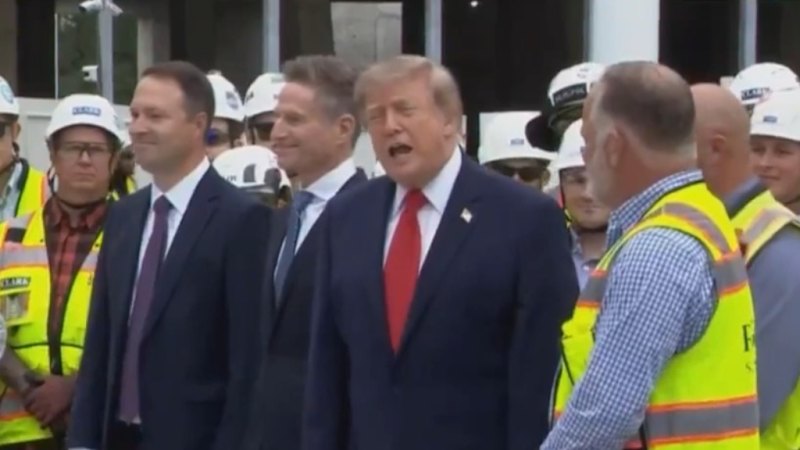
Donald Trump recently found himself speaking to a crowd at a White House ribbon-cutting ceremony for a new granite Marine One helipad, only for his words to go practically unrecorded. Instead of a pristine audio feed shared with the nation, his voice was swallowed entirely by background noise. The major networks weren't there with their high-end boom mics. The reason why comes down to a tense, escalating standoff between the administration and major news organizations over press access.
The Press Boycott Behind the Silence
If you wondered why the audio on the official White House feed sounded like a mess of roaring helicopter engines rather than a crisp political address, the answer is simple. Several major news outlets refused to send their usual pool reporters to cover the event.
This absence wasn't an accident. It followed a contentious decision by the White House to ban specific media organizations, including CNN and Politico, from entering the grounds. In response to what they viewed as a direct assault on the First Amendment, major outlets staged a pushback, pulling their technical support and audio gear from the scene.
Without those specialized broadcast crews on-site, the standard multi-mic setup vanished. The official government feed relied on stationary equipment that failed to isolate the president's voice over ambient sound. Trump stood at the podium, gestured to the crowd, and spoke at length, but viewers at home heard nothing of substance.
An Awkward Visual That Amplified the Chaos
The audio failure wasn't the only viral moment from the South Lawn. Photos and clips from the event quickly made the rounds online for an entirely different reason.
Trump struggled to cut the ceremonial red, white, and blue ribbon. Wielding an oversized pair of golden scissors, he had to ask for physical assistance from two men standing nearby just to slice through the fabric. Combined with the total lack of intelligible audio, the visual created a surreal scene.
Critics jumped on the technical failure as a sign of poor planning. Defenders argued that the media boycott manufactured the issue by deliberately withholding standard broadcast capabilities. Regardless of where you fall politically, the incident highlights a fragile relationship between modern administrations and the press corps that covers them daily.
What This Means for Future White House Coverage
When a president's speech goes unheard, it sets a dangerous precedent for transparency. Information channels shouldn't depend on petty squabbles between media executives and executive branch officials.
Lawsuits are already moving through the federal court system to challenge the credential bans. Judges will have to decide whether restricting specific outlets violates constitutional protections. Until those legal battles resolve, expect more logistical friction.
If you want to stay informed on executive actions, don't rely solely on official feeds. Watch how independent reporters and alternative setups capture these chaotic photo ops. Transparency takes effort, and right now, both sides are making it harder than ever to see and hear the full picture.