Security details often resort to wild tactics, but escaping a NATO summit inside an airport catering truck takes the cake. Donald Trump was smuggled onto a backup military aircraft via a food-service vehicle during his July visit to Ankara, Turkey, after intelligence flagged a credible assassination threat from Iran.
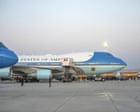
The public narrative didn't match reality. Official updates claimed the president merely swapped his newly acquired, Qatar-donated Boeing 747-8 for the classic, baby-blue legacy Air Force One. Instead, a high-stakes deception operation unfolded behind the scenes.
Inside the Ankara Airport Ruse
Cameras captured Trump climbing up the stairs into the older presidential jumbo jet in full view of the press. It was all theater. Moments after stepping inside, he was quietly shuffled back out of public sight.
Secret Service and security handlers transferred the president into an airport catering truck—the exact kind normally used to load food trays and beverage carts. Under the cover of routine airport logistics, the vehicle shuttled him across the tarmac to an Air Force C-32A military transport plane.
Reporters and even some White House aides remained completely in the dark. Traveling journalists trapped in the press cabin received strict orders to keep their window shades shut for takeoff, stoking quiet panic among the staff. When quizzed later about the claustrophobic directive, Trump offered a characteristic warning: "You're probably on a dangerous flight. But if I go, you go. Right?"
Why Iran Sparked the Emergency Switch
Hostilities with neighboring Iran loomed heavy over the entire NATO gathering. Intelligence pointed toward an active, credible plot targeting Trump's life, elevating risk levels to a point where standard motorcade and flight departures posed unacceptable vulnerabilities.
The White House had already faced fierce scrutiny over bringing the newly retrofitted Qatari-gifted jet on its maiden international voyage. Critics questioned its rapid timeline for security upgrades, while the administration leaned on the older fleet to mask movements.
By splitting the fleet into multiple aircraft—the decoy old Air Force One, the secretive C-32A carrying the president, and the new Qatari jet—security teams created a multi-layered shell game in the skies over the Middle East.
Historical Precedents for Presidential Deception
Moving a commander-in-chief through hostile territory requires extreme deception. This covert maneuver mirrors past high-risk presidential movements.
Back in 2000, Bill Clinton pulled off a nearly identical stunt during a visit to Pakistan. Authorities deployed an official Air Force One as an empty decoy while Clinton flew into Islamabad aboard an unmarked executive jet to minimize the window for surface-to-air missile threats.
The C-32A carrying Trump eventually touched down at RAF Mildenhall in Britain just ahead of the media pool's arrival. After landing, Trump calmly emerged from the legacy aircraft stairs, flashed a peace sign to the waiting press corps, and greeted local U.S. service members before transitioning to the Qatar-donated plane for the final leg back to Washington.
White House communications director Steven Cheung defended the complex security protocols, stating that the administration utilizes every available resource to counter persistent foreign threats. Threats against top leaders demand unorthodox precautions, and sliding out of a foreign airfield inside a food truck proves that presidential security operates in a reality most citizens never see.