Donald Trump has spent nearly a decade attacking mainstream media outlets as untrustworthy, unfair, and downright "fake news." He built an entire political movement on distrusting establishment journalism. So when he suddenly takes a high-profile clip from CNN and blasts it out to millions of followers on Truth Social, people notice.
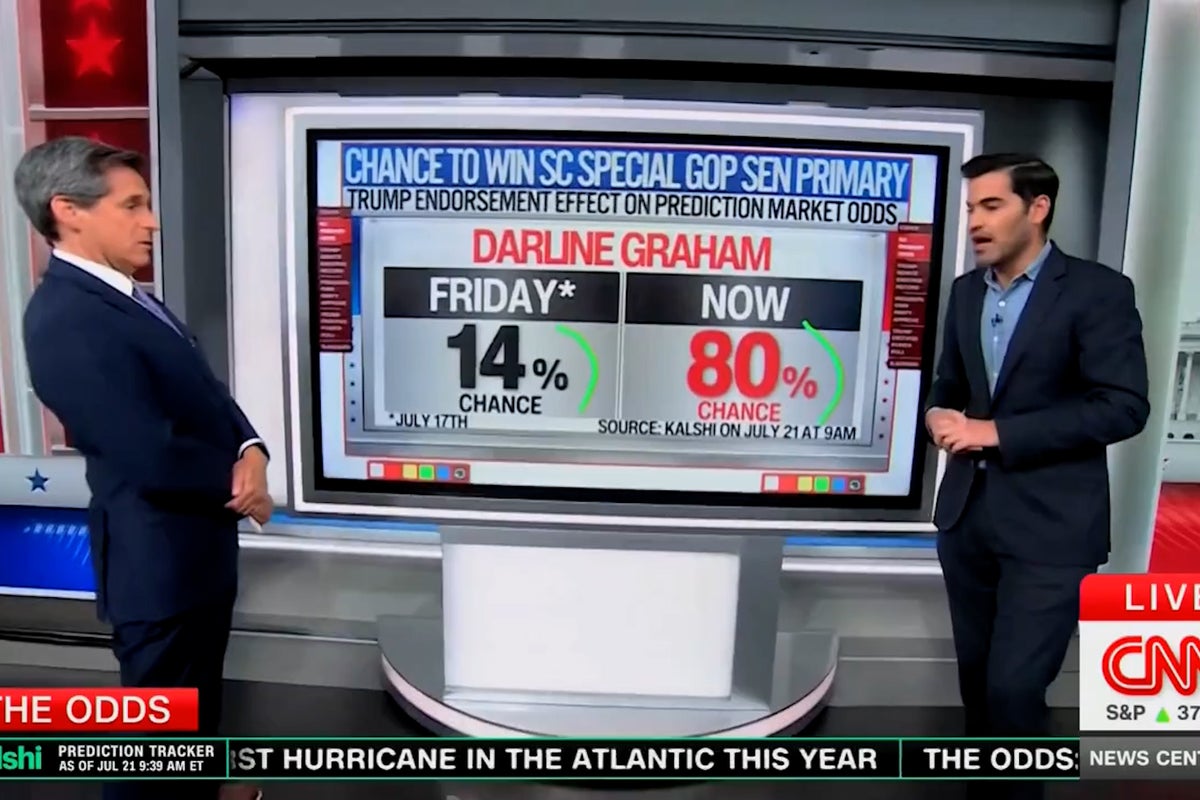
It happened again recently when Trump shared a segment featuring CNN senior data analyst Harry Enten. In the clip, Enten broke down hard data showing the sheer weight of the former president's endorsement in Republican primaries. The numbers were undeniable. When Trump backs a primary candidate, their odds of winning skyrocket compared to unendorsed contenders.
Trump didn't care that the logo in the corner belonged to a network he regularly rails against. The numbers told a story he liked, so he hit share.
This isn't an accident, nor is it a hypocritical slip-up. It's a calculated, highly effective communications strategy that political figures have used for decades, dialed up to eleven for the digital age.
The Irony of Trump Sharing Mainstream Cable News
Watch Trump at a rally and you'll hear him point toward the press risers and call reporters the enemy of the people. Watch his social feed, though, and you'll see a surprisingly broad mix of sources.
When CNN, MSNBC, or The New York Times publishes something critical, it's labeled bias. But when those same outlets publish a poll showing him leading, or an analysis showing his iron grip on the Republican base, those clips get pinned to the top of his feed.
It creates a fascinating paradox. Trump relies on the authority of the very institutions he seeks to undermine. By sharing a CNN segment, he's effectively saying to his base that even his fiercest critics can't deny his political power.
Think about how that lands with a loyal follower. If a friendly outlet says Trump is winning, it's expected. If CNN says Trump's endorsement dominates the primary field, supporters view it as an accidental admission of truth from an opponent. That makes the validation twice as potent.
What the Numbers Say About the Trump Endorsement Power
Harry Enten's analysis wasn't wrong. The math behind primary endorsements inside the Republican Party shows a stark reality for GOP candidates.
Historically, presidential endorsements in primary races were a mixed bag. An endorsement from a sitting or former president helped with fundraising and brought local media attention, but it rarely guaranteed a blowout. Local dynamics, candidate quality, and regional issues usually dictated the outcome.
Trump changed that formula completely.
During recent primary cycles, Trump-backed candidates in open Republican primaries won at staggering rates. When an incumbent Republican draws his ire, their political survival becomes a coin flip at best.
Trump Primary Endorsement Success Rates (Open Primaries vs. Incumbents)
---------------------------------------------------------------------
Open Primary Candidates Backed by Trump:  ~90% Win Rate
Challenged Incumbents Backed by Trump:    ~95% Win Rate
Anti-Trump Incumbents Retaining Seats:    <20% Survival Rate
These numbers explain why primary candidates still flock to Mar-a-Lago seeking photos, endorsements, and social media shoutouts. In a closed Republican primary where diehard voters turn out, his stamp of approval acts as an instant signal to the electorate.
Selective Media Consumption as a Political Tool
Everyone cherry-picks information to support their worldview. Politicians just do it with a megaphone.
When Harry Enten presents data on declining support among independent voters or flagging favorability ratings on specific policy issues, those clips stay far away from Trump's social feed. You won't see him truth-socializing a segment about inflation concerns or shifting suburban demographics.
Instead, his team filters media through a simple screen: Does this prove dominance? Does this show strength? Does this intimidate primary opponents?
If the answer is yes, the source doesn't matter. Fox News, Newsmax, CNN, or a random local paper all become useful ammunition.
This selective amplification serves three distinct purposes:
- It reinforces loyalty among the base. Seeing favorable coverage from a hostile network convinces voters that their side is winning the narrative war.
- It warns intra-party rivals. Any Republican considering a primary challenge or a vote against party leadership sees a reminder of the electoral cost.
- It controls the news cycle. Outlets end up covering Trump sharing their own coverage, creating a feedback loop that keeps him at the center of political conversation.
Why Primaries and General Elections Tell Two Different Stories
Understanding the "Trump effect" requires separating primary elections from general elections. This is where many casual political observers get confused.
In a Republican primary, the electorate is conservative, highly engaged, and deeply loyal to the party brand. In that environment, a Trump endorsement is absolute gold. It cuts through campaign noise and tells voters exactly who fits the MAGA mold.
General elections are a completely different ballgame.
Independents and moderate swing voters don't view a Trump endorsement as an automatic positive. In suburban swing districts, an endorsement can actually act as a lightning rod, driving up turnout for the opposition.
Data analysts like Enten point out this dual reality constantly. The very endorsement that guarantees a candidate survives a May primary can make them vulnerable in November. Trump shares the first half of that analysis because it highlights his power inside the party. He ignores the second half because it complicates the narrative of invincibility.
How Political Strategists Should Read Endorsement Numbers Today
If you're managing a campaign or just trying to make sense of national political trends, relying on surface-level headlines won't cut it. You have to look at how data gets weaponized by both sides.
First, look at the district demographics. A Trump endorsement in a deep-red southern district carries vastly different weight than the same endorsement in a suburban Rust Belt district.
Second, watch voter turnout patterns. Endorsements don't just change minds; they drive specific cohorts of voters to the polls. When a high-profile figure gets involved in a local race, turnout among low-propensity voters usually spikes.
Third, pay attention to media dynamics. Candidates who win endorsements often get millions of dollars in free earned media because news networks love the narrative of a political proxy war.
What to Do With This Information
Don't take any single social media share at face value. When a political figure posts a news clip—especially from a network they routinely criticize—ask yourself a few quick questions to spot the strategy:
- Check the sample size. Is the clip highlighting a single favorable poll or a long-term trend across multiple high-quality surveys?
- Separate primaries from general elections. Is this data measuring internal party strength or broad appeal among swing voters?
- Look for what was left out. What did the analyst say immediately before or after the 30-second clip shared on social media?
Understanding how political figures use media validation allows you to see past the spin and focus on the actual numbers driving national politics.