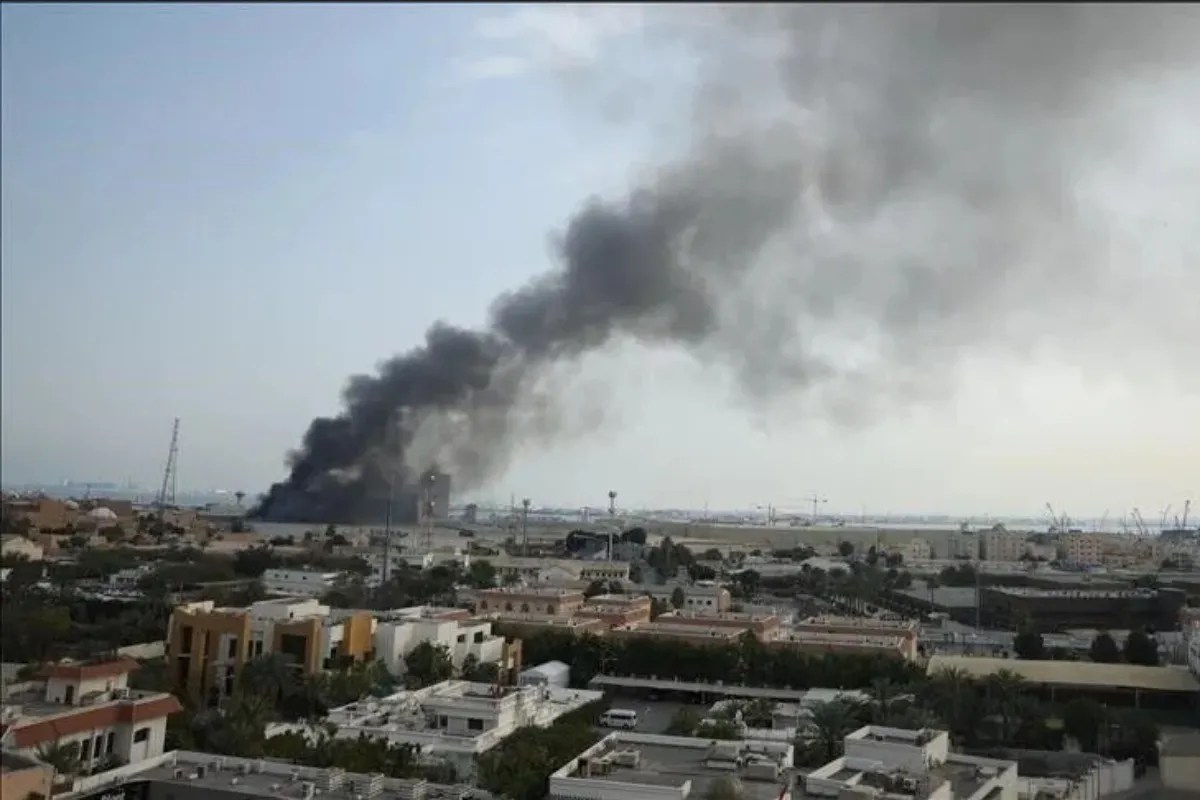
The threat of a direct military confrontation between the United States and Iran has loomed over the Middle East for decades. Every time regional tensions spike, the internet fills with alarmist headlines predicting an immediate, catastrophic World War III scenario. Many commentators paint a picture of sudden, massive armada movements and immediate territorial invasions.
That picture is wrong.
A real conflict between Washington and Tehran would not look like the Gulf War. It would not start with a neat, televised air campaign followed by a swift ground victory. Instead, it would be an asymmetric, chaotic, and highly distributed conflict that would instantly pressure global trade routes and test the limits of modern air defense.
To understand what a real escalation looks like, you have to look past the sensationalized clickbait. You need to examine the actual geographic choke points, the specific military installations at risk, and the hard realities of asymmetric warfare.
The fragile tripwires in Jordan and Kuwait
If a full-scale conflict erupts, the first blows will not land on the shores of mainland America or inside the heavily fortified borders of Iran. They will strike the network of US military installations scattered across neighboring Middle Eastern nations.
Look at the map. The United States maintains a significant footprint in countries like Jordan and Kuwait. These bases are critical for logistical operations and regional stability, but they also sit directly within the reach of Iran's massive missile and drone arsenal.
The vulnerability of forward operating sites
In Jordan, Muwaffaq Salti Air Base serves as a major hub for US air operations. Meanwhile, smaller, more remote outposts like Tower 22 sit right near the border tripoint with Syria and Iraq. These locations are highly exposed to one-way attack drones. We have already seen how tragic strikes on these smaller bases can trigger massive retaliatory cycles.
Kuwait presents a different kind of strategic headache. Ali Al Salem Air Base and Camp Arifjan house thousands of US service members and massive stockpiles of hardware. While these bases feature sophisticated missile defense systems like the Patriot PAC-3, they are not invincible.
Iran possesses the largest and most diverse ballistic missile arsenal in the region. The Islamic Revolutionary Guard Corps (IRGC) has spent decades perfecting the art of saturation strikes. By launching waves of cheap, slow-flying suicide drones alongside fast, precise ballistic missiles, they can overwhelm even the most advanced radar systems. A Patriot battery might have an incredible interception rate, but it only carries a limited number of ready-to-fire missiles. When you run out of interceptors, the remaining incoming threats get through.
Tehran under the shield of modern air defense
A common misconception is that the US could easily establish total air superiority over Iranian airspace within forty-eight hours. While the US Air Force and Navy possess unmatched stealth technology, Iran is not a defenseless target.
Tehran has invested heavily in layered, indigenous air defense networks. They do not just rely on older Russian imports like the S-300 system. Iran has developed its own long-range surface-to-air missile systems, most notably the Bavar-373, which Iranian military officials claim can track and engage stealth targets at significant distances.
The geography of defense
Iran’s terrain acts as a natural fortress. The country is vast, rugged, and dominated by mountainous corridors. Placing air defense batteries deep within these mountain ranges makes them incredibly difficult to locate and destroy.
If US aircraft or cruise missiles attempt to penetrate Iranian airspace to target command hubs or nuclear facilities, they will face a dense envelope of radar-guided threats. Air defenses around Mehrabad International Airport and other critical installations in Tehran are kept on high alert. Any serious escalation would see these systems active around the clock, creating a highly dangerous environment for civilian aviation across the entire Persian Gulf region.
Why proxy warfare makes containment almost impossible
You cannot talk about a conflict with Iran without talking about its network of regional allies and proxies. This network, often called the Axis of Resistance, gives Tehran the ability to strike back without ever firing a missile from its own soil.
- Hezbollah in Lebanon: They possess an estimated 150,000 rockets and precision-guided missiles aimed directly at Israeli infrastructure.
- The Houthis in Yemen: They have proven their ability to disrupt global shipping in the Red Sea and strike targets deep inside Saudi Arabia and Israel.
- Hashd al-Shaabi in Iraq: These mobilized groups can launch localized rocket and drone attacks against US diplomatic and military sites at a moment's notice.
This distributed threat profile means that any US strike on mainland Iran would trigger a multi-front response. The conflict would instantly spill over into Lebanon, Syria, Iraq, Yemen, and the shipping lanes of the Bab al-Mandab and the Strait of Hormuz. Trying to contain the fighting to a single country is a logistical fantasy.
The economic shockwave that everyone ignores
We often talk about military conflicts in terms of troop movements and hardware losses. But the most devastating weapon in this potential war is not a missile. It is the geographic reality of the Strait of Hormuz.
Roughly one-fifth of the world's petroleum passes through this narrow waterway daily. Iran has spent decades training its naval forces for a specific mission: closing this strait.
They do not need a massive blue-water navy to do this. The IRGC Navy relies on hundreds of fast, heavily armed patrol boats, sea mines, and anti-ship cruise missiles hidden along its mountainous coastline. By mining the shipping lanes and harassing commercial tankers, Iran could effectively halt maritime traffic.
The economic consequences of a prolonged closure would be felt globally almost instantly.
[Strait of Hormuz Closes]
       │
       ▼
[Global Shipping Halts]
       │
       ▼
[Oil Prices Spike 20-30%]
       │
       ▼
[Global Supply Chain Chaos]
Insurance rates for cargo ships would skyrocket. Energy markets would panic, sending oil prices to unprecedented levels. This economic damage would hit everyday consumers thousands of miles away, turning a regional military conflict into a global financial crisis.
How to prepare for the inevitable fallout
We must look at the hard truth of the situation. A direct US-Iran war is a scenario where there are no real winners, only varying degrees of loss. The military, economic, and human costs would be staggering.
If you want to understand the true dynamics of this threat, stop focusing on sensationalist live-blogs. Instead, keep your eyes on three specific indicators:
- The deployment of US Carrier Strike Groups: Watch whether they operate inside the Persian Gulf or retreat to the safer, open waters of the Gulf of Oman to stay out of range of land-based anti-ship missiles.
- Commercial shipping rerouting: Watch the actions of major maritime shipping firms. When they start avoiding the Persian Gulf entirely, the economic threat is real.
- Diplomatic backchannels: Keep track of mediator nations like Oman and Qatar. Even during the worst spikes in tension, these channels are the only things preventing miscalculations from turning into full-scale war.
The region remains on a knife-edge. Understanding the actual strategic layout is the only way to cut through the noise and see where the path of escalation truly leads.