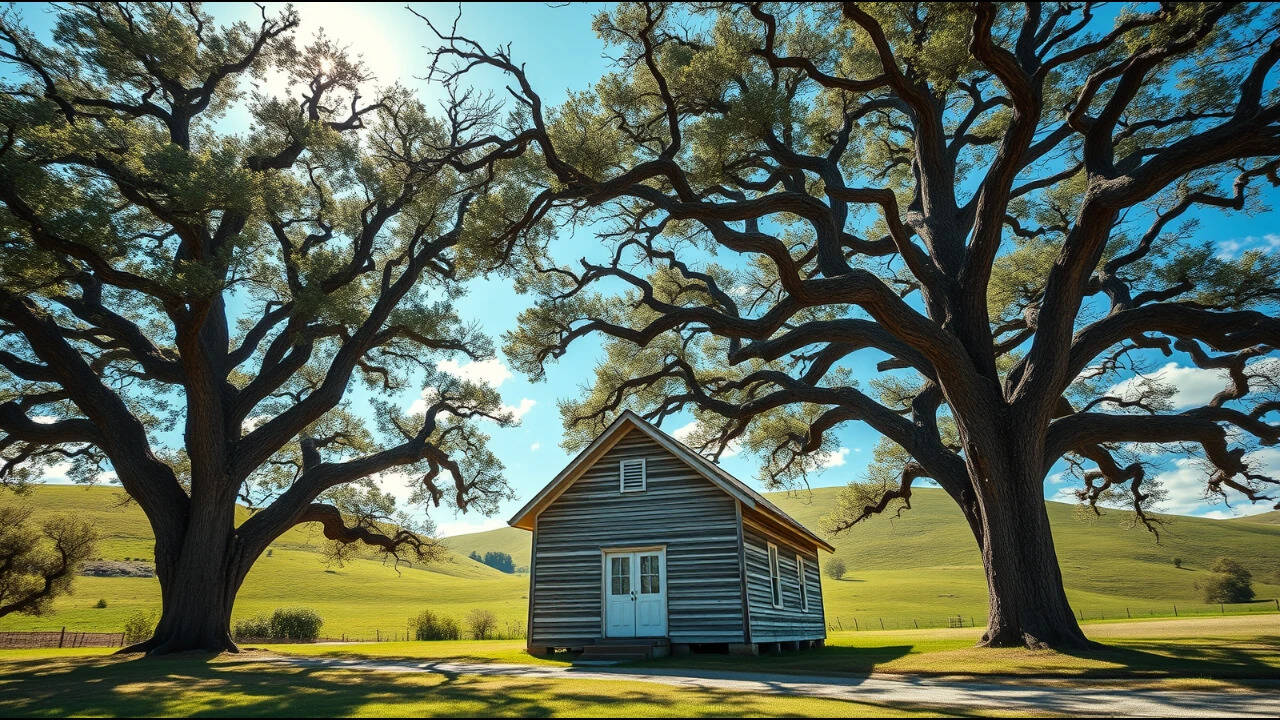
When two massive oak trees crashed through the roof of the Mark Prairie Schoolhouse in February 2021, most people thought the 142-year-old historic building was finished. Storms in Clackamas County, Oregon, pack a serious punch, and the damage was catastrophic. The roof caved in. Walls shifted out of alignment. Debris filled the interior.
Yet, instead of hauling away the wreckage and bulldozing what remained of the 1879 structure, local volunteers engineered an incredible comeback. They didn't just rebuild the historic schoolhouse. They milled the very oak trees that destroyed it and built pieces of them back into the walls.
If you think historical preservation is just about buying expensive reproduction materials and hiring fancy contractors, this project proves otherwise. Let's look at how a small community saved a piece of local history using grit, grants, and timber from the disaster itself.
The Roots of the Mark Prairie Schoolhouse
History runs deep in this part of Oregon. John and Mary Francis "Fanny" Mark arrived in Clackamas County via the Oregon Trail back in 1847. Decades later, the community established the schoolhouse to serve local families. By 1946, formal classes stopped, but the building never lost its social purpose. The Mark Prairie Community Club—now operating as the Mark Prairie Historical Society—took over ownership. It transitioned from a classroom into a central community gathering space.
Then came the storm.
When the oak trees slammed down, they didn't destroy everything. Miraculously, the original old-growth Douglas fir floors survived the impact and the rain exposure. Volunteers rushed in immediately to secure what they could. They hauled out historic desks, old books, and priceless artifacts before further water damage set in.
Peggy Sigler, a preservationist who managed the effort, noted that quitting was never an option. The local community jumped on board instantly. But enthusiasm alone doesn't buy drywall or hire carpenters.
Funding a Massive Restoration Through 33 Grants
Restoring a historic building costs a fortune. You can't just run down to the local big-box hardware store and pick up materials that match 19th-century construction specs.
The Mark Prairie Historical Society solved this by piecing together a massive funding mosaic. The project relied on:
- A partial insurance settlement
- Community donations
- A $10,000 Preservation Fund grant from the National Trust
- A total of 33 individual grants secured over the course of the multi-year effort
Bringing the building up to modern codes meant handling complex plumbing, electrical upgrades, and ADA-compliant accessibility requirements. Fundraising stretched all the way into 2024 to finish the interior panelling and utility work.
Turning Destruction Into Construction Material
The most poetic part of the entire project wasn't the grants or the volunteer hours—it was the wood.
Contractors and volunteers salvaged white oak logs directly from the trees that had crushed the roof. They milled that fallen timber and integrated it back into the structure. Meanwhile, new Douglas fir was custom-milled to precisely replicate the damaged tongue-and-groove interior panelling.
By combining original surviving elements, custom-milled wood, and the very timber that caused the disaster, the rebuild became a masterclass in adaptive reuse.
What the Schoolhouse Looks Like Today
The restored building officially reopened in May 2025. It now operates as a functioning community space and event venue, surrounded by an old oak grove and Memorial Park.
The layout includes:
- A 600-square-foot main classroom space
- A 360-square-foot service kitchen
- An entry vestibule and exterior porch
- An ADA-accessible bathroom
The project earned recognition in the Winter 2026 issue of Preservation magazine, highlighting how historic places can survive disasters when local residents refuse to let them fade away.
Stop waiting for big institutions to save local landmarks. If you want to protect your community's history, look at what a few dedicated volunteers did with a chainsaw, some grant applications, and a fallen oak tree. Roll up your sleeves and get to work on the historic structures in your own backyard.