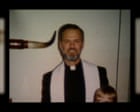
Accountability arrived too late for Gerard Joseph "Jerry" Howell, but for his survivors, his death brings a sharp sense of finality. Howell, an 87-year-old former Catholic priest whose decades of child sexual abuse targeted vulnerable members of the local deaf community, died after an apparent fall in his Austin apartment. Austin police found him unresponsive during a welfare check on September 8, bringing an end to a life shielded for decades by powerful institutional buffers.
If you're following the fallout of Catholic clergy abuse scandals, Howell's case stands out as a glaring example of systemic evasion. The Roman Catholic Archdiocese of New Orleans didn't just stumble in handling him; they actively protected him for forty years. Church leaders knew about his crimes, reported him to local prosecutors in 1980 who chose not to file charges, and watched him get publicly exposed by local news station WWL Louisiana in 1992. Yet, instead of stripping him of his collar, church officials enabled him, funded him, and fought to preserve his financial perks right up until bankruptcy courts stepped in. Don't miss our previous coverage on this related article.
Anatomy of an Institutional Cover-Up
Howell was ordained in 1964 and embedded himself within a marginalized community that church leadership should have protected with extra vigilance. Deaf children and their families trusted him. He exploited that trust systematically.
When the truth finally breached church walls, the response from successive archbishops read like a playbook for evasion. Back in 1980, Archbishop Philip Hannan reported Howell to Orleans Parish District Attorney Harry Connick Sr., but no prosecution followed. After WWL Louisiana broadcast an explosive exposé in 1992, Archbishop Francis Schulte told Howell to find a secular job, only for Vatican leadership to overrule him and command that Howell retain his clerical status and full financial support. If you want more about the context here, The Guardian offers an excellent summary.
Decades later, internal church records showed that a 2010 psychological evaluation flagged Howell as a "high risk" offender, noting that church administration already knew of at least 24 child victims. Even then, the archdiocese kept paying his living expenses, insurance, and a monthly stipend of $650. That financial lifeline only stopped in 2020 when a federal judge halted the payouts after the archdiocese filed for bankruptcy protection amid mounting abuse lawsuits.
Even bankruptcy didn't end the institutional coddling. Archbishop Gregory Aymond wrote a letter to a Vatican official in 2020 calling the court-ordered cancellation of Howell's benefits "unjust and painful." Aymond also directed Howell toward external clerical aid organizations. One of those groups had ties to leaders previously investigated for misusing charitable donations.
The Human Toll on Survivors
For survivors like Kathleen Austin, whose childhood abuse by Howell was detailed in the 2025 documentary film God As My Witness, institutional cruelty compounded the trauma. Austin recalled confronting Archbishop Hannan years ago, only to be told to physically retaliate against her abuser next time she saw him.
"That's not my job. This is your job," Austin noted of the encounter.
When news of Howell's death broke, Austin expressed relief that he could no longer harm anyone, alongside a grim acknowledgment of the manner of his passing. Howell's death from an apparent fall mirrors a stark statistic: falls claim the lives of over 43,000 people annually in the United States. For survivors who lived under the shadow of his actions for decades, the quiet, unceremonious end offered a stark contrast to the massive platform he enjoyed for so long.
Where the Bankruptcy Settlement Stands Now
Howell's legacy is deeply tied to the financial reckoning currently reshaping the New Orleans church. He was named as the offender in nine claims filed as part of the archdiocese's bankruptcy proceedings. This placed him near the top of the living offenders list on the archdiocese's public registry of removed clergy.
The archdiocese agreed to a $305 million settlement to resolve its bankruptcy, aimed at compensating roughly 740 clergy abuse claimants. Payout amounts depend on a complex matrix assessing the duration and severity of the abuse. However, friction remains. Court-appointed trustees have recently questioned whether church leadership is genuinely complying with nonmonetary transparency provisions meant to reform how abuse reports are handled moving forward.
While the archdiocese maintains it is working tirelessly to implement these reforms, survivors and watchdogs argue that trust cannot be rebuilt through public relations statements.
If you or someone you know has been affected by child abuse or institutional misconduct, immediate resources exist. In the United States, you can contact the Childhelp National Child Abuse Hotline or connect with adult survivor networks like ASCA. Accountability requires vigilance, transparency, and a refusal to let institutional self-preservation override the safety of children.