Luis Manuel Otero Alcántara didn't choose to leave Cuba. The Cuban government gave him a brutal, familiar ultimatum: rot in a maximum-security prison or leave your homeland forever.
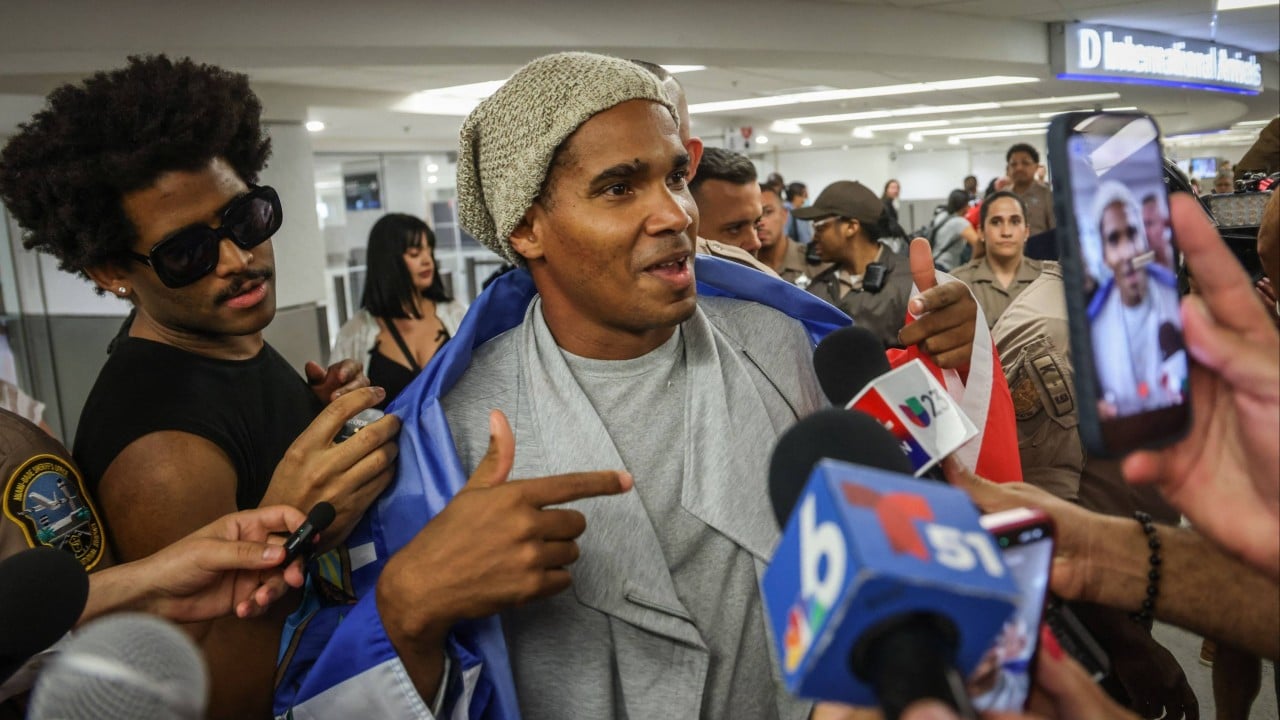
On July 18, 2026, the 38-year-old co-founder of the San Isidro Movement stepped off a plane at Miami International Airport. Wrapped in a Cuban flag emblazoned with the words Patria y Vida (Homeland and Life), he walked into a wall of sound. Hundreds of supporters cheered, sang, and held phones high to capture the moment the artist finally escaped Havana's grip. For a closer look into this area, we suggest: this related article.
"The joy of being free is what I want for every Cuban still on the island," Alcántara told the crowd in Spanish. His first stop on American soil wasn't a press conference. It was the Shrine of Our Lady of Charity in Coconut Grove, where he offered a broken statue of the Virgin Mary—a piece he brought from Cuba as a symbol of hope and healing.
The Ultimate Price for Saying Patria y Vida
The deal that brought Alcántara to Miami wasn't a humanitarian gesture by Havana. It was a forced exile. For broader information on the matter, comprehensive analysis is available at Associated Press.
He spent five brutal years behind bars after his arrest on July 11, 2021, during the historic nationwide J11 protests against the communist regime. In 2022, a Cuban court sentenced him to five years for public disorder, contempt, and disrespect toward national symbols. Amnesty International quickly designated him a prisoner of conscience. Freedom House openly labeled him "the Cuban artist the regime fears most."
His official sentence was supposed to end on July 9, 2026. Instead of releasing him to his family in Havana, state security forces moved him from the Guanajay maximum-security penitentiary to a secret facility two days before his term ended. For days, his family and legal advocates at Cubalex had no idea where he was. They filed a habeas corpus petition. They feared the worst. It turns out the regime was hiding him, ensuring he went straight from a cell to an international flight with zero stops in between.
Why Havana Weaponizes Forced Exile
Havana uses banishment as a highly calculated political safety valve. By forcing high-profile dissidents like Alcántara into exile, the regime accomplishes two things at once:
- It defuses international pressure over human rights abuses.
- It neutralizes internal leadership by ripping activists away from their community.
You see this play out constantly. Without a leader on the ground, movements struggle to maintain momentum. But Alcántara's message to those left behind remains uncompromising. "You have to keep fighting," he insisted to reporters in Miami. "You have to keep fighting for liberty."
The artist also brought stark reminders that his freedom is an exception, not the rule. His fellow artist and San Isidro Movement co-founder, Maykel "Osorbo" Castillo Pérez, remains locked away in a Cuban prison cell.
The Pressure Campaign Behind the Release
Alcántara's arrival in the United States follows intense diplomatic maneuvering and a crushing economic backdrop on the island. The U.S. government granted him parole into the country after sustained pressure from civil society and politicians.
US Secretary of State Marco Rubio confirmed the arrival, highlighting that the fight is far from over. Rubio used the moment to demand the immediate release of more than 700 political prisoners still held by the Cuban government. Human rights groups like Prisoners Defenders put that number even higher, documenting 1,306 political prisoners on the island, including 16 who are still detained as minors.
The release comes at a time of severe strain for Cuba. The island's energy infrastructure has practically collapsed, leaving millions dealing with rolling blackouts. Just days before Alcántara's release, the U.S. Department of the Treasury slapped fresh sanctions on Cuba's Ministry of Tourism, hitting the regime's primary economic lifeline.
What Happens Next for the San Isidro Movement
Forced exile shifts the battleground; it doesn't end it. Alcántara now faces the daunting reality of continuing his activism from a different country. The challenge for exiled Cuban dissidents in Miami is staying relevant to an island cut off by censorship and rolling blackouts.
If you want to support the ongoing struggle for artistic freedom and human rights in Cuba, look into the work of organizations like Cubalex and Freedom House. They track political detentions and offer direct legal support to dissidents who don't have the international spotlight that saved Alcántara. Don't let the celebration in Miami obscure the 1,300 political prisoners still waiting for their own walk to freedom.