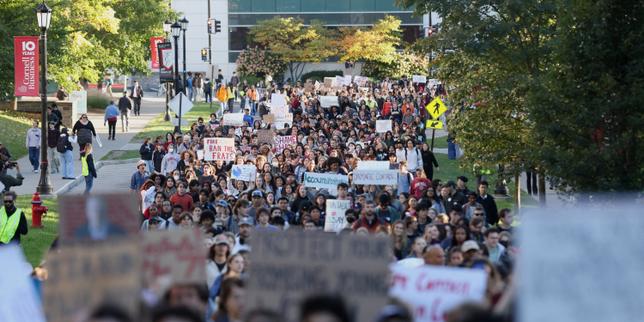
Outrage has boiled over at Cornell University. Students and faculty are filling the quadrangles to protest what they call a profound institutional failure in handling a brutal sexual assault case. When a system protects perpetrators while silencing victims, the entire foundation of higher education cracks.
Let's look at what actually happened behind closed doors. In October 2024, a twenty-year-old student attended a fraternity event at Ithaca, New York. According to a civil lawsuit filed in September 2026, she became heavily intoxicated after being served alcohol despite being underage. She then went to the Chi Phi fraternity house to meet someone she trusted as a friend.
What followed is harrowing. The lawsuit details hours of forced intoxication, drugging with ketamine, and a multi-perpetrator sexual assault that lasted until the early morning hours. To make matters worse, one of the accused men allegedly sent a Snapchat message to a group chat inviting others to join in.
The Institutional Failure and Disappointing Sanctions
When survivors report assaults, they expect justice. Instead, they often run into a wall of bureaucratic indifference.
The victim reported the attack to Cornell campus police in November 2024. While the university launched internal disciplinary probes, the Tompkins County District Attorney initially declined to press criminal charges, claiming the initial statement lacked sufficient evidence of forced coercion. The case went dark for months, leaving the survivor without support or communication from investigators.
Even more shocking were the disciplinary measures handed down by the university. Reports surfaced that the accused students could mitigate their punishments by writing essays. While university officials later defended their broader response—noting suspensions and expulsions—the fact that lenient alternative punishments were even on the table sparked global fury. Out of the seven men accused, reports indicate that only two were ultimately expelled.
Students are right to ask how a prestigious institution can tolerate such inadequacy.
The Breaking Point and Protests
Anger reached a boiling point in early October 2026. Following the public release of new investigative details and text messages, demonstrators took direct action. Protesters targeted administrative buildings, spray-painting messages demanding accountability and structural reform.
The backlash forced state authorities to step in. New York Governor Kathy Hochul publicly criticized how the case was handled, stating the system failed the survivor. Consequently, New York State Attorney General Letitia James stepped in, and the local prosecutor reopened the criminal investigation.
Greek life is also under heavy scrutiny. Critics and mental health reports point out that fraternities often foster cultures hostile to consent, driven by binge drinking and outdated social hierarchies. University leadership, including interim President Michael Kotlikoff, has promised an independent review of Greek organizations. But for many students, promises are too little, too late.
Moving Past Empty Statements
Real change requires more than university press releases or temporary fraternity suspensions. Institutions must overhaul how they handle reports of sexual violence from day one. Law enforcement agencies need mandatory training on trauma-informed investigation, especially regarding drug-facilitated assaults where victims experience memory gaps or physical paralysis.
If universities want to regain the trust of their students, they must dismantle the protective shields surrounding powerful campus organizations and prioritize absolute transparency. Justice shouldn't require a national outcry or a high-profile lawsuit to begin.
The Cornell Rape Case: What Happened and Why It's Being Reopened
This video provides an in-depth breakdown of how the legal and institutional failures surrounding the Cornell assault case sparked widespread national outrage.