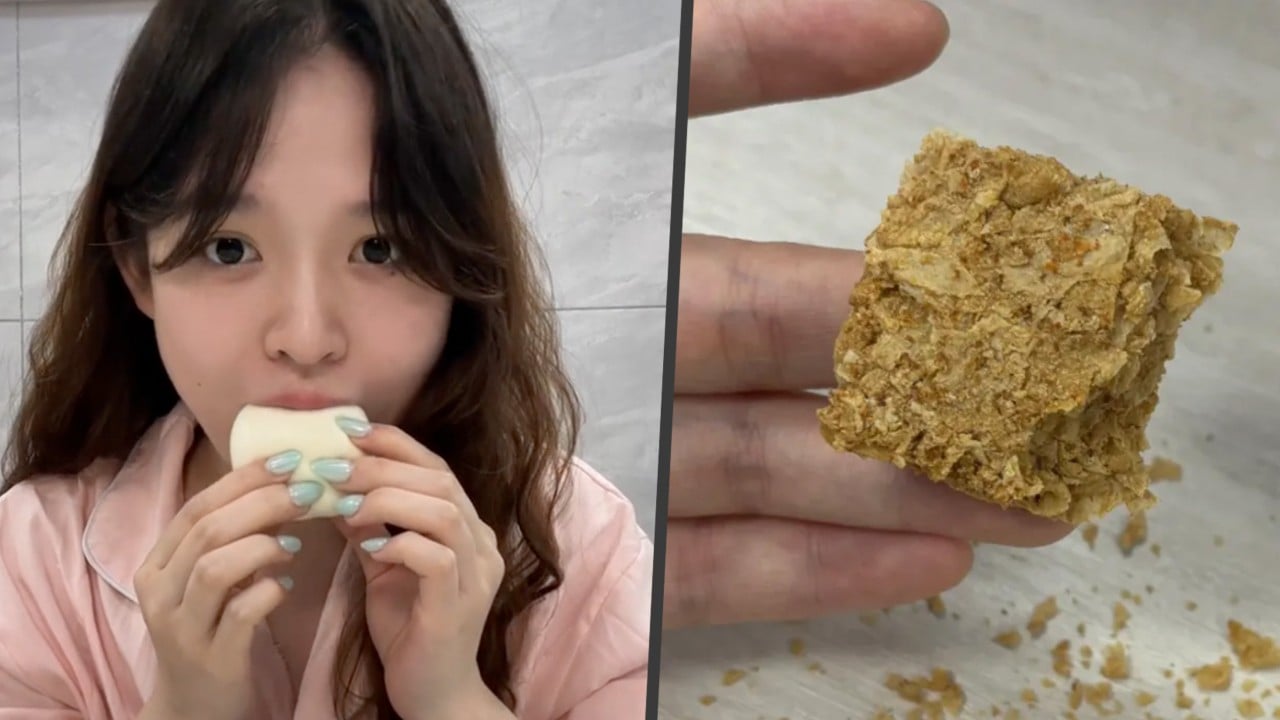
Forget counting every single calorie or choking down flavorless salads. Young people in China found a bizarre new weight loss tactic. They are chewing on things that taste like nothing and take forever to break down.
Social media feeds across the country are flooded with young dieters trading traditional diet foods for absurdly tough textures. We are talking about things like dangshen roots, additive-free beef jerky, frozen buns, and even baby teething biscuits. Some individuals are chewing on actual pet chew sticks for hours just to keep their jaws occupied.
It sounds weird. But there is a functional logic driving this strange movement.
The Psychology Behind the Jaw Workout
Dieting fails for one main reason. You get hungry, you get bored, and you cave.
When you spend two hours fighting a piece of Zhoushan hard cake—a regional pastry historically carried by sailors because it feels as solid as a brick—something shifts in your brain. You trick your mind into feeling satisfied without swallowing thousands of calories. The physical act of chewing triggers satiety signals. It keeps your mouth busy while you sit at a desk or study for exams.
You aren't eating for flavor anymore. You are eating for the workout.
A 37-year-old office worker from Guangxi recently shared online that she relies on chewy traditional herbs like dangshen roots to get through her workday. It has a mild, earthy sweetness, keeps her focused, and costs her zero extra pounds. She gets the hand-to-mouth action of snacking without any sugar crash.
Why Traditional Diets Keep Failing You
Most extreme diets rely on willpower. Willpower runs out by Tuesday afternoon.
When you severely restrict your food intake, your body panics. Stress hormones spike. You start obsessing over food. This chewy snack trend sidesteps that trap entirely.
- Mechanical Satiety: Your jaw gets tired. Your brain registers that you have been "eating" for a long time.
- Anxiety Relief: Repetitive chewing acts as a stress valve. People are using tough snacks to cope with professional pressure and academic stress.
- Metabolic Nuances: Traditional Chinese Medicine has long championed slow, methodical eating and heavy chewing to aid digestion and boost metabolism naturally.
Instead of fighting your cravings with a tiny plate of steamed broccoli, you manage the behavioral urge to snack by choosing items that require maximum physical effort for minimum caloric return.
The Downside Nobody Mentions
Before you run out to buy a bag of military-grade rice cakes or pet supplies, let us be completely honest. This trend has limits.
Too much intense chewing puts massive stress on your jaw joints. Dentists will tell you that overworking your masseter muscles can lead to TMJ pain, headaches, or accelerated tooth wear. If you spend hours grinding away at brick-hard snacks, your jaw will ache by nightfall.
It is also an acquired taste. Most of these items taste boring, bitter, or completely plain. If you love food for its rich flavors, you will hate this approach within five minutes.
How to Apply This Without Going Extreme
You do not need to raid the pet store aisle or buy historical sea biscuits to control your snacking habits. The core principle is pacing and texture.
Swap soft, hyper-palatable processed snacks—chips and cookies that melt in your mouth before you even taste them—for foods that demand your attention. Unsweetened dried fruits, thick jerky slices, or raw vegetable sticks work well. Take smaller bites. Put the fork down between chews.
Stop looking for the magic low-calorie snack that tastes like a candy bar. Sometimes, the best way to stop eating is to make eating hard work again.