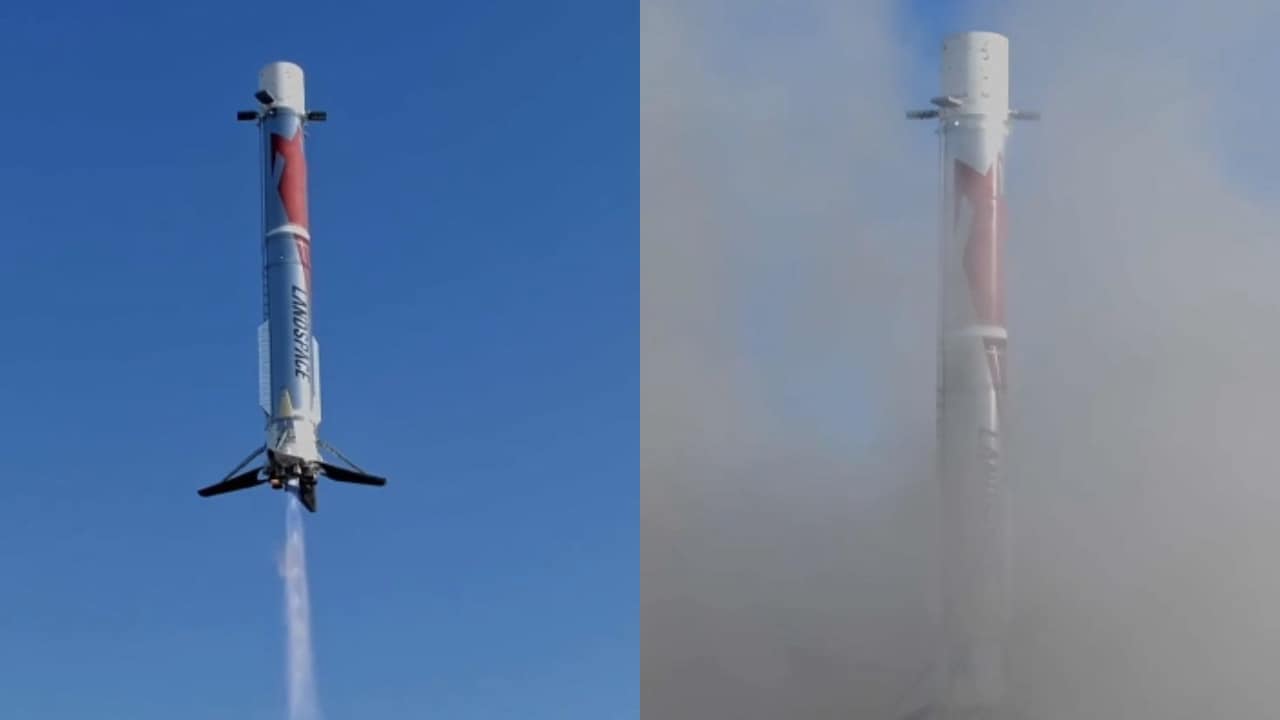
The race to space has changed. For years, the conversation started and ended with SpaceX. Everyone watched Elon Musk’s rockets dance back to earth, landing with a precision that felt like science fiction. Now, the narrative is shifting. China just successfully landed a reusable rocket on land for the first time. It is a massive technical feat. It is also a signal that the commercial space sector is entering a messy, competitive new phase.
Many people think this is just about bragging rights. It isn't. Landing a rocket isn't just cool; it’s about money. If you can land a rocket, you can fly it again. If you fly it again, you stop throwing away millions of dollars every time you launch a satellite. Simple, right? The economics of space travel change when you stop treating hardware like a disposable coffee cup.
The Zhuque 3 breakthrough
The rocket in question is the Zhuque 3, built by the private Chinese company LandSpace. Don't mistake this for a state-only operation. While China’s space program is heavily directed by the government, the rise of companies like LandSpace proves that the commercial model—the same one that built the Falcon 9—is spreading.
They launched this machine, sent it up, and brought it back down to a landing pad on solid ground. This matters because it’s harder than it looks. You’re dealing with supersonic speeds, atmospheric reentry, and the minor detail of not smashing a multi-million dollar piece of engineering into the dirt.
Let's look at the facts. China had already tested a sea-based recovery back in July using a net-capture system. That was innovative, but land-based vertical landing? That is the gold standard for reusability. It’s what everyone is trying to master because it’s generally easier to maintain a rocket that lands on concrete than one you have to fish out of the ocean.
Why this changes the global space economy
If you’re wondering why this is a big deal in 2026, look at the satellite market. We are launching more stuff into low Earth orbit than ever before. If China drives down launch costs, they become the preferred partner for nations and companies that don't want to rely on Western launch providers.
This isn't just about one country catching up. It is about the commoditization of space. When SpaceX started landing boosters, they turned orbital logistics into a logistics business. Now, China is doing the same. We are moving toward a time where launches might become as common and boring as shipping containers crossing the ocean.
What most people miss is the technical hurdle of the landing legs. This was China’s first run at using deployable landing legs on a landed stage. Getting the timing right—extending those legs at the exact millisecond before touchdown—is where most projects fail. LandSpace clearly ironed out those bugs.
What you need to know about the tech
You might hear people say this is just a copycat move. That’s lazy analysis. Even if you study the SpaceX playbook, you still have to build the hardware, write the software, and test it in reality. You can't simulate your way to a perfect landing.
- Economic scale: The cost per kilogram to orbit is the only metric that matters. Every time a rocket lands, that price drops.
- The cadence: It’s not enough to land one. You have to land them consistently. The real test for LandSpace isn't this landing. It’s whether they can launch, land, and relaunch the same booster within weeks.
- The private shift: China’s government is clearly betting on private firms to innovate faster than state bureaucracies. That’s a direct copy of the American model.
Why this won't be the last headline
Expect more of this. Japan is already testing its own reusable experiments. Europe is struggling to find its footing. The US remains the leader in total flight experience, but leadership in technology rarely lasts forever without constant pressure.
If you are following this for business or investment reasons, keep your eyes on the launch cadence. A company that lands a rocket once is an interesting story. A company that makes landing a rocket a routine, boring chore is a titan.
Don't overcomplicate the news cycles you see on this. The tech is real. The implications for launch pricing are real. We are officially in the era of orbital reusability. The only thing left to see is who can do it cheapest and most often. Keep watching the launch schedules. That is where the real story happens.


