You can't talk peace with a neighbor who locks you out of the room.
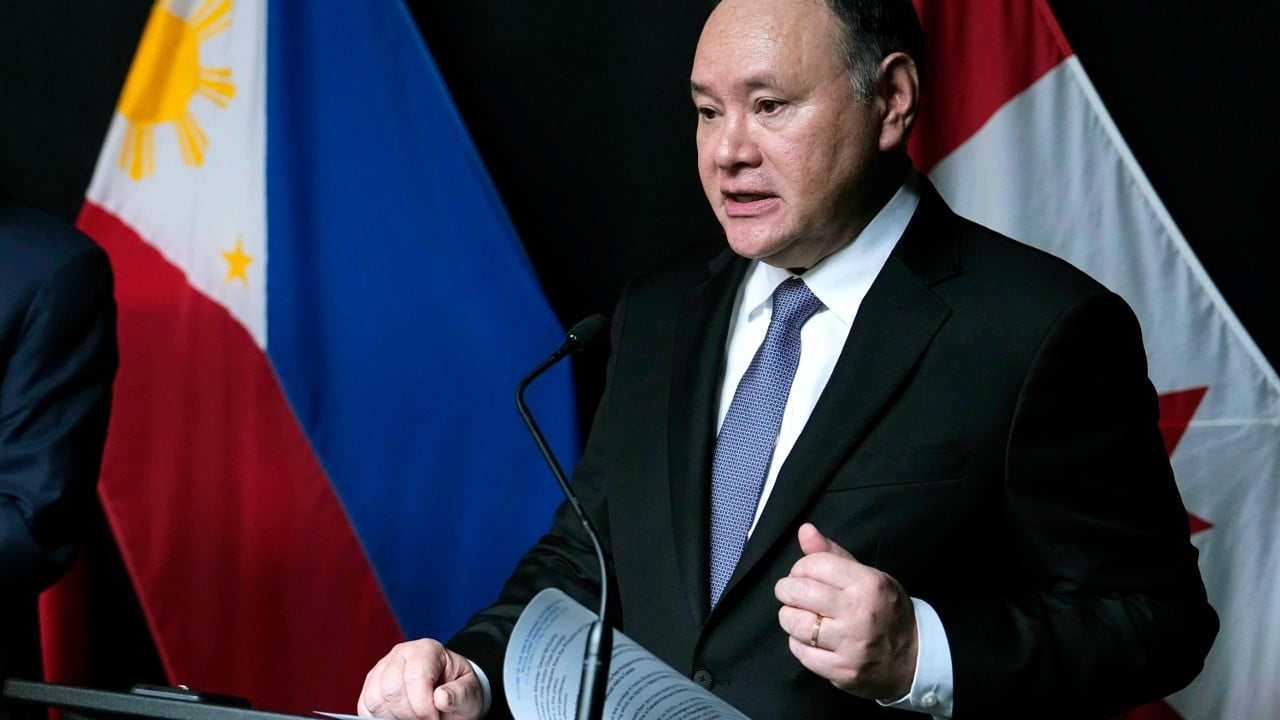
That is basically the reality Manila is facing right now. Beijing recently slapped unprecedented personal sanctions on Philippine Defense Secretary Gilberto Teodoro Jr., barring him and his immediate family from entering mainland China, Hong Kong, and Macau. Chinese companies and citizens are also banned from doing any business with them. Beijing calls his sharp critiques of their maritime aggression "irresponsible remarks" that vilify China. Teodoro, true to form, shot back that he was simply sanctioned for "speaking truth."
If you are looking at this and wondering why a defense chief getting banned from vacationing in Hong Kong matters, you're missing the bigger picture. This isn't just a diplomatic spat. It is a massive roadblock for regional security. By blacklisting the exact man responsible for the Philippines' military strategy, Beijing has made formal, high-level defense talks virtually impossible. It is a calculated move to freeze out a fierce critic, but it also pushes Manila deeper into the arms of Washington and its allies.
The Real Reason Beijing Blacklisted Teodoro
To understand why China went after Teodoro personally, you have to look at how he changed the Philippines' posture. Under President Ferdinand Marcos Jr., Teodoro has been the loud, uncompromising voice of a nation that used to play nice with Beijing. He didn't just issue polite diplomatic protests. He openly called China's sweeping territorial claims "the biggest fiction and lie" and directly blamed a "small dictatorship and autocracy" within the Chinese Communist Party for escalating tensions.
Then came the June 2026 Shangri-La Dialogue in Singapore. Teodoro stood in front of global defense leaders and tore into Beijing's soft-power tactics. He dismissed China's recent fertilizer and fuel aid to the Philippines as mere packaging and deception, stating bluntly that "no matter how they sugarcoat their assistance to us, it doesn't cut the mustard."
For Beijing, that was the tipping point. They accused him of political theatrics and acting as a deliberate saboteur of bilateral relations. But the sanctions backfired immediately in Manila. President Marcos slammed the move as unhelpful, warning that it only raises the level of tensions. Malacañang Palace quickly announced that China's move wouldn't affect Teodoro's mandate one bit. He is still running the show, whether Beijing likes it or not.
From Sea Skirmishes to Wild New Narratives
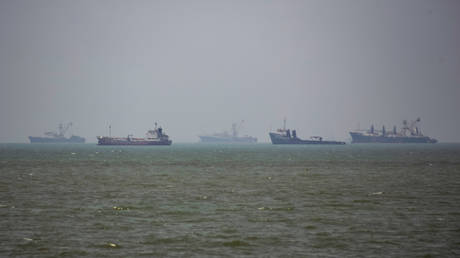
This personal blacklisting comes at a time when China's tactics are shifting from physical blocking at sea to a bizarre campaign of psychological warfare. For years, we saw coast guard ships firing water cannons at Philippine resupply missions at Second Thomas Shoal. Now, the battle lines are expanding to the far north, right next to Taiwan.
Just days ago, Chinese academics at a state-backed symposium in Guangzhou concluded that the Philippines' northernmost Batanes Islands are actually a "natural geographical extension of Taiwan." Because Beijing claims Taiwan, they are now laying the rhetorical groundwork to claim Batanes too.
Teodoro didn't hold back his thoughts on this new narrative. He publicly joked that anyone genuinely believing Batanes belongs to China probably needs medical help and should consult the health department.
"This is no longer just a violation of international law or our Constitution," Teodoro said. "It is contrary to normal human thinking."
While it sounds absurd, Filipino defense officials know exactly what China is doing. It is a long-game strategy to build a legal and historical narrative, no matter how flimsy, to justify future military presence near the Bashi Channel—a crucial chokepoint for global shipping and any potential conflict over Taiwan.
The Counterproductive Result of Locking the Door
If Beijing's goal was to bully Manila into submission, they completely miscalculated. When you refuse to talk to a country's defense chief, you don't leave them with many options.
Instead of backing down, Teodoro has spent his energy building a massive network of international defense alliances. He has supercharged joint combat exercises with the United States, expanding them to include real-time naval patrols in disputed waters. He is actively forging Visiting Forces Agreements with Japan, France, Canada, and New Zealand.
By weaponizing sanctions against individual ministers, China isn't stopping the pushback. It is guaranteeing that the Philippines looks elsewhere for security. If bilateral defense dialogues are dead in the water, deterrence through global alliances is the only path Manila has left.
What Happens Next
The diplomatic freeze between Manila and Beijing isn't thawing anytime soon. If you are tracking security risks in the Asia-Pacific region, watch these concrete developments over the coming months:
- Watch the Bashi Channel: Expect the Philippine military to ramp up its radar capabilities and troop presence in the Batanes Islands to counter China's new "lawfare" narrative.
- Track the Multilateral Patrols: Since high-level bilateral talks with China are paused, the Philippines will likely increase the frequency of joint naval drills with the US, Japan, and Australia in the West Philippine Sea.
- Monitor the Subic Bay Expansion: Keep an eye on how fast Manila develops its northern bases to handle advanced allied naval ships and aircraft.
The era of polite bilateral concessions between Manila and Beijing is over. By making a villain out of the Philippines' defense chief, China has closed the door on negotiation, leaving both nations navigating highly volatile waters with fewer brakes than ever before.