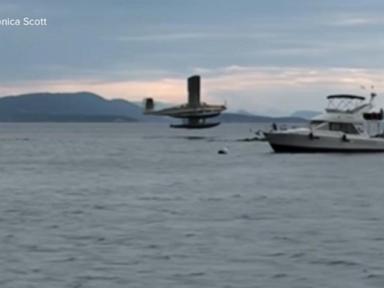
A holiday flight turned into a nightmare off the Washington coast. Eleven people survived after a Kenmore Air seaplane crashed and burst into flames near Sucia Island.
If you saw the viral video, you know how close this came to a total disaster. The de Havilland DHC-3 Otter hit the water, skipped toward the rocky shore, and erupted in thick black smoke. Everyone got out alive. That did not happen by accident. Quick-thinking boaters and local rescue crews pulled passengers from the wreckage just moments before bright orange flames consumed the fuselage.
Let's break down what actually happened during the emergency, how the rescue unfolded, and why safety experts are already asking tough questions about this specific aircraft model.
The Timeline of a Near-Disaster
Flight 140 left Lake Union in Seattle at about 4:30 p.m. on Thursday. The destination was Roche Harbor on San Juan Island, roughly 80 miles north.
Everything seemed normal until the aircraft approached Shallow Bay on Sucia Island around 5:15 p.m. Witnesses on nearby pleasure boats watched in horror as the plane came in too low.
- The pilot attempted an emergency landing in the water.
- The plane touched down hard on a single float, skipped back into the air, and slammed into the rocky shoreline.
- A crunching impact echoed across the bay just before the aircraft came to rest against a large coastal rock.
Within seconds, smoke poured from the cabin. Passengers began scrambling out of the doors while nearby boaters gunned their throttles to reach the sinking, smoking hulk.
The Good Samaritan Rescue That Saved Lives
You can't rely solely on official emergency services when an aircraft goes down in a remote archipelago. Seconds count.
Civilian vessels anchored in Shallow Bay rushed to the scene immediately. According to the U.S. Coast Guard, multiple good Samaritan boats arrived before official rescue assets could deploy.
Boaters pulled terrified passengers straight out of the water and away from the wreckage. Orcas Island Fire and Rescue, the San Juan County Sheriff's Office, and Coast Guard units flooded the area shortly after.
Out of the 10 passengers and one pilot on board, injuries ranged from cuts and broken bones to severe head trauma. One victim was rushed to the hospital in critical condition. Four passengers required transport to medical centers in Bellingham and Seattle, while seven others went to a Coast Guard base for evaluation. At least five victims were discharged by Friday, but the psychological impact of watching a plane catch fire right after a crash will linger much longer.
The Shadow of Past Crashes
This incident hit a raw nerve in the Pacific Northwest. The aircraft involved was a DHC-3 Otter, operated by Kenmore Air.
That model carries heavy baggage in Washington State. Back in 2022, a different DHC-3 Otter operated by a separate company plunged into Puget Sound, killing all 10 people on board. While Kenmore Air stated their aircraft passed standard inspections and canceled flights immediately following the crash, aviation enthusiasts and safety advocates are already demanding answers from the Federal Aviation Administration and the National Transportation Safety Board.
Kenmore Air CEO David Gudgel told reporters the company won't speculate on the cause while investigations are underway. Right now, NTSB investigators are sifting through the charred wreckage on Sucia Island to piece together engine telemetry, weather conditions, and pilot inputs.
What You Should Know If You Fly Floatplanes
Seaplanes are a staple of tourism in coastal hubs like Seattle, Vancouver, and Alaska. They offer incredible views and cut travel time to remote islands. They also operate under unique constraints compared to commercial jets.
- Floatplanes lack traditional runways, meaning pilots must constantly judge variable water conditions, wind gusts, and hidden obstacles.
- Emergency exits on older aircraft designs like the DHC-3 can become jammed or difficult to operate if the hull twists during a hard landing.
- Always listen to the pilot's safety briefing. Pay close attention to how emergency exits open before the flight pushes away from the dock.
If you have upcoming travel plans involving regional floatplanes, don't panic. Air travel remains statistically safe, but keeping your wits about you in an emergency is what separates survivors from statistics.
Check local advisories, review the carrier's safety record, and always know where the nearest exit is.