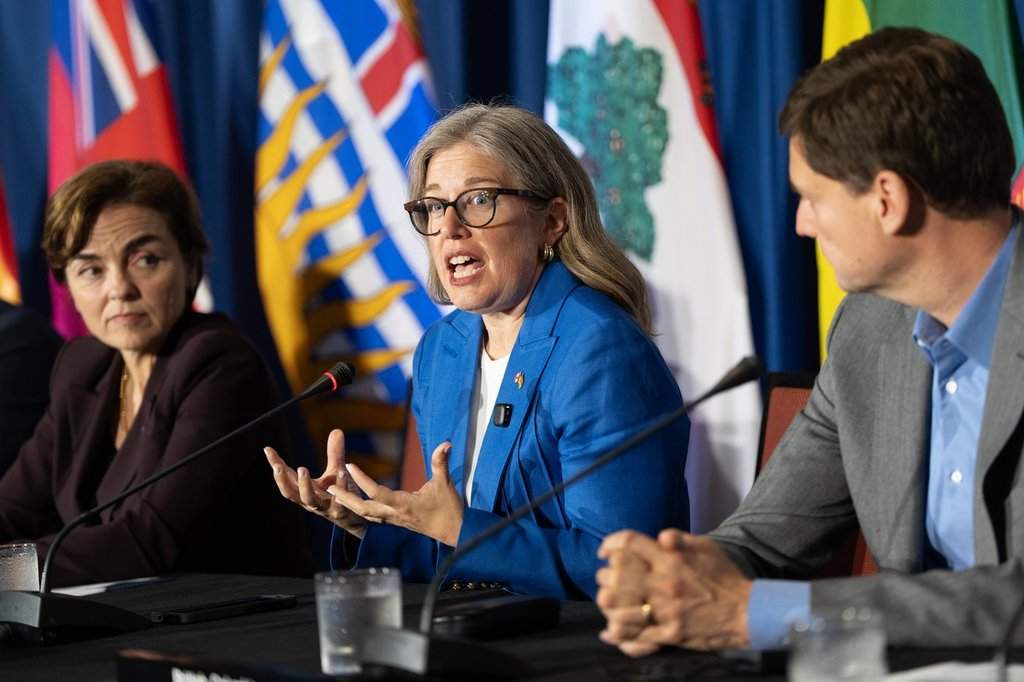
Trade wars rarely stay in the boardroom. They bleed right into grocery store aisles, local hardware shops, and family budgets. When trade talks between Ottawa and Washington collapsed, U.S. President Donald Trump immediately slapped a punishing 50 per cent tariff on billions of dollars worth of Canadian goods.
Now, regional leaders are pushing back. Eastern Canada premiers are doubling down on calls for residents to buy Canadian, hoping consumer habits can cushion the blow of an aggressive economic conflict. For a more detailed analysis into similar topics, we recommend: this related article.
The Reality of the New Tariff Wave
You cannot pretend this is business as usual. The latest round of U.S. levies targets roughly $28 billion in Canadian exports, hitting everyday items ranging from honey and hockey sticks to essential oils and dairy. Prime Minister Mark Carney has vowed to retaliate dollar-for-dollar with levies on American goods, but trade experts know that federal policy takes time to work through the supply chain.
That leaves regional premiers scrambling to protect local workers right now. For broader background on this topic, extensive analysis can also be found on NBC News.
In New Brunswick, Premier Susan Holt didn't mince words after the border restrictions hit. She warned that provincial businesses are staring down immediate financial threats, urging citizens to shift their spending habits toward home-grown operations.
Over in Prince Edward Island, Premier Rob Lantz pointed out the direct link between consumer choices and community survival. Every dollar spent on local goods supports the person who grew it, caught it, or built it. It sounds simple. Most people forget it until a crisis forces them to look at product labels.
Quebec Puts a Price Tag on Solidarity
Numbers talk louder than slogans. Quebec Premier Christine Fréchette laid out the math behind the regional strategy, noting that these new tariffs directly impact about $7.7 billion of her province's exports.
Her proposed fix? If every family in Quebec redirected just $25 a week toward local products, the resulting economic spinoff would inject roughly $3 billion back into the domestic economy.
Fréchette called buying local an act of national solidarity rather than a standard economic choice. Critics often dismiss these campaigns as empty political posturing, but shifting even a fraction of routine household spending creates a heavy buffer for businesses cut off from U.S. buyers.
What This Means for Your Wallet
You might wonder if buying Canadian just means paying higher prices for identical goods. Sometimes it does. Inflation has already stretched household budgets to the breaking point.
Yet the alternative is far worse. When regional manufacturing and agricultural sectors dry up, local jobs disappear with them. Premiers across the country—from British Columbia's David Eby to Nova Scotia's Tim Houston—are emphasizing a united front. They want Canadians to realize that reliance on the American market carries massive structural risks.
Look closely at your grocery receipts and retail purchases this week. Prioritize domestic alternatives whenever possible. Stand behind local producers before supply chains shrink further.