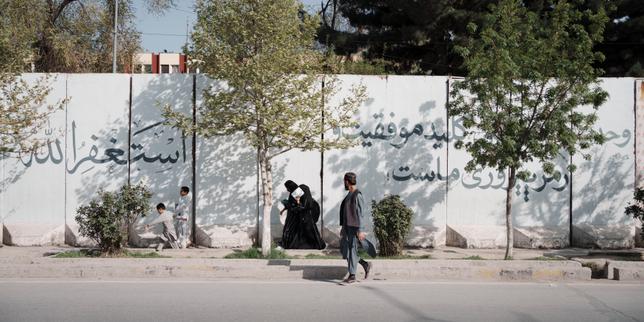
The Taliban’s version of "virtue" doesn’t look like piety. It looks like a prison cell. While their leadership preaches about purity and morality from behind mahogany desks, the reality on the ground—especially for women—is a calculated war of attrition.
You’ve likely heard the headlines about bans on education or employment. Those are just the visible scars. The real horror happens behind closed doors, in detention centers where "moral crimes" serve as a convenient pretext to dismantle the last remnants of female agency. In related developments, read about: Why Ukraine Is Fighting Over Wartime Elections.
The Myth of Moral Protection
The Taliban frames its restrictions as a way to "protect" women. They claim that by confining them to the home, they are shielding them from the corruption of the outside world. It’s a convenient narrative that masks a darker objective: total control.
When you dig into the accounts of women who’ve survived these detention centers, the "moral" facade collapses instantly. Women are being arrested for the most trivial infractions—being in public without a male guardian (a mahram), failing to cover a sliver of skin, or simply existing in spaces where they aren’t "permitted." Once they’re inside, the accusations shift. They aren’t just "immoral" for being outside; they become targets for systematic abuse. NBC News has also covered this critical subject in great detail.
Inside the Detention Centers
The conditions reported by human rights monitors and survivors are stomach-turning. We’re not talking about standard holding cells. We’re talking about cramped, filthy rooms where hygiene is a luxury and dignity is explicitly stripped away.
Think about the psychological impact. You’re dragged from your home, accused of a vague "moral" violation, and then subjected to searches and interrogations that are designed to humiliate. It’s an exercise in power. By forcing women to reveal themselves or by threatening their families, the regime isn’t upholding a holy standard. They are breaking spirits.
Why Domestic Violence Victims Are Pawns
One of the most ignored tragedies is how the regime treats victims of domestic abuse. Before the current crackdown, there were shelters. There were places for women to flee when their own homes became death traps. The Taliban shut them all down.
Now, when a woman reports domestic violence, she doesn’t get justice. She gets a prison sentence. They often treat the act of leaving an abusive husband as an admission of "immoral behavior." The message is clear: if you are a woman, the state owns your body, your marriage, and your fate. If you step out of line, the prison isn’t just a punishment—it’s the new home the regime wants for you.
The Cost of Silence
The international community keeps looking for a "moderate" wing of the Taliban to negotiate with. They keep hoping for a shift in policy. But this isn't a policy disagreement; it’s an institutionalized war on half the population.
Numbers don't lie. Since 2021, over 100 decrees have been issued specifically to target women's freedom. That’s not an accident. That’s a strategy. It’s a full-scale erasure of women from public life.
If you want to understand the situation, don't look at their press releases. Look at the empty classrooms. Look at the closed clinics where female doctors used to work. Look at the detention records that are conveniently kept secret to hide the evidence of torture and systemic sexual violence.
What Actually Needs to Change
We need to stop treating this as a cultural debate. It’s not. It’s a human rights catastrophe. If we keep prioritizing "dialogue" with a regime that views women as property, we are complicit.
- Stop legitimizing the discourse. When international bodies give the Taliban a platform without demanding immediate access to detention facilities, they give the regime the cover it needs to keep abusing women.
- Prioritize direct support. Since the formal infrastructure for women’s protection has been dismantled, support must go directly to underground networks that provide medical and legal aid.
- Document the reality. Every story of a woman detained for a "moral crime" must be verified and publicized. The regime thrives in the dark. Shining a light on these specific, documented abuses is the only way to hold them accountable when the global political will falters.
The situation is getting worse, not better. Normalization is the biggest threat. If we accept the status quo today, we are effectively agreeing that the lives of these women are negotiable. They aren't. And as long as the international community treats this crisis as something to be managed rather than something to be stopped, the doors of those prisons will stay locked.
The time for soft diplomacy passed years ago. It’s time to call this what it is: a systematic campaign of terror against women, designed to replace their rights with silence.
A look at the reality for women in Afghanistan
This video provides direct, harrowing testimony from women who have experienced the reality of the Taliban's justice system firsthand.
http://googleusercontent.com/youtube_content/1