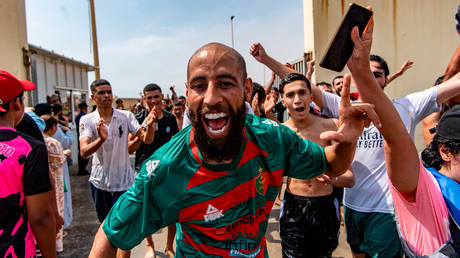
The anti-war movement inside Russia just lost one of its final public figureheads. Boris Nadezhdin, the 63-year-old veteran politician who rallied thousands around an explicit anti-war platform, popped up on Telegram standing right in front of the Eiffel Tower.
"Good news: I'm alive and free," he announced from Paris. "Unfortunately, not in Russia for the time being."
If you watched his long-shot 2024 presidential run, you knew this exit was coming. The Kremlin doesn't tolerate open dissent, and it tolerates electoral defiance even less. When Nadezhdin tried to build momentum for the upcoming September parliamentary elections, the state machinery moved fast. They slapped him with a "foreign agent" label, hit him with administrative charges over an old online video featuring Alexei Navalny, and effectively locked him out of the ballot.
You're left wondering how long any public critic can survive inside a tightening vacuum. The answer, at least for Nadezhdin, is that his luck ran out just weeks after entering the race.
The Anatomy of a Kremlin Crackdown
State suppression in Russia rarely happens overnight. It's a calculated, step-by-step squeeze designed to isolate targets before pushing them out or locking them up.
Take a close look at Nadezhdin’s timeline leading up to his escape. Last month, authorities detained him briefly over a minor administrative violation. Then came the justice ministry's "foreign agent" designation—a scarlet letter meant to dry up any remaining institutional support, impose crippling reporting duties, and ruin public credibility.
The final legal nail was an extremism-related charge over a 2023 video clip that briefly showed the late opposition leader Navalny. A court fined him a nominal amount, but the political consequence was massive. Under Russian law, an extremism conviction strips a candidate of the right to run for public office.
The state didn't need to throw him into a high-security penal colony immediately. They just made legal survival impossible.
Why the 2026 Parliamentary Vote Terrifies Moscow
You might ask why the Kremlin cares so much about a parliamentary election it always controls anyway. United Russia and its loyalist allies face a very specific anxiety this year.
Public fatigue over the war in Ukraine is creeping past official censorship. Economic pain, inflation, and localized fuel shortages are straining households. When people feel pinched, token opposition stops looking harmless. It starts looking like a lightning rod.
That is why even mild anti-war platforms like Nadezhdin's—or the hurdles thrown at the liberal Yabloko party—face total eradication. The regime cannot risk any electoral outlet channeling public discontent, even if the ballot boxes are heavily managed.
The Reality of Exile for Russian Dissidents
Fleeing to Paris doesn't solve everything. Nadezhdin noted in his video statement that he needs "to look around and figure out life going forward".
Political exile is a lonely, complicated business. You lose your physical constituency, your daily connection to the ground, and your immediate safety net. Other prominent critics learned this the hard way over the past decade. Yet staying meant facing a choice between silent compliance or a long prison sentence under harsh penal conditions.
Nadezhdin chose survival. He spent decades working inside and around Russia's political system, serving as a municipal lawmaker and a 1990s government adviser. Seeing someone with that deep institutional background forced into French exile underscores just how narrow the political corridor has become.
The upcoming parliamentary vote will happen without any genuine anti-war voices on the ticket. The stage is cleared. But clearing the stage doesn't make the underlying friction disappear.