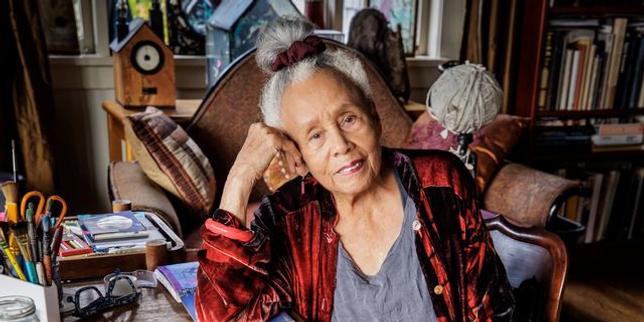
Betye Saar died in her sleep on July 26, 2026, just four days shy of her one hundredth birthday. She lived long enough to see her art reshape cultural memory, challenge racial violence, and rewrite the rules of assemblage. Most people remember her for a single, shocking image created in 1972. They miss the seven decades of relentless creation that followed.
Her passing in Los Angeles marks the end of an era for the Black Arts Movement and second-wave feminism. Yet, her influence isn't buried in history books. It lives on in every gallery space that dares to question power structures through everyday junk and found objects.
The Alchemist of Found Objects
Saar didn't paint pretty pictures on pristine canvases. She gathered the discarded debris of American racism and family history, turning trash into sacred testaments. Born in Los Angeles in 1926, her artistic awakening came early. While spending childhood summers in Watts, she watched Simon Rodia build the legendary Watts Towers by hand using scrap metal, broken glass, and tiles. That raw, do-it-yourself blueprint stuck with her.
She studied design at UCLA and worked as an interior decorator before diving headfirst into art. By the late nineteen sixties, her work took a sharp, mystic turn. She used old window frames, bird cages, tin washboards, and faded photographs to build shrines.
Look at Black Girl's Window from 1969. It uses a weathered wood window frame to trap mystical symbols, a silhouette of a hand, and a photograph of a child. It feels intensely personal. At the same time, it captures the claustrophobia of growing up Black and female in America.
The Weaponization of Aunt Jemima
You cannot talk about political art without talking about The Liberation of Aunt Jemima. Created in 1972, this piece changed everything.
Saar took a commercial memo pad featuring a smiling, racist caricature of a mammy figure and flipped the script. In her assemblage, the grinning domestic servant holds a broom in one hand and a rifle in the other. A clenched Black power fist sits at the base.
She took a symbol designed to comfort white supremacy and turned it into an armed warrior of liberation. It was sharp. It was dangerous. It made institutions uncomfortable. Saar proved that craft could carry political fury without losing its poetic soul.
Building Legacies Beyond the Gallery
Saar kept working when most people would have retired decades prior. Into her nineties, she produced massive, site-specific installations. Her outdoor work at the Huntington Library gardens, titled Drifting Toward Twilight, stands as a haunting testament to her connection with nature and time.
She mentored countless younger artists, including painters like Kerry James Marshall. She built communities across Los Angeles, connecting local histories with global spiritual traditions like Haitian Vodou and Mexican milagros.
Before her death, she worked alongside Roberts Projects to establish the Betye Saar Legacy Group, ensuring scholars and curators would protect her vision. Major institutional retrospectives continue to travel globally, proving her relevance stretches far beyond her local West Coast roots.
She didn't wait for permission to be radical. She just built the future out of the past.