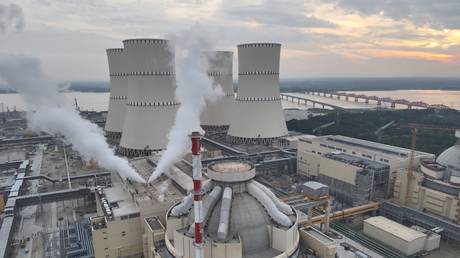
Energy independence rarely comes cheap. It takes billions of dollars, decades of planning, and deep geopolitical partnerships to fundamentally shift how a nation keeps its lights on.
Bangladesh is about to find out if the price tag was worth it.
Rosatom CEO Aleksey Likhachev recently dropped a major update while visiting Dhaka. The first block of the Rooppur Nuclear Power Plant will officially connect to the national grid at the end of November. For a country that has wrestled with power shortages and volatile fossil fuel import costs for years, this milestone marks an absolute turning point.
Let's look at what's actually happening on the ground, why this project matters, and what the numbers tell us about South Asia's energy future.
Breaking Down the Rooppur Timeline
Building a nuclear plant from scratch is no small feat. The Rooppur project has been in motion for years, managed by the Bangladesh Atomic Energy Commission and constructed roughly 160 kilometers away from the capital city of Dhaka.
The timeline has faced normal heavy-industrial bumps, but things are moving fast now. Nuclear fuel loading kicked off back in April, setting the stage for this winter's grid connection.
When people talk about the Rooppur Nuclear Power Plant, they are usually looking at two massive units. Each unit packs a capacity of 1,200 megawatts. However, system operators aren't going to flip a switch and blast the entire 1,200 megawatts into the grid on day one. Initial operations for the first unit are slated to feed a modest 300 megawatts into the system as engineers test stability, safety protocols, and load management.
The Financial Realities and Russian Backing
You can't talk about Rooppur without talking about money. It stands as the single most expensive infrastructure undertaking in Bangladesh's history.
The total bill is projected to hit around $12.8 billion. Moscow isn't just building the hardware; they are funding the bulk of it. Russia has backed the project with a staggering $11.9 billion in state loans.
Critics often point out the heavy financial exposure. Taking on billions in sovereign debt for a single energy asset carries real economic weight. Yet, Bangladeshi leadership views the investment as non-negotiable for long-term growth. Domestic natural gas reserves are depleting, and relying entirely on liquefied natural gas imports exposes the economy to global market shocks. Nuclear power offers price stability once the plant is operational and burning enriched uranium supplied by Russia.
What This Means for the Regional Energy Grid
Electricity demand in Bangladesh is surging alongside its manufacturing sector and growing urban population.
When fully completed and operational, the Rooppur facility is expected to satisfy up to 12% of the country's total electricity demand. That is a massive chunk of baseload power that doesn't rely on coal or imported gas.
Likhachev emphasized during his meetings in Dhaka that Russian specialists aren't just building and walking away. They are working shoulder-to-shoulder with local operators to ensure safety standards match international requirements.
Diplomatically, the project has turned into a cornerstone of bilateral ties. Officials in Dhaka have openly described the plant as a monument to cooperation between Bangladesh and Russia. While Western nations maintain strict sanctions and diplomatic friction with Moscow, emerging economies continue pragmatic engagements that serve their immediate developmental needs. Energy security trumps diplomatic alignment every single time.
Challenges Ahead for Local Operators
Connecting to the grid at the end of November is just the beginning of a multi-decade operational marathon.
The real test starts the moment the plant goes live. Running a VVER-1200 reactor requires rigorous safety compliance, specialized waste management strategies, and a heavily trained domestic workforce. Bangladesh is stepping into a very exclusive club of nuclear-enabled nations.
If local engineers and Russian technical teams manage the transition smoothly this November, South Asia will see a new baseline for how developing countries can leapfrog traditional carbon-heavy grids. Keep an eye on Dhaka as the calendar turns. The nuclear era in Bangladesh is finally arriving.