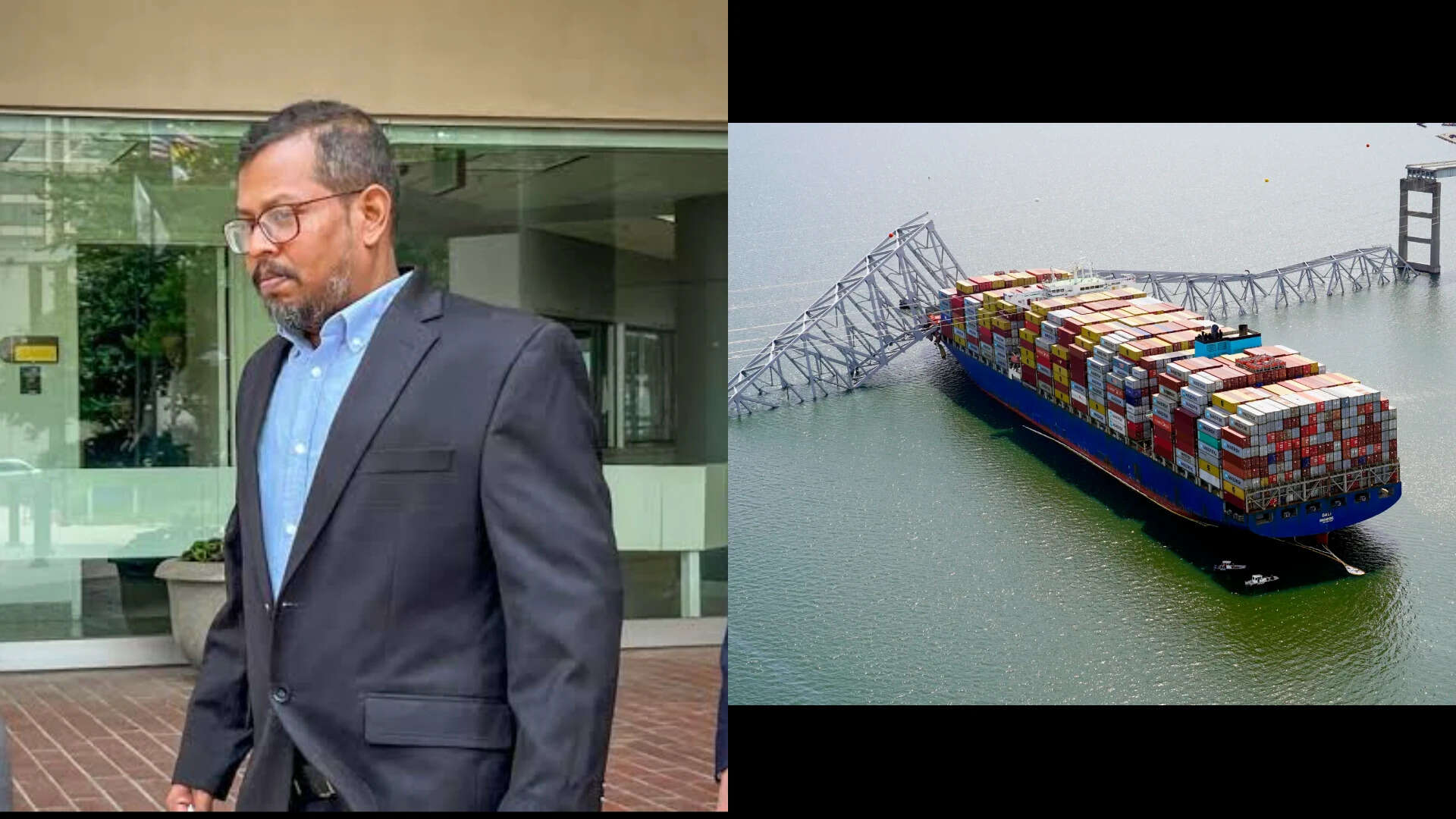
Two years after the Francis Scott Key Bridge crumbled into the Patapsco River, we're finally getting to the raw truth of what happened in those chaotic minutes before impact. The news cycles have moved on, but the legal and structural fallout is just peaking. Recently, testimonies from the cargo ship Dali's crew—specifically the ship's Indian-origin chief engineer—shed light on the precise mechanical failures and human missteps that caused the catastrophe.
It wasn't just bad luck. It was a series of compounding technical oversights.
When the massive container ship lost power and slammed into a critical support pillar in March 2024, it killed six construction workers and paralyzed one of America's most vital ports. For months, federal investigators combed through black boxes, maintenance logs, and electrical grids. The core question remained. Why did a modern ocean liner completely lose steering and propulsion at the worst possible micro-second?
The answers coming out of the official hearings show that human error in the engine room played a much bigger role than anyone initially wanted to admit.
What Really Happened in the Dali Engine Room
The National Transportation Safety Board (NTSB) focused heavily on the vessel's electrical distribution system. Ocean-going cargo ships rely on complex high-voltage networks to run everything from the massive diesel engines to the steering pumps. If the electricity goes dark, the ship becomes an unguided 100,000-ton steel block.
That's exactly what happened.
The chief engineer admitted to a specific operational mistake regarding the ship's circuit breakers. In the days leading up to the departure from Baltimore, the vessel experienced intermittent electrical fluctuations. Instead of keeping the primary and backup systems completely isolated to prevent a total blackout, a configuration error connected them in a way that allowed a single fault to trip the entire grid.
When an exhaust dampener accidentally closed, it caused the engine to stall. Under normal setups, the backup generator should have isolated the failure and kept the steering pumps online. Because of the configuration oversight, the blackout cascaded instantly. The crew was left blind in the dark, drifting toward a massive concrete pier at eight knots.
They tried to recover. They didn't have enough time.
The Illusion of Redundancy in Modern Shipping
We love to believe that modern engineering has solved catastrophic failure. Every major system on a container ship has a backup. There are backup generators, backup steering motors, and backup batteries.
But redundancy is only as good as the human beings managing it.
Maritime engineers work under intense pressure to keep tight schedules. Delays cost shipping lines tens of thousands of dollars per hour. This environment creates a culture where minor electrical glitches get patched rather than deeply investigated.
[Bridge Departure]
       │
[Exhaust Dampener Fails] ──> Engine Stalls
       │
[Incorrect Breaker Setup] ──> Cascading Blackout
       │
[Total Loss of Steering] ──> Bridge Collision
The chief engineer's admission highlights a systemic issue in the maritime industry. When a system throws a warning sign, crews often find workarounds to keep moving. In this case, the workaround directly disabled the safety net designed to protect Baltimore's infrastructure.
The Tragic Structural Reality of the Key Bridge
We can blame the ship's crew all day, but the bridge itself was a sitting duck. Built in the 1970s, the Francis Scott Key Bridge was designed before the era of mega-container ships. The vessels using the port today are monstrously larger than anything the original engineers envisioned.
The bridge lacked modern protective barriers.
Think about large structures called fenders or dolphins. These are massive concrete structures placed in the water ahead of a bridge pier to absorb the impact of a stray ship or redirect it away from the steel pillars. The Key Bridge had rudimentary protection, but it was completely inadequate for a vessel of the Dali's mass.
When the ship struck, the force bypassed any meaningful defense and hit the primary support column directly. The continuous truss design meant that once one major support failed, the entire superstructure was doomed to unzip and collapse into the water. It took less than a minute for the entire span to fall.
Real Lessons for Global Infrastructure
If we don't change how we protect coastal infrastructure, this will happen again. Ports around the world are welcoming bigger ships every single month, yet the bridges spanning those channels remain decades old.
The immediate next steps require action from both port authorities and shipping companies.
- Mandatory Tugboat Escorts: Large vessels should not navigate tight, bridge-heavy channels under their own power alone. Tugboats must remain attached until the ship clears all major infrastructure, providing immediate steering and braking assistance if a ship's engine room goes dark.
- Physical Protection Upgrades: Governments must invest in physical dolphins and artificial islands around vulnerable bridge piers. If a ship loses power, it should run aground on a sand island or smash into a sacrificial concrete barrier long before it ever touches a structural bridge column.
- Stricter Electrical Audits: Maritime regulators need to enforce unannounced, rigorous testing of automated backup systems. Workarounds that bridge primary and backup electrical networks should result in immediate grounding of the vessel.
The disaster in Baltimore proved that a single oversight in a ship's engine room can cripple an entire metropolitan economy and cost innocent lives. True safety requires treating human error as an inevitability, not a surprise. We must build physical and regulatory walls that stop a single person's bad day from bringing down a piece of national infrastructure.