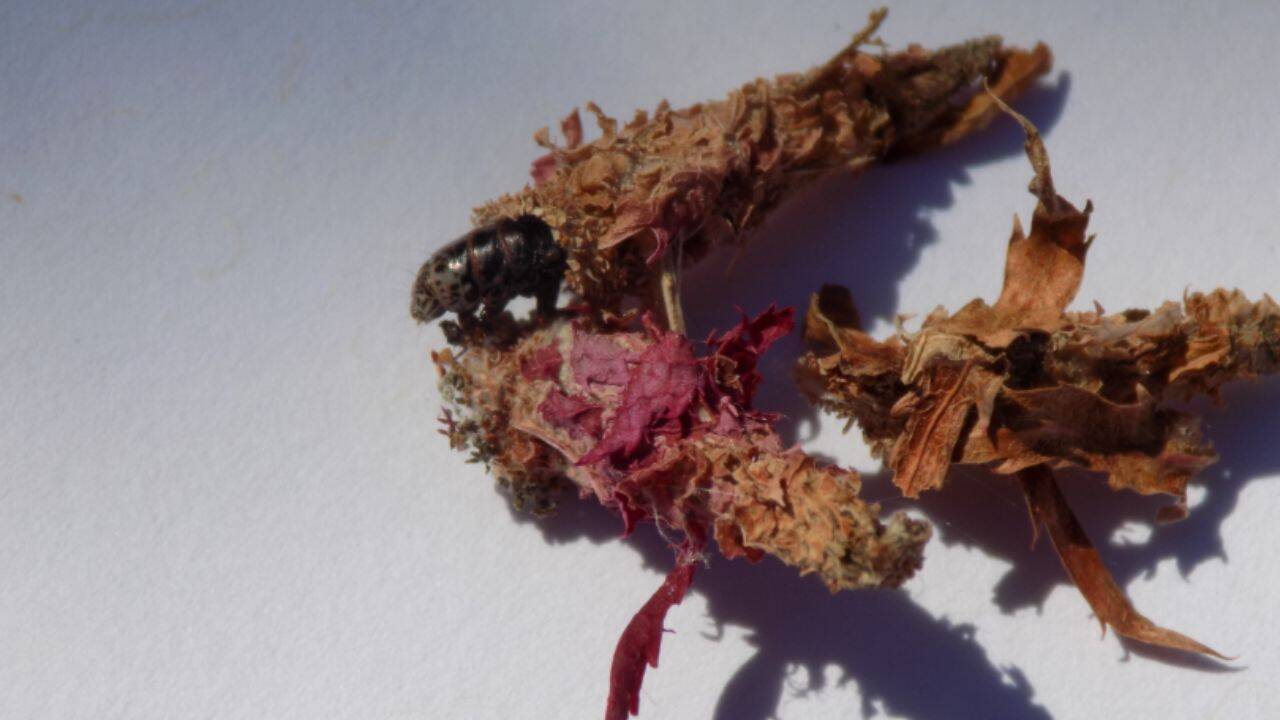
Imagine spending your entire youth dragging a custom-built log cabin or leaf-shrouded shelter everywhere you go. For the bagworm caterpillar, this isn't survival fiction. It's Tuesday. These tiny architects of the insect world spin structural silk from their own bodies and armor it with bits of leaves, twigs, and bark. The result is a tough, portable case that functions as both a mobile bunker and an elite camouflage suit.
If you have ever spotted what looks like a tiny, animated stick or a weirdly shaped leaf dangling from a tree branch, you've likely crossed paths with a bagworm. Let's break down how these master builders construct their lifelong houses, why their life cycle is bizarrely asymmetrical, and what you need to know if they show up in your yard.
The Engineering Behind the Portable Bag
Bagworms belong to the family Psychidae, encompassing thousands of species globally. The process begins the moment the larva hatches. Tiny and vulnerable, a newborn bagworm wastes zero time. It immediately spins a cone-shaped base layer of silk, often looking like an upside-down ice cream cone.
As it crawls around searching for food, it glues fragments of its local environment onto the exterior. Depending on the species and available foliage, a bagworm case might feature:
- Pine needles arranged in tight geometric patterns
- Tiny hardwood twigs stacked like a miniature log cabin
- Shredded leaves and plant debris that mimic natural detritus
This architecture scales up in real-time. The caterpillar doesn't build one house and stay put. As its body grows—stretching anywhere from a quarter of an inch to over two inches long—it continuously adds new material to the front opening. The bug pokes its head and thoracic legs out to walk and feed, dragging the heavy structural shell behind it like an ultra-cautious backpacker. If a predator approaches, the caterpillar anchors the case with silk or pulls itself entirely inward, sealing the hatch tight.
A Bizarre Life Cycle and Radical Sex Differences
The bagworm existence takes an extreme turn when it's time to mature. According to data from agricultural extension publications, these insects undergo a radical transformation that separates the sexes entirely.
In late summer, mature caterpillars anchor their bags permanently to twigs or bark and enter the pupal stage. Weeks later, adult males emerge as functional, winged moths. They leave their historic cases behind, flying off frantically in search of a partner.
Females take a completely different path. A female bagworm never develops wings, legs, or even eyes. She stays inside her protective silk case for her entire life. After mating through a small opening at the bottom of the bag, she deposits between 500 and 1,000 eggs directly inside her old pupal shell, then dies. Those eggs overwinter safely inside the structure, hatching late in spring to repeat the cycle.
Friend or Foe: Managing Bagworms in the Garden
While watching a caterpillar haul a leaf-covered mansion across a branch is fascinating, property owners often view them differently. Heavy infestations can strip evergreen trees and shrubs bare, causing severe aesthetic and structural damage to arborvitae, cedar, and juniper plants.
If you find these cases hanging on your trees during winter, don't ignore them. Those old bags might be packed with hundreds of overwintering eggs waiting for warmer weather.
To manage them effectively:
- Hand-picking: Snip the bags off the branches manually during winter or early spring before the eggs hatch. Drop them into soapy water to destroy them.
- Timing treatments: If you use biological controls like Bacillus thuringiensis (Bt) or targeted insecticides, apply them in late spring when the newly hatched larvae are small and actively feeding outside their bags. Waiting until late summer is useless because mature caterpillars stop eating and seal their cases.
Look closely at your landscape plants this season. That tiny moving twig might just be a master builder securing its next generation.