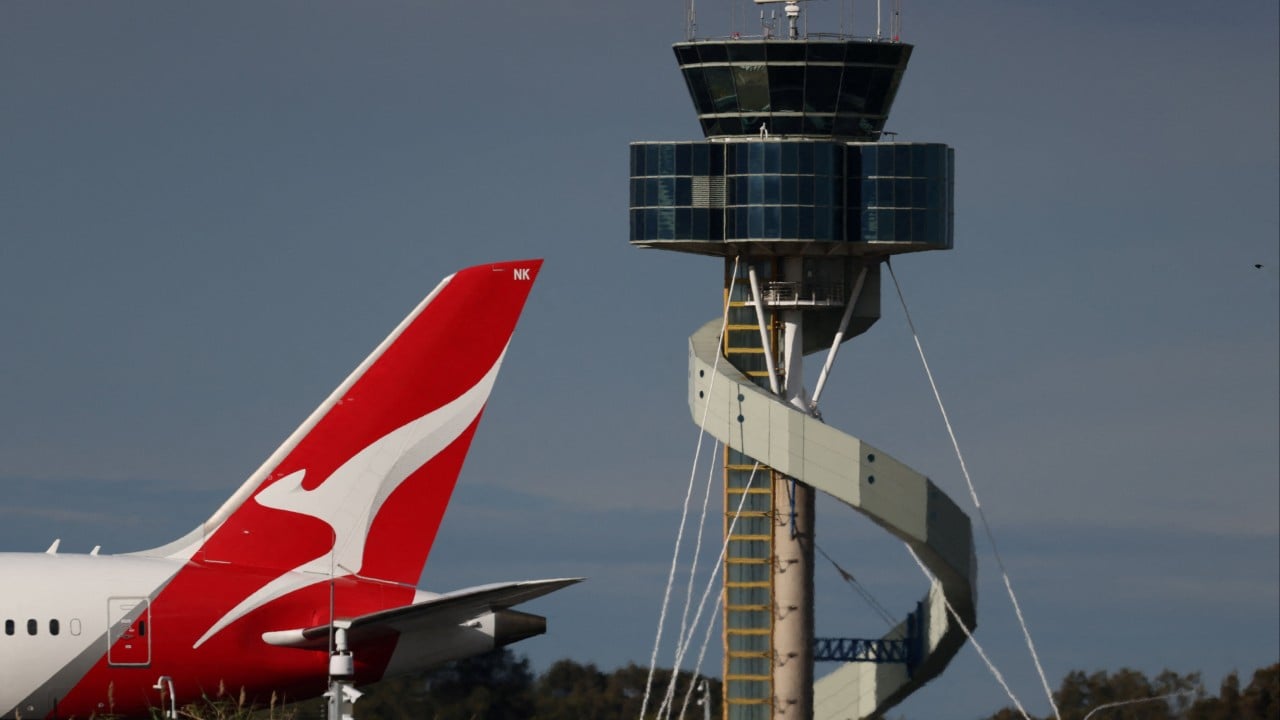
Planes nearly colliding on runways and tarmac tracks don't happen by accident. They happen when a system runs on fumes, and right now, Australia's airspace is dangerously close to empty. Sydney Airport alone recorded at least four close calls over the span of a single month, exposing a brutal reality behind the nation's aviation network.
If you look at the headlines, you'll see a lot of finger-pointing about scheduling errors and sudden tarmac scares. But the root cause runs much deeper than a few bad shifts. Let's break down why Australia's air traffic controller shortage is turning into a full-scale safety crisis and why fixing it won't be quick or easy.
The Breaking Point at Sydney Airport
When a passenger jet has to abort its takeoff because another aircraft is sitting right in its path, safety margins have completely vanished. That exact scenario played out recently, alongside another incident where a taxiing plane had to slam on its brakes to avoid a collision.
These aren't isolated quirks. They are symptoms of chronic understaffing. Airservices Australia—the commonwealth-owned organization managing the skies—has been wrestling with a depleted workforce ever since a wave of pandemic-era redundancies cleared out 140 experienced staff aged 56 or older back in 2021.
While the organization claims total headcounts have ticked up to over 1,000 controllers, raw numbers lie. The actual demand has skyrocketed. New airspace management responsibilities and the upcoming launch of the Western Sydney International Airport mean the existing roster is stretched thinner than ever.
Why the Roster Relies on Endless Overtime
Ask any insider how the daily schedule gets filled, and the answer is terrifying: overtime.
According to Civil Air, the union representing air traffic controllers, the baseline staff numbers aren't even enough to cover the core roster before accounting for sick leave. Controllers are legally entitled to sick days, but taking them leaves holes that can only be patched by forcing working colleagues to pull brutal double shifts. Some staff have reported working ten days straight with only a single day off.
Exhausted people make mistakes. When cognitive fatigue sets in, the standard safety buffers shrink. Controllers are forced to increase spacing between aircraft simply to manage the reduced manpower. Fewer planes get handled safely, cascading into massive flight delays across the country.
The Bottleneck in Recruitment and Training
You might wonder why Airservices doesn't just hire a thousand people tomorrow. The training pipeline makes that impossible.
The job is notoriously difficult to break into. Around 2,000 candidates might apply for a single intake, and only about 15 make the cut. The aptitude tests are brutal, and applicants face another major hurdle: mandatory training takes place exclusively in Melbourne.
Expecting potential recruits to uproot their lives and move interstate for a high-stress training program with no guarantee of passing keeps candidate numbers low. Even when trainees pass, turning a rookie into a fully endorsed controller at a high-pressure hub like Sydney takes years of mentoring.
Fixing this mess requires decentralizing training facilities, sweetening retention bonuses, and accepting that running an aviation network on mandatory overtime is a disaster waiting to happen. Until those structural changes take hold, expect more delays and closer calls in Australian skies.