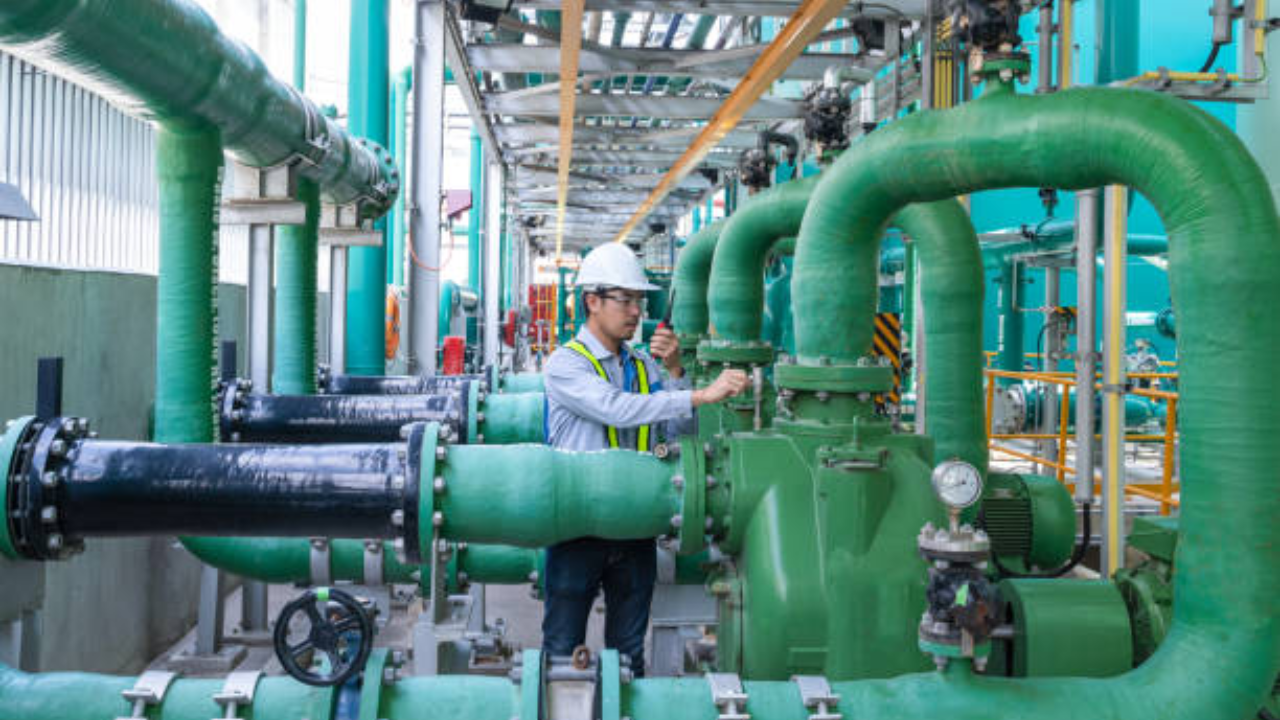
Water scarcity doesn't care about your municipal planning timelines. While major cities argue over quotas, regional towns face the harsh reality of dry riverbeds and unpredictable rainfall. That's why a new $7.8 million advanced wastewater treatment plant in Dubbo, New South Wales, matters. It isn't just another recycling plant. It represents a fundamental shift in how we handle sewage effluent, turning a disposal headache into a vital liquid asset.
Built right next to the town's existing sewage facility, this installation processes up to 700 megalitres of wastewater annually. To put that in perspective, it's roughly 280 Olympic-sized swimming pools worth of water. More importantly, it tackles the biggest flaw in traditional recycling: the stubborn, toxic compounds that standard filtration leaves behind.
The Physics Behind the Fixed Catalyst
Standard advanced oxidation systems have a major limitation. They require loose catalysts or complicated chemical dosing that constantly needs replenishment, driving up operational costs and energy consumption. Water treatment scientist Troy Warry spent years trying to fix this exact bottleneck.
The resulting technology uses a titanium-dioxide-based catalyst that stays permanently immobilized inside the reactor while remaining intensely photoactive. When light hits the system, it accelerates reaction kinetics to a level that Warry claims is roughly 16 times more efficient than conventional setups.
Instead of merely acting as a physical sieve—which traditional membranes do, often leaving behind a concentrated salty brine—this reactor actively destroys the molecular bonds of contaminants.
What Gets Destroyed Inside the Reactor
We aren't just talking about basic organic matter or suspended solids. Municipal wastewater is a chemical soup filled with modern contaminants that older treatment plants were never designed to handle.
The system tears apart:
- Pharmaceutical residues and prescription drugs
- Stubborn agricultural antibiotics
- Endocrine-disrupting hormones
- Traces of petroleum hydrocarbons
- Industrial pesticides
By attacking the chemical structures directly rather than moving pollutants into a secondary waste stream, the plant delivers exceptionally clean water without generating the heavy, salty reject streams that plague inland reverse osmosis plants.
Why a Regional Town Took the Risk
Big cities love talking about innovation, but regional councils usually take the operational risks. Dubbo Regional Council didn't act alone. They formed a public-private partnership with renewable energy developer Squadron Energy, which chipped in $3.6 million of the funding.
Squadron didn't do this out of pure charity. They needed massive amounts of water to construct three local wind farms and an energy firming station. By tapping into this recycled supply, the industrial project avoids draining local drinking water reserves. As Dubbo Mayor Josh Black bluntly put it, the arrangement means the town won't have to choose between drought management and economic development.
The 700-megalitre capacity covers about 11 percent of Dubbo's total annual water demand. That is a massive buffer for an inland community vulnerable to dry spells.
The Reality Check on Scalability
Before you assume every town will copy this tomorrow, let's look at the hurdles. While the system logged pilot testing hours in Germany, Spain, and Norway, deploying it at a multi-million-dollar municipal scale is a different beast.
Independent experts, such as University of Sydney civil engineering professor Stuart Khan, have pointed out that while the approach is promising, its long-term performance metrics under continuous municipal loads still need rigorous, independent verification. Furthermore, regulatory approvals take time. Dubbo is currently walking through administrative hoops to clear the water for dust suppression, concrete batching, and sports oval irrigation via partnerships with the University of Newcastle.
If those trials succeed, this setup provides an enticing blueprint for inland municipalities everywhere. As groundwater reserves deplete and populations swell, treating wastewater as a throwaway byproduct is a luxury we can no longer afford. Stop looking at sewage as the end of the line. Treat it like the raw material it actually is.