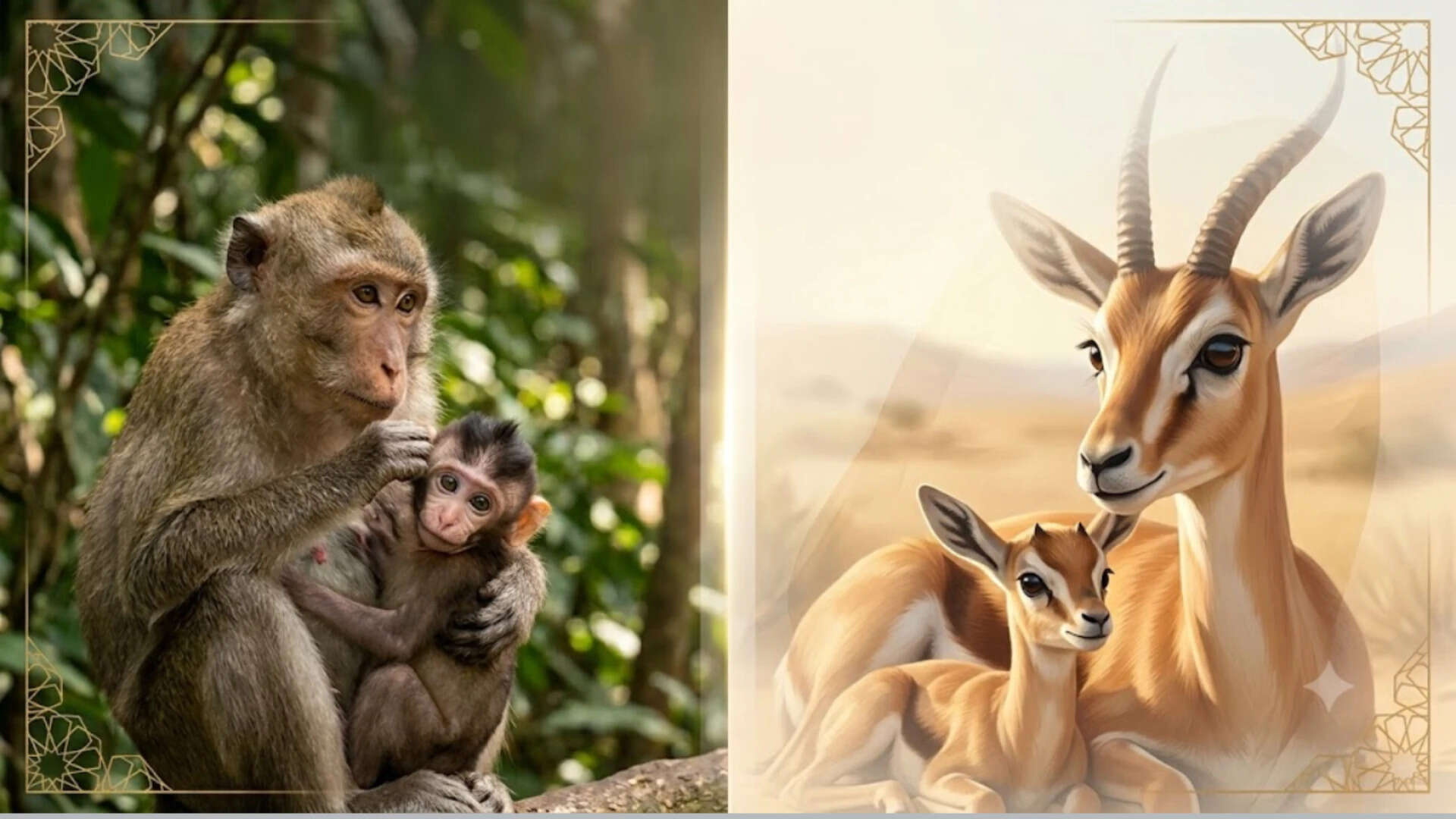
We all think our kids are geniuses. It's a survival mechanism. You look at your screaming toddler covered in spaghetti sauce and somehow see a future Nobel laureate. Cultures have tried to capture this exact phenomenon for centuries, but nobody did it quite like the ancient Arabs.
The classic Arabic proverb of the day 'The monkey is a gazelle in its mother's eyes' sums up this beautiful, slightly terrifying delusion perfectly.
It's an ancient saying. Yet, it feels intensely relevant right now. Go on Instagram or TikTok today. You'll see parents bragging about their kids doing completely mundane things as if they just split the atom. Love blinds us. It changes our neurochemistry. It transforms a clumsy, chaotic little monkey into a graceful, flawless gazelle.
Understanding this proverb isn't just a fun lesson in linguistics. It's a look into human psychology, evolution, and the dangerous traps of modern parenting.
The Story Behind the Monkey and the Gazelle
The phrase originates from traditional Arabic folklore, specifically rooted in fables like those found in Kalila and Dimna. One popular version of the tale involves a ruler or a hunter who wanted to hand out a prize for the most beautiful animal in the kingdom. All the animals lined up. The lion brought its cub. The gazelle brought its fawn.
Then came the monkey, proudly presenting its wide-eyed, hairy offspring.
The crowd laughed. The organizer pointed out the obvious physical flaws. The mother monkey got defensive, hugged her baby tight, and declared that to her, the little creature was more beautiful than any gazelle.
It stuck. For centuries across the Middle East and North Africa, people have used this phrase to gently mock over-enthusiastic parents. It's the ultimate reality check wrapped in a joke. It reminds us that affection warps our vision.
The Cognitive Bias of Pure Affection
Psychologists have a lot of fancy names for what the mother monkey experienced. They call it confirmation bias or positive illusive bias.
Brains are wired for connection. When you love someone deeply, your brain floods with oxytocin and dopamine. These chemicals literally suppress the areas of the brain responsible for critical judgment. You physically cannot see the flaws that are glaringly obvious to everyone else in the room.
- The School Performance Blindspot: Your child gets a bad grade, and your immediate instinct is to blame the teacher, the test format, or the lighting in the classroom.
- The Talent Illusion: Believing a child is destined for the Olympics because they managed to kick a soccer ball straight once.
- The Behavioral Pass: Excusing blatant rudeness or tantrums as "just being tired" or "showing leadership skills."
We need this bias to an extent. Raising children is exhausting, expensive, and stressful. If parents didn't have a built-in mechanism making them completely obsessed with their offspring, the human race would have died out a long time ago. Evolution chose the gazelle illusion because it keeps babies alive.
How Other Cultures Frame the Delusion
The Arabs weren't the only ones who noticed this trait in human nature. Every culture has its own version of the monkey and the gazelle, though the animals change based on what was running around the local area.
In English, we often say "love is blind," but that's too broad. It applies to romance, friendships, and hobbies. It lacks the specific, sharp sting of the Arabic version.
The French say chacun trouve son coucou beau, which translates to "everyone thinks their own cuckoo bird is beautiful." The concept is identical, but a cuckoo lacks the dramatic visual contrast between a monkey and a gazelle.
A gazelle in Arabic poetry represents the absolute pinnacle of grace, beauty, and elegance. The eyes of a gazelle are legendary in classical literature. By contrasting that specific animal with a monkey, the proverb highlights the sheer scale of the parental delusion. It's not just a minor miscalculation. It's a total inversion of reality.
When the Illusion Turns Toxic
Seeing your kid as a gazelle is harmless when they're five years old drawing a stick figure. It becomes a massive liability when they grow up and enter the real world.
Modern parenting culture has weaponized the gazelle illusion. We live in an era of participation trophies and constant validation. Parents shield their children from failure, criticism, and discomfort.
When you treat a child like a flawless gazelle for twenty years, the real world hits them like a brick wall. Bosses don't have parental blindspots. Professors don't care about your child's hidden potential. The outer world treats them exactly like what they are: ordinary humans who need to work hard to earn respect.
Young adults raised by parents who refused to acknowledge their flaws often struggle with intense anxiety and fragile egos. They can't handle feedback because they've never received it. They feel entitled to success without putting in the grueling hours required to achieve it.
Striking a Balance Between Love and Reality
You don't have to stop loving your kids or telling them they're great. You just need to keep one eye firmly planted in reality. You can think your child is the most magical creature on earth while simultaneously recognizing that their math skills need serious work.
True parental love isn't blind. True love sees the flaws, accepts them, and helps the child grow through them.
Start by changing how you praise them. Don't praise their identity by calling them a genius or a natural superstar. Praise their effort. If they build a cool Lego tower, don't tell them they're the next Frank Lloyd Wright. Tell them you love how focused they were and how hard they worked to balance the pieces.
Listen to outside feedback. When a coach, a teacher, or another parent brings a behavioral or academic issue to your attention, don't immediately get defensive like the mother monkey in the fable. Take a breath. Step back. Ask yourself if your internal gazelle filter is distorting the truth.
Your Next Steps
Take an honest look at how you view the people closest to you this week.
Look at your kids, your partner, or even your own projects. Identify one area where you've been letting affection totally distort your judgment. Write it down. Acknowledge the flaw clearly without judging it or trying to excuse it away.
Strip away the illusion. It's the only way to help them, and yourself, actually improve.