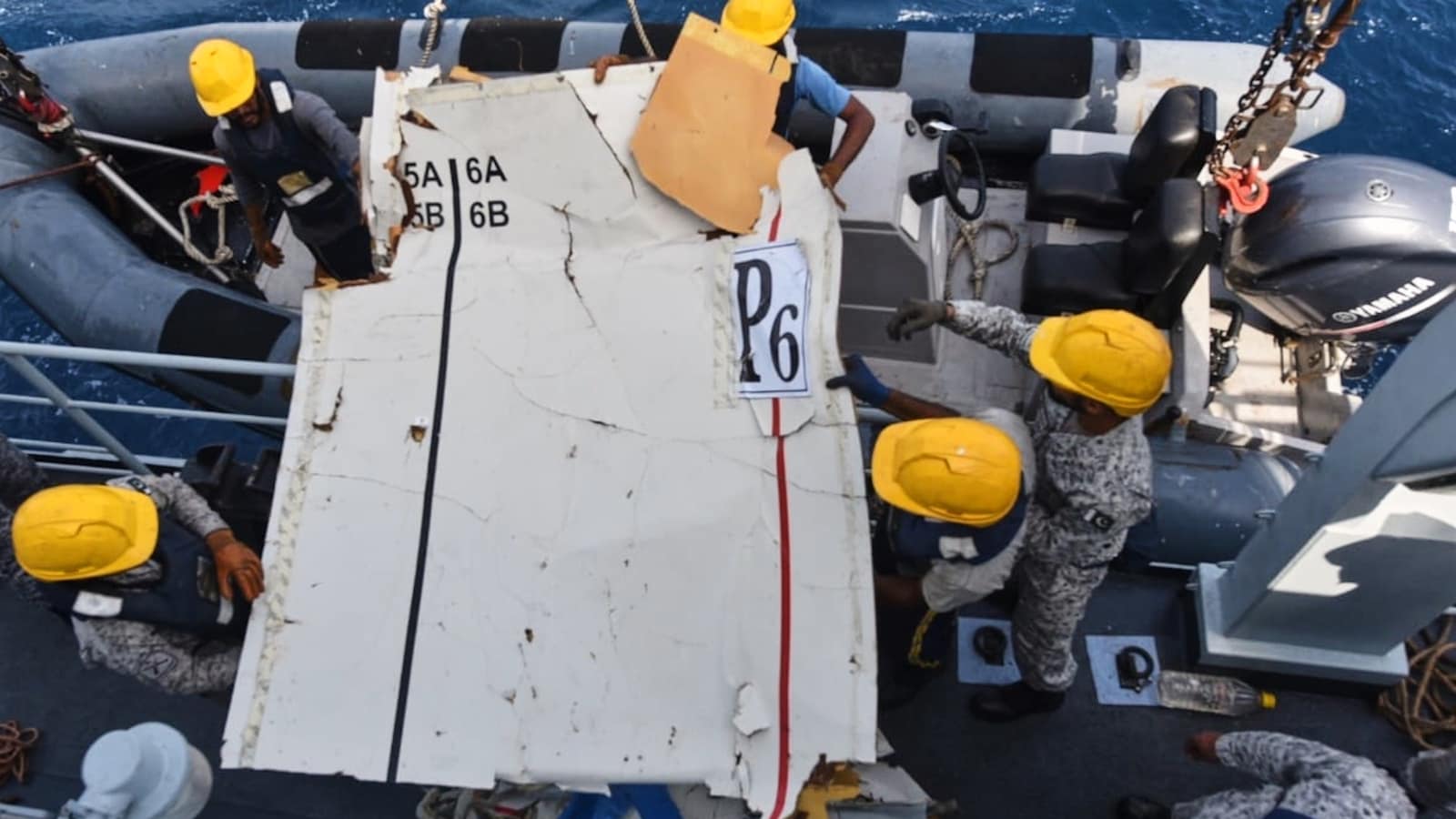
A plane doesn't just drop from 36,000 feet without something going horribly wrong. When K2 Airways flight KTA1732 vanished from radar screens west of Karachi on Tuesday night, it wasn't just another tragic headline. It exposed the massive, unforgiving risks of flying aging cargo workhorses through harsh monsoon seasons. Now, with wreckage pieces bobbing 53 nautical miles south of Ormara Port, the focus shifts to a desperate race against time and tide for five missing crew members.
The aviation world is looking at the numbers. They're terrifying.
I have watched flight data for years, and the telemetry from this Boeing 737-400 freighter reveals a violent, chaotic final struggle in the cockpit. This wasn't a smooth glide after an engine failed. It was a catastrophic aerodynamic upset that left the crew with almost no chance to recover. While the mainstream media repeats the same dry press releases, we need to talk about what actually happened in those dark sky corridors over the Arabian Sea.
The Fatal Three Minutes Over the Arabian Sea
The flight started routinely enough. The aircraft took off from Sharjah in the United Arab Emirates, carrying cargo bound for Karachi. Everything seemed fine until 9:18 PM Pakistan Standard Time.
The crew radioed air traffic control to report a navigational system problem. That happens. Pilots train for instrument failures constantly. Air traffic controllers immediately tried to assist, trying to guide the plane toward its destination using ground radar vectors.
Then came the silence. Just three minutes later, at 9:21 PM, both radio and radar contact vanished.
Think about that timeline. Three minutes is an eternity when you're troubleshooting a minor glitch, but it's a blink of an eye when a crisis explodes. The plane was roughly 155 nautical miles west of Karachi when it dropped off the grid. The suddenness of the event shocked air traffic teams on the ground. One minute they were talking to a crew dealing with a standard navigation glitch, and the next, they were looking at an empty radar screen.
What the Terrifying Flightradar24 Data Tells Us
The public tracking data from Flightradar24 gives us a chilling picture of what those final moments looked like inside the cockpit. It completely contradicts the idea of a simple mechanical failure.
First, the aircraft experienced wild, violent altitude swings. It dropped around 5,000 feet in less than sixty seconds. That kind of sudden altitude loss indicates a severe dive or a massive loss of lift. But what happened next is even more baffling. The plane briefly climbed back up by approximately 6,000 feet within just thirty seconds.
That tells me the pilots were fighting with everything they had. They were pulling back on the yoke, desperate to override whatever mechanical or aerodynamic force was dragging them down.
After that brief, agonizing climb, the aircraft entered its final, irreversible descent from 36,550 feet. The final transmission from the plane recorded it at just 1,100 feet above sea level. Its vertical descent rate was clocked at minus 22,400 feet per minute.
Let's put that number in perspective. A normal passenger descent is around 1,500 to 2,000 feet per minute. An emergency descent might hit 6,000 feet per minute. A rate of minus 22,400 feet per minute means the aircraft was essentially in a vertical dive, screaming toward the ocean at near-supersonic speeds. Aviation expert Imran Aslam pointed out to local media that planes don't just fall like stones if an engine quits. They glide. To go down that fast means the aircraft suffered a structural failure, a total loss of control surfaces, or a catastrophic stall that flipped it upside down.
Old Planes Converted to Cargo Workhorses
We have to look at the machine itself to understand how this happens. The missing aircraft was a Boeing 737-400 converted freighter.
It started its life all the way back in 1999 as a passenger jet for Russia's Aeroflot. After thirteen years of hauling passengers, it was converted into a cargo configuration in 2012. K2 Airways, a private carrier based in Karachi that started operations around 2018, added this exact plane to its fleet in 2024. Shockingly, records indicate this was the airline's only active aircraft.
There's a massive industry built around converting retired passenger planes into cargo freighters. It makes financial sense for young airlines. You get a cheap hull that can carry tons of freight. But aging airframes require meticulous maintenance. A plane built in 1999 has been through thousands of pressurization cycles. The metal gets tired. The wiring gets brittle.
When a crew reports a navigation failure followed immediately by a catastrophic dive, you have to wonder if an electrical fire knocked out the flight management computers, or if an uncommanded stabilizer trim run-away drove the nose into the dirt. We saw similar issues with older 737 classics in the past, where rudder reversals or trim issues caught crews completely off guard.
The Brutal Reality of Monsoon Search Operations
The Pakistan Navy moved quickly. They deployed the frigate PNS Zulfiqar to the last known coordinates. They sent out maritime surveillance aircraft, including an ATR plane from Turbat, and the Air Force scrambled assets to spot debris from above. Merchant ships from the Pakistan National Shipping Corporation also altered course to help.
After twelve hours of scanning the black waters, they found pieces of the plane near Ormara. But finding floating debris is the easy part. Finding the crew and the black boxes is another story entirely.
The Arabian Sea during the summer is a nightmare for search and rescue. The monsoon season brings heavy swells, blinding rain, and shifting ocean currents. Retired Rear Admiral Faisal Shah pointed out a hard truth about maritime disasters. Debris floating on the surface tells you very little about where the plane actually hit the water. Wind and currents can drag light aluminum panels miles away from the impact site within hours.
Worse yet, the ocean floor in that part of the Arabian Sea drops down to about 3,000 meters. That is nearly ten thousand feet deep. At that depth, the water pressure is crushing, and the darkness is absolute. Pakistan simply does not possess the deep-sea salvage equipment required to locate and recover a black box from three kilometers down. They will have to call in international salvage teams, a process that takes weeks to organize while the acoustic pinger on the flight recorders slowly runs out of battery.
Echoes of Past Karachi Aviation Disasters
This crash opens up old wounds for Pakistan's aviation sector. The country has struggled for a decade with safety ratings, pilot licensing scandals, and high-profile crashes.
Everyone in Karachi still remembers May 2020. That was when a Pakistan International Airlines passenger flight slammed into a crowded residential neighborhood right outside the Karachi airport. Ninety-seven people died. The subsequent government investigation blamed sheer human error, pointing out that the pilots and air traffic controllers were distracted and failed to follow basic safety protocols during an aborted landing.
While this K2 Airways crash happened over the open ocean rather than a neighborhood, the underlying questions remain identical. Is the regulatory oversight strict enough? Are private cargo operators cutting corners on maintenance to keep their solo aircraft in the sky?
The missing crew members weren't rookies. The airline identified them as Captain Muhammad Rizwan Idris, First Officer Faisal Jatoi, flight engineers Muhammad Hamid and Muhammad Arif Siddiqui, and loader Muhammad Taufiq Khan. These were experienced professionals who knew the flight paths between the Gulf and Pakistan like the back of their hands. The co-pilot's father-in-law, Ghulam Nabi Bahrani, told reporters that the family had spoken to him just before takeoff from Sharjah. They're waiting for a miracle, but every hour that passes in those rough monsoon seas makes a survival story less likely.
What Needs to Happen Next
Investigating a crash at sea requires methodical steps. Speculation doesn't solve mysteries, data does.
First, maritime teams must map the debris field on the surface to project the underwater trajectory of the sinking wreckage. This requires specialized sonar equipment deployed from naval vessels.
Second, the civil aviation authorities need to pull the complete maintenance logs of this specific Boeing 737-400. Investigators must scrutinize every repair done since its conversion in 2012, focusing heavily on any recent work involving the autopilot, navigation systems, or flight control cables.
Finally, the government needs to secure international help immediately. Waiting for local assets to find a hull sitting three thousand meters down is a waste of precious time. The flight data recorder and cockpit voice recorder hold the answers to those final three minutes of terror. Without them, we will never know why a routine cargo run turned into a vertical dive into the sea.