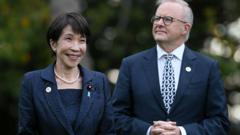
Anthony Albanese thought he was just doing a casual podcast interview. Instead, the Australian prime minister walked straight into a diplomatic storm over a pair of expensive fruits.
If you spend your time trying to figure out why politicians keep sabotaging themselves on entertainment shows, look no further than the recent "Bush Deep" podcast appearance. Albanese casually recounted receiving two high-end Crown Melons from Japanese Prime Minister Sanae Takaichi. What followed was a messy mix of hand gestures, a podcast host's joke, and a furious political backlash that refuses to die down.
The Podcast Moment That Sparked the Outrage
Back in July, Albanese sat down for a lighthearted chat. The conversation drifted toward a rather unusual diplomatic present: two pristine Shizuoka Crown Melons handed over by Takaichi during her visit. These aren't your average supermarket fruits. In Japan, premium Crown Melons are luxury items carefully cultivated in specialized greenhouses, sometimes fetching over 30,000 yen each. They represent deep respect and high-level hospitality.
During the interview, Albanese remarked that she brought "a couple of melons… she brought two, as you do," while making hand gestures near his chest. Podcast host Nikki Osborne chimed in with a quip comparing the visual to Pamela Anderson. Albanese smiled and kept the banter moving.
At the time, the episode didn't cause an immediate earthquake. The prime minister had already landed in hot water during the same recording for a separate "shag, marry, date" segment involving Australian celebrities—comments he later formally apologized for. But the melon comments lingered, waiting for a spark.
Why Former Diplomats and Opponents Are Fuming
The controversy roared back to life when Shingo Yamagami, the former Japanese ambassador to Australia, published a biting opinion piece. Yamagami didn't hold back. He labeled the comments a sexist joke that betrayed the close bond between Canberra and Tokyo. He argued that reducing a deeply symbolic, high-value cultural gift to a crude physical joke showed a severe lack of awareness.
The Australian opposition quickly jumped on the opening. Opposition leader Angus Taylor called the remarks insulting and beneath the dignity of the prime minister's office, demanding a personal apology. Liberal deputy Jane Hume branded the interaction grubby and inappropriate.
Downplaying the storm, government ministers rushed to shield their leader. Foreign Minister Penny Wong and Treasurer Katy Gallagher insisted the comments were completely mischaracterized and lacked any malicious intent. Reports also surfaced that Tokyo had previously sent a diplomatic cable noting they saw no ill intent and blamed sensationalized media coverage for blowing the incident out of proportion.
The Real Cost of Unfiltered Politicking
Politicians love chasing younger demographics by appearing on alternative media platforms, podcasts, and comedy shows. It makes them look human. It makes them relatable. But trading traditional media training for casual banter carries massive risks.
When you sit across from a comedian, the guardrails vanish. Jokes land differently when spoken by the leader of a sovereign nation than they do coming from a professional comic. Even if Tokyo is willing to brush the incident aside diplomatically, the domestic fallout creates a distraction that no administration needs while navigating complex Indo-Pacific security and trade partnerships.
Albanese has dug in his heels, flatly rejecting calls for a formal apology in parliament and pointing instead to the historic strength of Australia-Japan relations. Yet the damage to his political narrative is already done.
Stop treating informal media appearances as free passes. If you hold the highest office in the country, every word—and every hand gesture—carries weight. Think twice before trying to chase laughs on a comedy podcast.