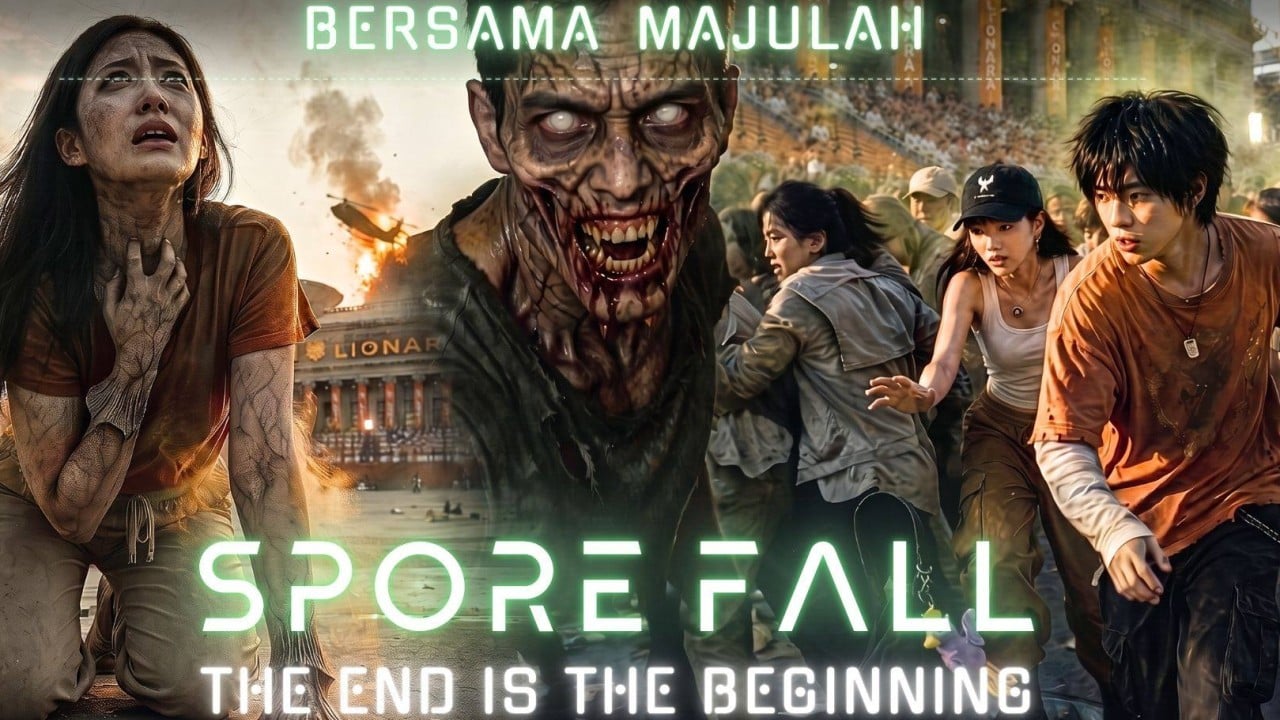
Imagine watching your country's proudest patriotic celebration suddenly overrun by flesh-eating zombies. That exact nightmare scenario unfolded on screens during Singapore's National Day, courtesy of an artificial intelligence-assisted short film called Bersama Majulah. Created by local studio Edenstone, the four-minute teaser trailer depicts a fictional National Day Parade descending into chaos after a lethal spore outbreak.
Unsurprisingly, the project ignited instant controversy. Critics immediately questioned whether using generative tools to depict a dystopian version of a national holiday crosses a line. Defenders argued it proves local artists can push boundaries with new technology. This clash highlights a deeper truth about the future of filmmaking. Generative tools are no longer just a novelty for tech enthusiasts; they are forcing a complete reckoning in how movies get made, funded, and received.
The Reality Behind Human-Written, AI-Realised Media
Most people assume projects built with machine learning tools require zero human effort. You type a prompt, press enter, and walk away with a Hollywood-grade trailer. That is entirely false.
The team behind Bersama Majulah—led by showrunner Joel Boh and executive producer Chan Gin Kai—insists on a strict boundary. They call it a "human-written, AI-realised" production. What does that mean in practice? The script, character arcs, emotional beats, and world-building are strictly conceptualized by human writers. Generative software is deployed afterward under tight creative direction solely to accelerate visual asset production.
Think of it as an industrial-grade visual effects pipeline compressed into a tiny startup budget. Traditional sci-fi microdramas require massive CGI teams and millions of dollars to render futuristic cityscapes like the fictional "Lionara". By using machine learning models to handle the heavy rendering lifting, small independent creators can compete on a global scale.
Yet, public pushback remains fierce. Some viewers online compared the aesthetic unfavorably to existing mainstream hits like The Last of Us, while others outright dismissed the work as low-effort digital noise. This tension exposes the core anxiety haunting the entertainment industry today. Audiences are hyper-sensitive to shortcuts. When you mix a beloved cultural celebration with synthetic imagery, people notice.
Why Dystopia on National Day Works
Choosing a national holiday to showcase a zombie apocalypse looks like a deliberate provocation. Critics asked why a local studio would mock or degrade a day dedicated to national unity.
The creators flipped that narrative on its head. Joel Boh argued that subverting the national skyline is actually an act of profound cultural confidence. If a national identity is fragile, you cannot touch it, satirize it, or imagine it under threat. If that identity is robust, it can survive being reimagined as a sci-fi battlefield.
This reflects a broader shift in how media is consumed across Southeast Asia. Independent studios are trying to escape romanticized, sanitized tropes to build gritty transmedia franchises. The short film is a spin-off of Spore Fall, an episodic microdrama exploring survival under an authoritarian regime. Local creators want darker, riskier storytelling. Technology gives them the leverage to build those worlds without needing a Hollywood studio greenlight.
The Real Threat to Filmmakers Isn't the Tech
If you talk to traditional artists, they will tell you that software models are coming for their jobs. That fear is valid, but it misidentifies the bottleneck.
The real challenge in modern digital media isn't generating pixels; it's holding an audience's attention. Anyone can spin up a creepy monster or a collapsing skyline using consumer tools today. The internet is already flooded with mediocre synthetic clips that look impressive for five seconds before turning boring.
What made the Singapore National Day project spark real debate wasn't the AI rendering quality. It was the context, the local resonance, and the deliberate choice of setting. Technology served the story, not the other way around. When human intent disappears from the creative equation, projects fail instantly because they lack a soul.
Independent creators looking to experiment with these tools need to learn from this controversy. Focus your energy on tighter scripts, sharper emotional stakes, and distinctive cultural angles. Let the algorithms handle the background rendering, but keep your hands firmly on the steering wheel of the narrative. The future of film belongs to the storytellers who refuse to let the software do the thinking for them.