The 2026 World Cup starts tomorrow, but the biggest clashes aren't happening on the pitch. They're happening at airport customs counters.
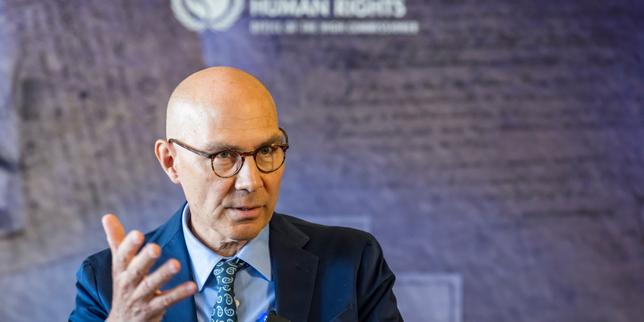
When FIFA expanded this tournament to 48 teams across three countries, it was sold as a historic celebration of global unity. Instead, it's morphing into a stark display of geopolitical exclusion. United Nations High Commissioner for Human Rights Volker Türk just threw down a massive gauntlet from Geneva. He openly demanded a "massive rethink" of how the United States handles its border enforcement before the whole tournament gets completely derailed by racial profiling, visa denials, and aggressive surveillance.
If you bought a ticket expecting a seamless celebration of soccer, you're missing the reality on the ground. The friction between global sport and hard-line domestic policy is creating chaos for teams, staff, and fans alike.
The Chaos at the Border Gates
The UN didn't just sound the alarm out of nowhere. The warning follows a string of high-profile incidents that have embarrassed international organizers and left participants stranded.
Take the case of Somali referee Omar Artan. He is one of Africa's top match officials, handpicked by FIFA to handle the highest-stakes games on the planet. He landed in Miami on Saturday with what he and his federation insisted was a perfectly valid visa. US Customs and Border Protection (CBP) promptly refouled him. His dream of officiating at the highest level evaporated on an airport tarmac because the State Department alleged vague links to "suspected members of terror organizations" without offering a shred of proof.
He wasn't the only one. Look at what happened to Iraqi striker Aymen Hussein. He was held for seven hours of intense interrogation and had his phone inspected over the weekend. While he eventually got in, his team's photographer and several support staff were turned away completely.
Then there are the teams themselves. The Iranian national team was forced to completely abandon its planned training base camp in Arizona, relocating to Mexico to avoid the escalating political crossfire. To make matters worse, the Iranian football federation revealed that their fan ticket allocations were abruptly revoked.
The Paradox of an Exclusionary World Cup
We're looking at a bizarre double standard. This is the largest, most expensive World Cup in history, designed to bring millions of people together. Yet, the host country with the most matches is actively shutting the door.
Jules Boykoff, a political science professor and author of Red Card: The 2026 World Cup, Sportswashing and the FIFA Greed Machine, pointed out how severe this contradiction has become. "On one hand, it has more teams than ever participating," Boykoff noted. "On the other hand, because of the policies of the administration, it looks more like a World Cup of exclusion than inclusion."
The math behind who gets to watch their team is brutal. Four qualifying nations face severe US travel restrictions. Haiti and Iran are under full entry bans. The Ivory Coast and Senegal face partial restrictions. Unless a fan from those countries holds dual citizenship somewhere else, their thousands of dollars spent on match tickets, flights, and hotels are basically junk.
Even fans from countries not on a direct ban list are getting crushed by bureaucratic red tape. Ticket holders from Morocco, Scotland, Egypt, Ghana, Jordan, Uruguay, and Uzbekistan have reported sudden visa denials or revocations just days before they were scheduled to fly. For others, the financial barriers are intentionally prohibitive. Travelers from places like Algeria and Cape Verde are facing a steep $15,000 bond requirement just to clear customs for a soccer match.
Where is FIFA in All of This
If you think FIFA is going to step in and save the day, don't hold your breath.
The governing body has gone completely silent. They issued a brief statement explaining they "don't intervene in the immigration procedures of the host country, including the issuance of visas." It's a massive cop-out, especially since FIFA's own 2017 bidding rules explicitly stated that visa processing must be handled in a non-discriminatory manner.
Instead of holding the US to those rules, FIFA leadership has spent the last 18 months cozying up to Washington. They've essentially abandoned their own commitments to international human rights guidelines to keep the peace with American organizers.
Civil rights groups aren't letting it slide. A coalition of over 120 civil society organizations, including the ACLU, took the extraordinary step of issuing a formal travel advisory for fans, journalists, and players traveling within the US. They're warning visitors to prepare for racial profiling, arbitrary detentions, and invasive digital searches in major host cities from Los Angeles to New Jersey.
What Travelers Need to Know Right Now
If you're one of the millions traveling to the US for the matches, assuming your match ticket guarantees entry is a fast track to getting sent home. Security agencies are conducting targeted social media screenings and strict device inspections at entry points.
Here's the practical reality for navigating this tournament safely:
- Prepare Your Digital Footprint: CBP officials are actively inspecting phones. If you're arriving from a flagged region, lock down your devices, minimize sensitive data, and be fully prepared to hand over passwords if pressed at a secondary screening station.
- Carry Paper Backups: Do not rely solely on your phone for event tickets, hotel confirmations, or return flights. Have physical copies of your complete itinerary, proof of funds, and employment verification from your home country to prove you don't intend to overstay.
- Have a Legal Contingency Plan: Know your rights before you land. If you're a non-citizen entering the US, you have fewer constitutional protections at the border, but you still have the right to remain silent if questioned about your religion or political beliefs. Write down the contact information for your country's local consulate and keep it in your pocket.
- Consider the Mexico or Canada Route: Thousands of international fans are already abandoning plans to enter the US entirely. If your team is playing group stages across borders, it might be safer to base yourself in Vancouver, Toronto, or Mexico City and skip the American border friction altogether.
The beautiful game was supposed to unite the world this summer. Instead, it's exposing just how divided the world really is, and a stadium ticket won't protect you from a border agent with a point to prove.


