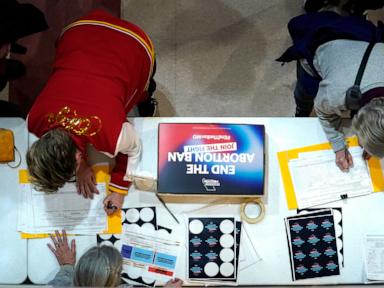
Think the battle over abortion rights ended with the 2024 elections? Think again. The fight is shifting right back to the voters. This November, residents in Idaho, Missouri, Nevada, and Virginia will head to the polls with direct say over the future of reproductive care in their states.
If you are looking for a simple, predictable narrative, you won't find it here. This isn't just about liberals trying to protect access and conservatives trying to block it. The 2026 landscape is weird, messy, and fiercely contested. We are seeing things that have never happened before in American politics—like a state attempting to aggressively undo a pro-choice constitutional amendment that voters passed just two years ago.
Here is exactly what is on the ballot on November 3, 2026, and why these four fights will fundamentally reshape the national battle lines.
Idaho tries an unexpected strategy to roll back its near total ban
Idaho currently enforces one of the most restrictive abortion bans in the nation. The current law lacks exceptions for the health of the pregnant patient, allowing the procedure only to save the patient's life or in specific cases of rape or incest. It is a strict system. Doctors face criminal charges just for doing their jobs.
But a volunteer-run petition drive just pulled off a massive upset. The secretary of state confirmed that an initiative to roll back this ban has officially qualified for the ballot.
What makes Idaho unique is the strategy. Organizers aren't trying to amend the state constitution. Instead, they are pushing a statutory citizen initiative to alter the state code. If it passes, it guarantees the right to an abortion up to fetal viability—usually around 21 to 24 weeks.
Conservative groups are sweating. David Ripley, CEO of Idaho Chooses Life, openly warned that this measure would basically invalidate decades of anti-abortion legislation in the state. It is a high-stakes gamble in a deeply red state.
Missouri faces a historic whiplash vote
If you want to see how chaotic the post-Roe world can get, look at Missouri.
In 2024, Missouri made history. It became the first state to use a citizen-led constitutional amendment to successfully overturn an existing statewide abortion ban. Reproductive rights advocates celebrated. They thought the battle was won.
They were wrong.
This November, conservative lawmakers are striking back with Amendment 3. It is a direct attempt to repeal what voters approved in 2024. If passed, Amendment 3 will ban abortion again in most cases, capping exceptions for rape or incest at a strict 12-week gestational limit.
To make things even more politically charged, lawmakers bundled the abortion restrictions with another hot-button issue: a constitutional ban on surgical procedures and specific gender-affirming care for transgender minors. It is an aggressive, all-or-nothing conservative package designed to drive base turnout. We have never seen a state experience this kind of constitutional whiplash so quickly.
Nevada and Virginia build their legal firewalls
The fights in Nevada and Virginia look very different from Idaho and Missouri. In both states, abortion is already legally protected through at least 24 weeks of pregnancy. Passing these ballot measures won't suddenly open clinics or immediately alter daily access.
Instead, these measures are about building permanent defensive firewalls.
Nevada voters are facing Question 6. If this sounds familiar, it is because Nevadans already voted on this exact amendment in 2024, approving it by a massive 2-to-1 margin. But Nevada law states that a constitutional amendment must pass a public vote twice before it actually takes effect. This is the final finish line for Nevada advocates.
Over in Virginia, voters will decide on a legislatively referred amendment to establish a explicit right to reproductive freedom. The amendment would protect an individual's right to make their own decisions about pregnancy, while still allowing state regulation in the third trimester—provided there are clear exceptions to protect the life and both the physical or mental health of the patient.
Don't dismiss these two states just because abortion is already legal there. These amendments are massive turnout drivers. In states where control of the governor's mansion or the state legislature can flip on a dime, putting abortion on the ballot changes who shows up to vote.
The cracks in the national coalitions
There is a hidden storyline in the 2026 elections that mainstream news often misses. The unified fronts on both sides of the abortion debate are starting to crack.
For a long time, abortion-rights groups won referendum after referendum. Since the Supreme Court overturned Roe v. Wade, pro-choice advocates prevailed in 14 state votes and lost four. But a quiet civil war is brewing over strategy.
Many grassroots local organizers want to push for total reproductive freedom without any restrictions. Meanwhile, major national organizations often prefer to back moderate measures that protect abortion only up to fetal viability. They think that is the only way to win over moderate and independent voters.
We saw this tension boil over recently. The National Abortion Federation publicly stated its opposition to rigid legal cutoffs or arbitrary gestational lines. Yet, the measures on the ballot in Idaho and Nevada explicitly include viability cutoffs to appease moderate voters. Local advocates, like Melanie Folwell of Idahoans United for Women and Families, have criticized national groups for sitting out tough state fights because the language isn't "perfect".
On the flip side, anti-abortion strategists are learning from past defeats. They are moving away from total, exceptionless bans. By adding specific exceptions for medical emergencies, fetal anomalies, or early-stage rape and incest—like Missouri is doing with Amendment 3—they hope to make abortion restrictions palatable to a broader public.
What you should do next
The national narrative wants you to focus exclusively on Congress or presidential posturing. Don't fall for it. State laws and local state constitutions are where the real impact happens.
If you live in Idaho, Missouri, Nevada, or Virginia, your vote this November will directly dictate medical realities for millions of people. Take the time to read the exact text of these amendments and statutory initiatives. Look past the flashy television ads and the partisan talking points. Understand the specific gestational limits, the precise health exceptions, and the legal mechanisms at play before you enter the voting booth. This isn't just politics—it is constitutional law, and it is entirely in your hands.