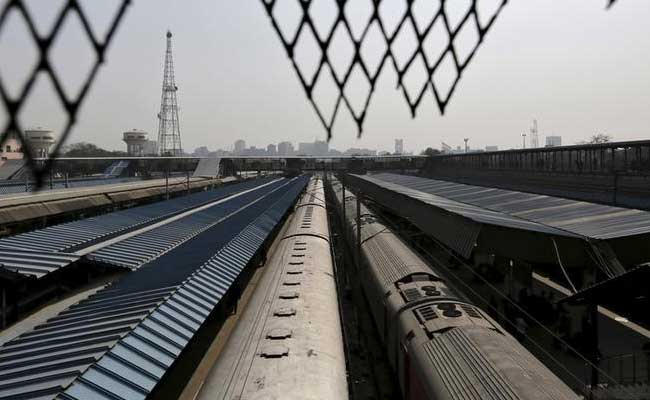
Most people think international diplomacy is just handshakes and treaties. It isn't. Real diplomacy is built on steel tracks, rolling stock, and multi-million dollar infrastructure contracts.
Right now we are watching a massive logistics shift play out in South Asia. You have probably seen the headlines announcing 200 Made-In-India coaches to give boost to Bangladesh railways. Headlines are fine. They rarely tell the whole story. The truth is this Rs 915 crore contract executed by RITES is about much more than just train cars. It is a highly strategic move that secures India's position as a heavy engineering exporter while stabilizing regional supply chains after intense political upheaval. Meanwhile, you can find related developments here: Why The Bank Of Japan Rate Hike To A 31 Year High Changes Everything For Global Markets.
The deal had slowed down following the political transition in Bangladesh. Contracts of this size usually die when governments fall. This one survived. That alone tells you how desperately Bangladesh needs this rolling stock and how determined India is to maintain its export momentum. Let me break down exactly why this matters, the financial mechanics behind it, and what is actually happening on the ground.
The Reality of Railway Exports
Exporting heavy rolling stock is brutally difficult. I have watched companies pitch international railway contracts for years. The competition is fierce. The margins are thin. The technical specifications are an absolute nightmare to align across different national transit grids. To explore the bigger picture, check out the detailed report by Bloomberg.
RITES secured this $111 million deal through a global competitive bidding process. They did not just get handed the contract out of neighborly goodwill. They had to beat out international manufacturers who have been eyeing the lucrative South Asian market for a decade. The fact that an Indian public sector enterprise won a European Investment Bank funded project proves something critical. The "Make in India" manufacturing quality has reached a tier where international financial institutions trust it with nine-figure capital allocations.
These aren't basic, stripped-down train cars. The agreement covers 200 broad-gauge passenger coaches built with high-grade stainless steel bodies. India is manufacturing them, yes. But the contract also forces RITES to provide design expertise, spare parts support, and extensive training for the operational staff in Bangladesh. You don't just drop off 200 train coaches at the border and wish the buyer luck. Integrating them into an existing grid requires years of technical hand-holding. The commissioning period alone spans 36 months, followed by a strict 24-month warranty.
How 200 Made-In-India Coaches Upgrade An Entire Network
If you look at the historical railway map of Bangladesh, it is a messy mix of meter-gauge and broad-gauge lines. Meter-gauge is slow. It severely limits cargo weight and caps passenger density. For a country trying to rapidly modernize its internal transit and boost economic output, broad-gauge is the only viable path forward.
The Broad Gauge Advantage
These 200 broad-gauge coaches will completely upgrade the carrying capacity of Bangladesh Railways. Broad-gauge trains are wider, stabler, and carry significantly more people per trip. When you run modern stainless steel coaches on broad-gauge tracks, you immediately reduce the risk of derailments and major accidents.
Think about the engineering. Older ICF-style coaches are notoriously dangerous during collisions because they tend to crush into one another. Modern stainless steel coaches feature anti-telescopic designs. If an accident happens, the coaches do not pile up. They absorb the impact and stay on the rails. We saw India transition heavily to this safer technology over the last twenty years. Now, that exact safety standard is crossing the border. Upgrading to these coaches isn't just about moving more people. It is about keeping them alive.
At roughly Rs 4.5 crore per coach, this is an incredible value for Bangladesh. Western manufacturers charge exponentially more for similar specifications. India offers the perfect middle ground: high-tier safety features at South Asian manufacturing prices.
Following the Money and EIB Backing
Here is the part most analysts ignore entirely. Who is actually paying for this?
Bangladesh is not simply handing over Rs 915 crore in cash. This project is funded by the European Investment Bank. Getting EIB funding for an Asian infrastructure project requires jumping through endless compliance hoops. The EIB demands strict environmental standards, highly transparent bidding processes, and rigorous financial audits.
The fact that the EIB is funding a contract awarded to an Indian manufacturer is a massive vote of confidence. It means RITES passed intense European scrutiny for cost-effectiveness and manufacturing reliability. When an external Western bank finances a trade deal between two South Asian neighbors, it fundamentally de-risks the transaction. India gets paid. Bangladesh gets much-needed trains. The EIB gets to expand its structural investment footprint in a developing market. Everyone wins.
The Political Elephant in the Room
You cannot discuss this deal without addressing the timing. The initial contract was signed in May 2024. Then Bangladesh went through a massive political upheaval. An entire government was ousted.
Usually, when a country undergoes that level of regime change, major infrastructure projects grind to an absolute halt. New leaders want to audit old deals. External suppliers get nervous and pause shipments. The Indian government suspended several operations temporarily to assess the security situation. It was a massive risk. We are talking about hundreds of crores tied up in manufacturing limbo.
But shipments are officially resuming. The first batch of these coaches is rolling across the border in July 2026. This resumption signals extreme geopolitical pragmatism. Regardless of who sits in the prime minister's office in Dhaka, the local population needs to commute. Trains must run. The current administration in Bangladesh recognized that canceling a finalized, EIB-funded contract for much-needed transit upgrades would be economic suicide.
Beating the Chinese Alternative
Let's speak frankly about the competition. China has aggressively pushed its railway technology into Africa and South Asia for the last twenty years. They offer massive loans, cheap infrastructure, and quick delivery.
Why did Bangladesh choose RITES instead of a Chinese state-owned manufacturer?
First, interoperability. India and Bangladesh share a massive border and are actively working on cross-border rail links. Using Indian-manufactured rolling stock means the technical specifications match perfectly when trains cross international lines.
Second, the debt trap reality. Many nations are waking up to the harsh economic conditions attached to certain foreign infrastructure loans. EIB funding combined with Indian manufacturing offers a transparent, financially viable alternative without hidden sovereign debt clauses.
RITES also has a proven track record here. This is not their first rodeo in Dhaka. They previously supplied 120 broad-gauge passenger coaches, 36 broad-gauge locomotives, and 10 meter-gauge locomotives to Bangladesh Railways. Trust is built on successful past deliveries, not just slick PowerPoint presentations. When a train engine you bought five years ago is still running flawlessly, you buy from that vendor again.
The Manufacturing Reality in India
You hear a lot of noise about local manufacturing pushes. Much of it is just marketing. Heavy rail export, however, is hard evidence of industrial capacity. Building 200 stainless steel coaches requires a massive, coordinated supply chain. You need raw steel production, precision welding, complex electrical routing, braking system integration, and rigorous safety testing.
This order keeps Indian factory lines moving. It employs thousands of specialized rail workers. More importantly, it creates a replicable template. If India can successfully deliver and commission EIB-funded rolling stock to Bangladesh despite massive political turbulence, they can do it anywhere. They can supply Sri Lanka, Nepal, or African nations looking to upgrade their transit grids. This contract serves as a real-world portfolio piece for Indian rail manufacturing on the global stage.
We are seeing a strategic shift from importing technology to exporting indigenous engineering. The focus is no longer just fulfilling domestic needs. The target is the global market.
What to Watch for Next
The physical delivery of the coaches is just phase one. The real test comes over the next 36 months during the commissioning and training phase.
If you track international logistics or infrastructure investments, keep your eye on the maintenance cycle. Supplying the coaches is profitable, but the long-term relationship relies heavily on spare parts support and technical training. RITES has baked this into the contract. If they execute the training phase perfectly, Bangladesh Railway will become permanently integrated with Indian rail engineering standards.
Look at the regional transit map. India is systematically building out infrastructure corridors. Cross-border train networks, shared power grids, and aligned customs protocols. These 200 coaches are literally the vehicles that will carry this integrated economic zone forward. The political turbulence is temporary. The broad-gauge steel tracks are permanent.
Watch the delivery schedules closely. The target is full deployment by December 2027. Delays will happen. They always do in heavy infrastructure. But the momentum is locked in. The trains are built and they are moving. Let's see how quickly they transform the daily commute across the border.